Street Food Safety in Hanoi: How to Eat Everything and Not Get Sick
Millions of people eat on Hanoi's pavements every single day. The gap between them and the unlucky tourist is not luck, it is a handful of habits you can learn in five minutes.
 Written with Mai Trần, Hanoi food tour guide and culinary specialist
Short answer
Millions eat Hanoi street food daily without trouble. The reliable rules, drink bottled or boiled water instead of tap, be careful with ice of unknown origin and with raw herbs, and eat hot, freshly cooked food from busy stalls with fast turnover. Boiling dishes such as pho and bun cha carry the least risk. A guided tour with a vetted stall list removes most of the remaining guesswork.
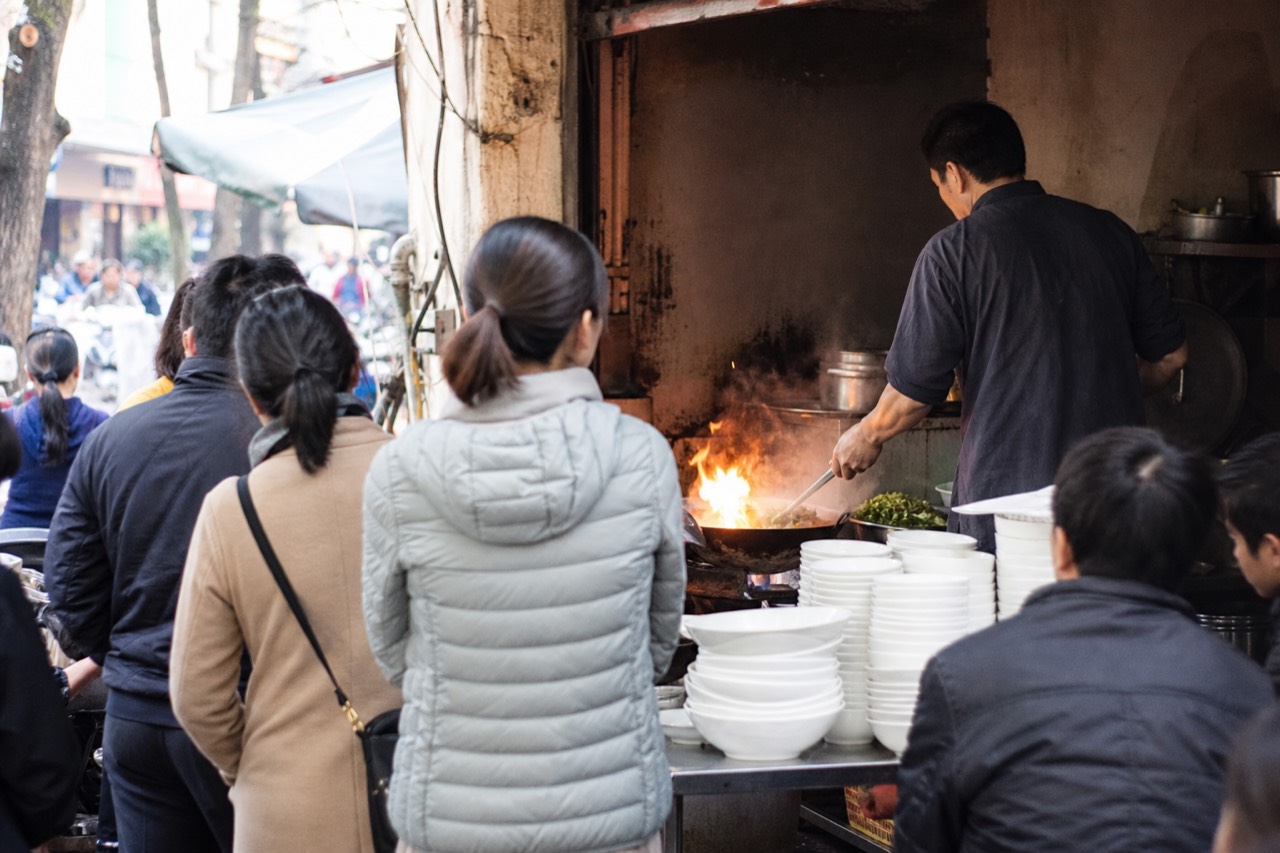
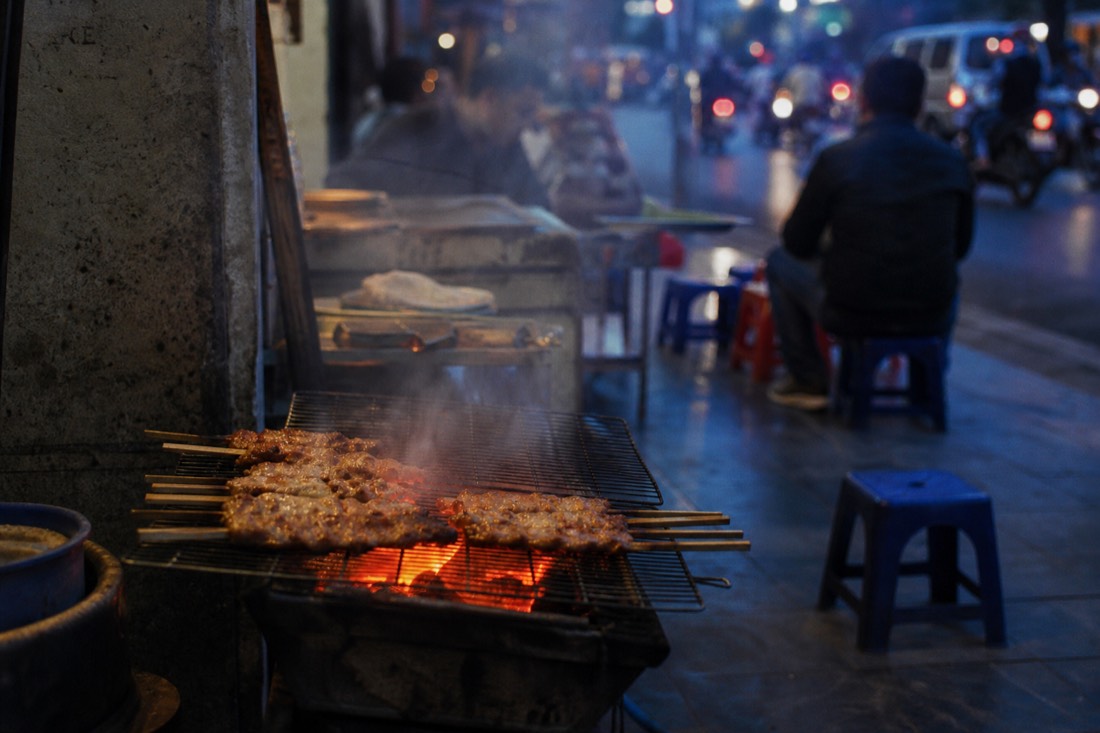
Steam is the first thing you notice on a Hanoi pavement at 7 a.m. Broth cauldrons rolling at a full boil, charcoal grills spitting under pork patties, a queue of office workers on tiny stools waiting for the same bowl they ate yesterday. That scene is also the single best food safety signal in the city, and this guide explains why. The advice here follows the CDC's food and water guidance for travelers, applied to how Hanoi actually eats.
How do you eat street food in Vietnam without getting sick?
Follow four habits: drink bottled or boiled water only, treat ice and raw herbs with care, choose food that is cooked hot in front of you, and eat where locals queue. Those four cover the large majority of realistic risk. Street food itself is not the hazard; lukewarm food, slow stalls and untreated water are.
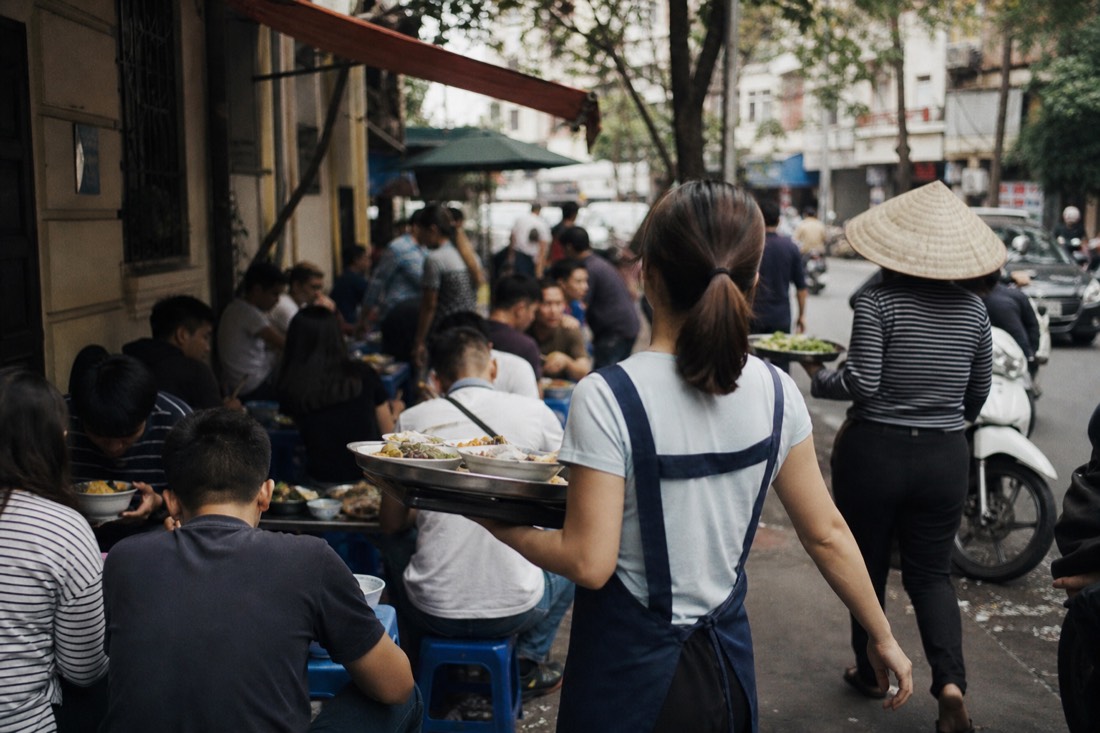
The calm truth gets lost in scary forum threads. Hanoi's street kitchens feed millions of residents daily, and the dishes most tourists want, pho, bun cha, banh mi, are mostly served at temperatures that give microbes no chance. This cooking is respected at the highest level: the Michelin Guide's 2026 Vietnam selection lists 23 Bib Gourmands in Hanoi, built largely on exactly this kind of low-cost kitchen. The CDC's framing for travelers is simple: hot, freshly cooked food is the safe category, while water, ice and raw produce are where caution belongs.
The job is not avoiding street food, it is picking the right stall and managing a few risky inputs. The grid below is the whole system, and the rest of the guide unpacks each row.
| Risk area | The rule | Why it works |
|---|---|---|
| Water | Bottled or boiled only, sealed cap | Removes the single biggest pathogen route |
| Ice | Fine in busy cafes using factory ice, skip elsewhere | Commercial ice is made from treated water |
| Raw herbs | Optional; dunk in hot broth or skip if cautious | Washing water, not the herb, is the risk |
| Cooking | Watch it cooked hot, to order | Heat kills what handling introduces |
| Stall choice | Busy, fast turnover, one specialty | Nothing sits out long enough to spoil |
How do you pick a safe stall?
Pick the stall with a local queue, one specialty done over and over, visible boiling or grilling, and ingredients that move fast. Skip quiet stalls with pre-cooked trays sitting at air temperature. Turnover is the audit that matters: at a busy pho counter, nothing has time to go wrong.
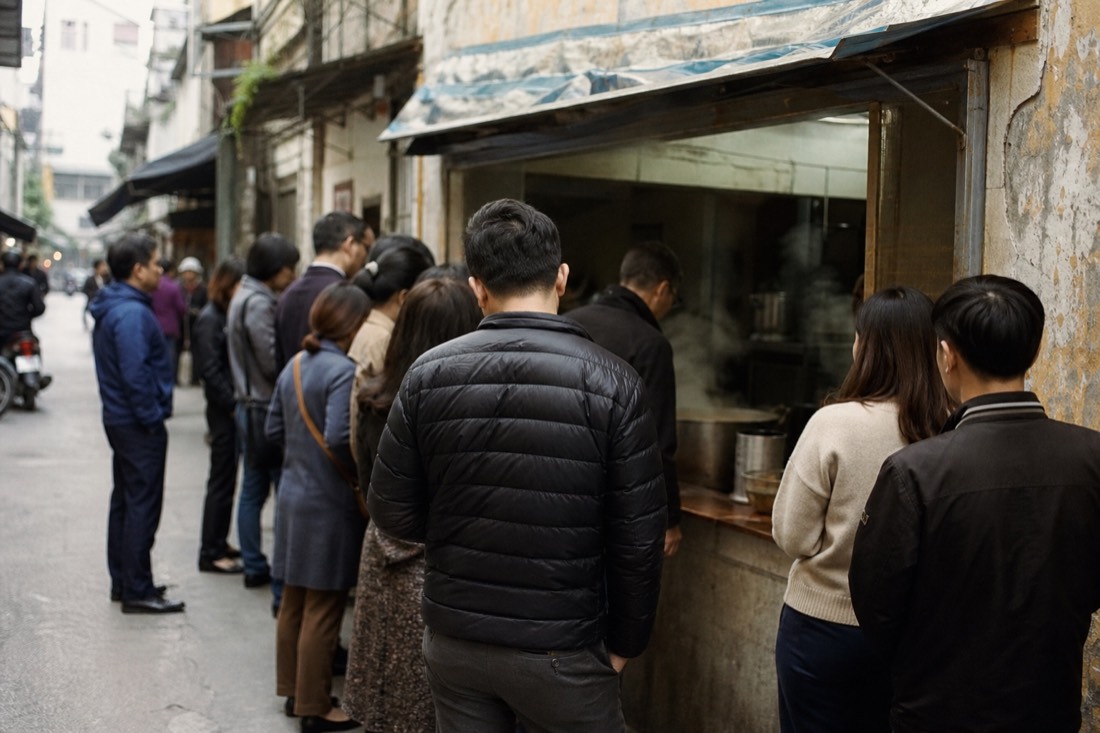
Locals are ruthless quality inspectors, and they vote with their stools every morning. A stall that made someone ill would empty out within days, which is why the crowd test outperforms any certificate on the wall. It helps to know that many pavement vendors are not even required to hold one, so the queue really is the only audit happening.
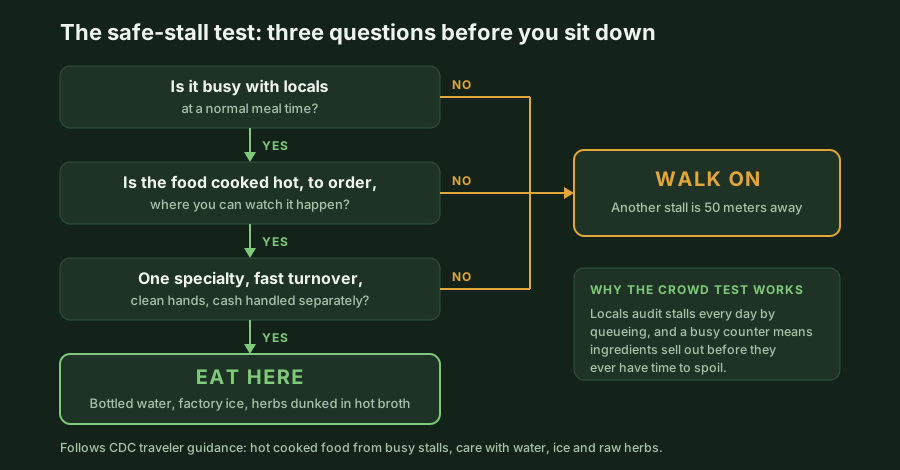
A few more signals worth reading, all visible from the curb before you sit down:
| Signal | Good sign | Walk on |
|---|---|---|
| Crowd | Locals, office workers, families | Empty at mealtime, tourist-only |
| Menu | One dish, maybe two | Twenty dishes with photos |
| Heat | Broth at a rolling boil, grill flaming | Trays of food sitting lukewarm |
| Hands | One person cooks, another takes money | Same hand on cash and food |
| Ingredients | Restocked mid-service | Meat out uncovered in afternoon sun |
The one-dish rule deserves a highlight. A vendor who has sold nothing but banh cuon for twenty years buys exactly the ingredients that will sell out by noon. A tourist cafe serving pho, pizza and pad thai from one small kitchen cannot manage freshness across all of them. This is the same reason the guided-tour route works so well for nervous first-timers, and it is covered honestly in the DIY versus guided comparison.
Can you drink tap water in Hanoi?
No. Tap water in Hanoi is not considered safe for visitors to drink, and locals do not drink it untreated either. Stick to sealed bottled water, which costs pocket change everywhere, or boiled water. Hot tea and coffee are fine because they are made with fully boiled water.
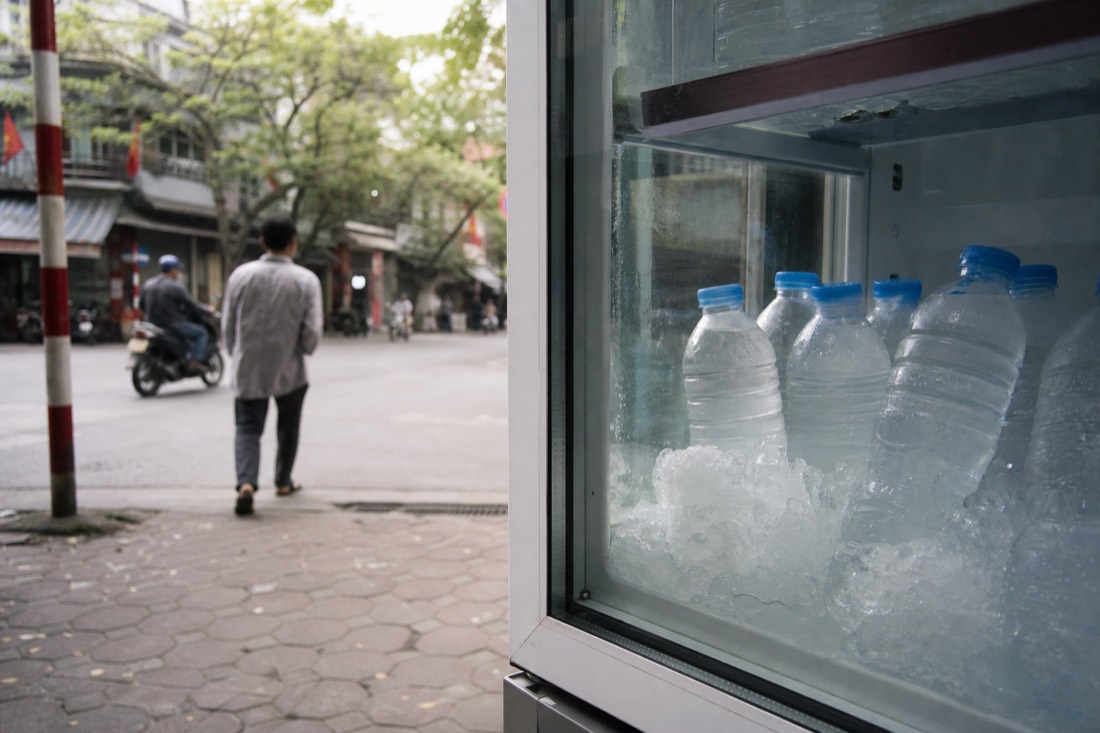
This is the least negotiable rule on the page and also the cheapest to follow. Bottled water is sold on every block. Check that the cap seal is intact, a standard travel habit rather than a Hanoi-specific worry. Brushing teeth with tap water is a judgment call; cautious travelers use bottled for that too, which matches the conservative end of CDC guidance.
The good news hiding inside this rule: Hanoi's drink culture is built on boiling. Green tea comes scalding. Egg coffee is whipped over a cup sitting in a bowl of hot water. Fresh beer, bia hoi, is brewed daily and served from a pressurized keg. You can drink extremely well here without a drop of tap water.
| Drink | Safe? | Notes |
|---|---|---|
| Sealed bottled water | Yes | Check the cap seal, costs very little |
| Hot tea and hot coffee | Yes | Made with boiled water |
| Bia hoi | Yes | Brewed and kegged daily, 10,000-15,000 VND a glass |
| Fresh juice and sugarcane | With care | Fine at busy stalls with clean equipment |
| Iced drinks | Usually fine | See the ice section below |
| Tap water | No | Applies to locals as well as visitors |
Is the ice in Hanoi safe?
Mostly yes, with a caveat. Cafes and drink stalls overwhelmingly use factory-made ice produced from treated water, the cylindrical kind with a hole through the middle. That ice is fine. The caution applies to crushed ice of unknown origin at very informal setups. When in doubt, order your drink hot.
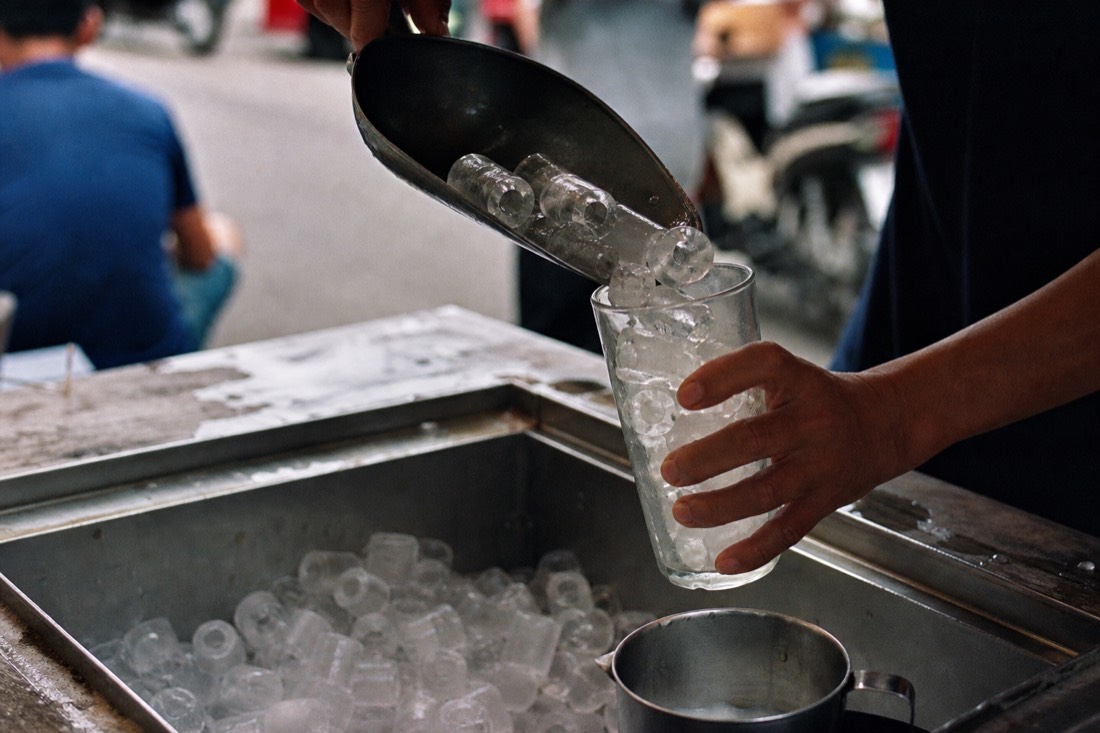
Ice panic is the most outdated piece of Vietnam travel advice still circulating. Commercial ice delivery is a mature industry, and the tube-shaped ice you will see in nearly every cafe comes from licensed plants. The CDC's underlying concern is ice made from untreated water, which in practice means the rare hand-filled tray, not the standard cafe bag.
A reasonable personal policy: iced coffee and iced tea at any busy cafe, yes. Ice in a remote roadside setup where you cannot guess the source, skip it and take the hot version. Nobody has ever regretted a hot cup of Hanoi coffee.
Should you eat the raw herbs?
The herb basket is optional, and skipping it is a legitimate choice for a short trip or a sensitive stomach. The risk is not the herb but the washing water. Two middle paths work well: dunk herbs into boiling broth for several seconds, or eat them only at high-turnover places where the basket is refreshed constantly.
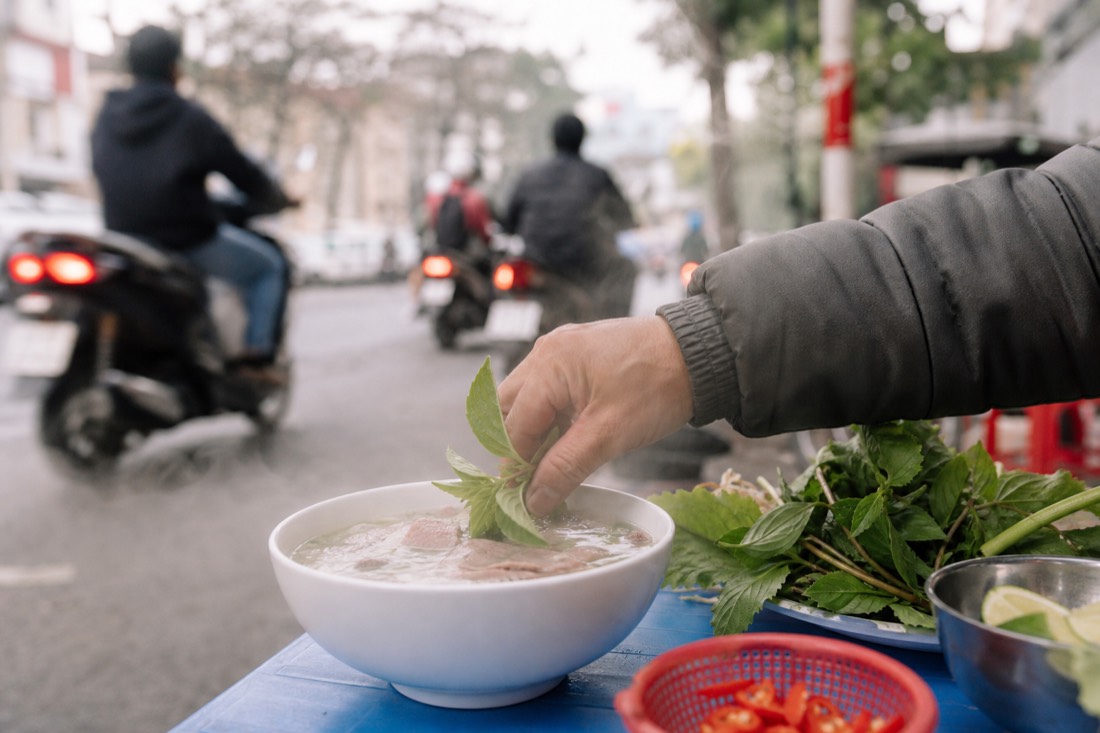
That green mountain of perilla, basil, coriander and lettuce beside your bun cha is one of the glories of northern Vietnamese food, and plenty of travelers eat it daily without incident. It is also the one category the CDC flags beyond water and ice, since raw produce carries whatever rinsed it. Treat it as a dial, not a ban.
The broth-dunk trick is what careful locals do instinctively with pho herbs anyway: drop them in, let the near-boiling liquid do its work, then eat. With bun cha you can dip herbs in the hot dipping sauce. On a first night, or with a delicate gut, leave the basket alone and lose nothing but garnish.
Does a guided tour actually make eating safer?
Yes, in a mechanical way rather than a marketing way. A good guide eats at the same six or eight stalls week after week, knows the owners and drops any stall that slips. You inherit a vetted list on night one, then reuse those stalls solo for the rest of your trip.
Prefer learning technique over being led? A cooking class covers ingredient handling from the market onward, and the Old Quarter walking tour is the classic starter route.
What should you carry to eat street food comfortably?
Almost nothing exotic. A sealed bottle of water, alcohol gel or wipes, a small pack of oral rehydration salts from any pharmacy, a few tissues, and a pocket of small notes. Every item on that list sells within a block of wherever you are staying, and together they cover the gaps a pavement stall cannot.
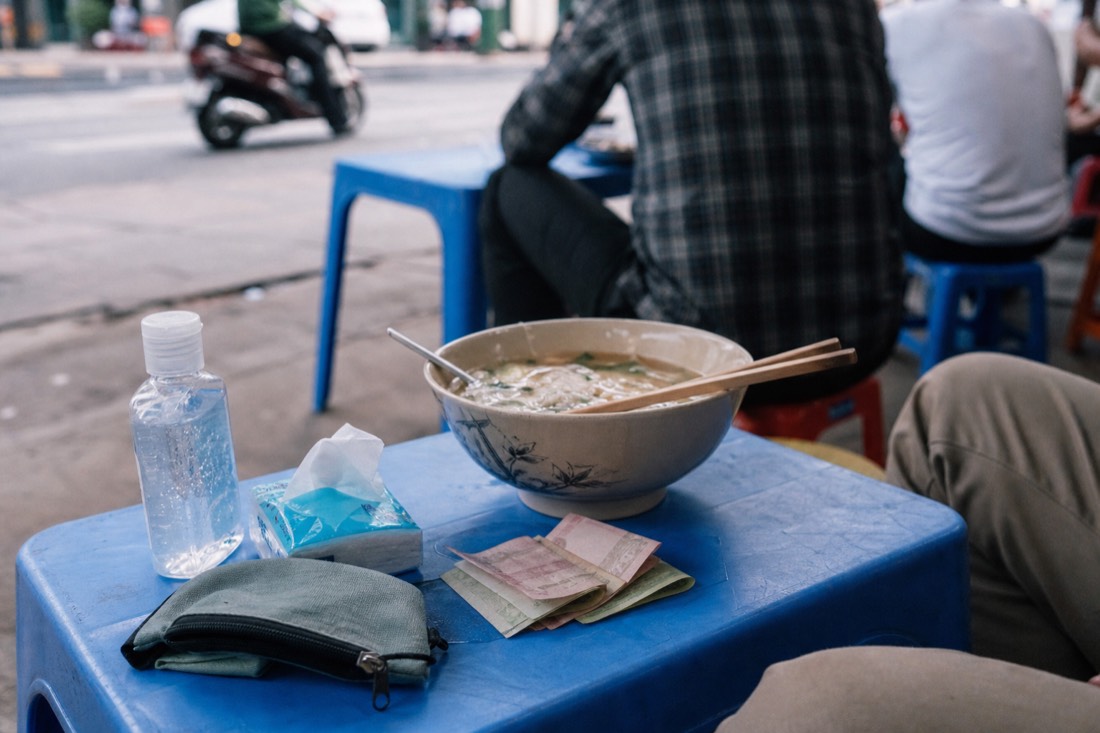
Pavement eating has no sink. That one fact explains most of the kit: you sit down, then handle chopsticks, chilli, lime wedges and cash within the same two minutes, with nowhere to wash in between. Alcohol gel closes that loop, and it quietly does more work than most of the food rules people argue about in forums.
Water is the other half of the list. Sealed bottles cost pocket change on every corner, which makes the tap rule easy to keep once you get in the habit of leaving your room with one already in the bag. Summer changes the arithmetic, since the hot months push fluid through you faster than you notice while walking between stalls.
Rehydration salts are the item travellers skip and later wish they had. They cost very little at any Old Quarter pharmacy, weigh nothing, and turn a standard 24-hour upset into an inconvenience rather than a lost day. Buying them on arrival, while you are well, beats hunting for a pharmacy at 2 a.m. while you are not.
Small notes belong on the list for a food-specific reason: hesitating over change at a counter with six people waiting behind you is how visitors end up at the quiet, slow stall next door instead. Pay fast, sit down, eat hot.
These are planning allowances from our own experience pacing a night of eating in Hanoi, not published figures or medical guidance.
| What to carry | Why a stall cannot cover it | Our allowance |
|---|---|---|
| Sealed bottled water | No safe refill point anywhere on the street | One 500 ml bottle per couple of hours of walking, double in summer |
| Alcohol gel or wipes | No sink at a pavement counter | One small bottle per person, replaced every few days |
| Oral rehydration salts | Pharmacies are everywhere, but not open at 2 a.m. | One or two sachets in the day bag from arrival onward |
| Tissues | Table napkins are small and shared | A travel pack, topped up every day or two |
| Small notes | Stalls dislike breaking large bills mid-service | Enough 10,000 and 20,000 notes for a full night of snacking |
Which Hanoi dishes are lowest risk, and which need more thought?
Anything that reaches you boiling or straight off charcoal sits at the safe end: pho, bun cha, hot noodle soups, grilled skewers, steamed banh cuon. Extra thought belongs with the cold assemblies, the raw herb basket, shredded green papaya salad, pre-cut fruit and crushed-ice desserts, where no heat ever touched the ingredients.
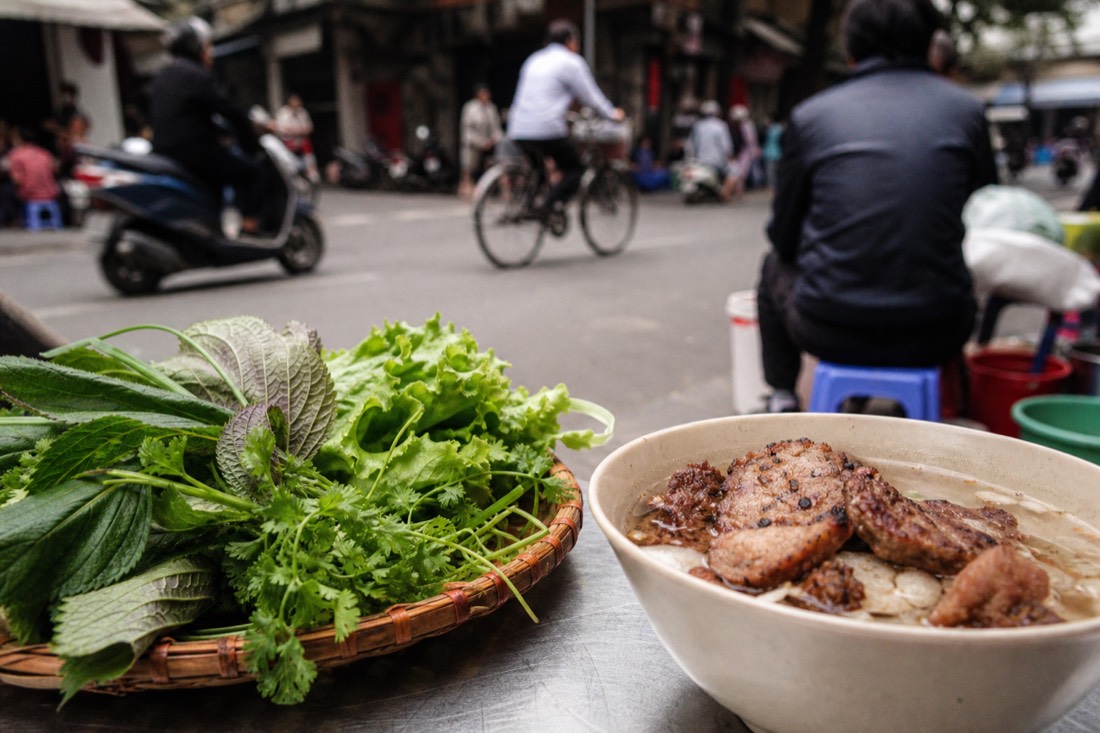
The better mental model is not street food against restaurant food, it is hot against assembled. A pho counter is effectively a sterilising machine that happens to produce breakfast, and the same is true of any dish finished over charcoal while you watch. Assembled dishes are different, not dangerous: someone washed, chopped and dressed those ingredients earlier, so turnover and volume become the thing you read instead of heat.
That distinction also tells you what to order first. Northern classics like pho and bun cha sit at the safest end without any effort on your part, which is why they make sensible first meals. The cold specialties are worth eating too, just at the places that sell out of them daily. Nom bo kho, the shredded green papaya and beef jerky salad, appears on the tasting list for the eat like a local small group tour precisely because the vendors who make it well go through a tub of it every evening.
| Dish | How it reaches you | How much thought it needs |
|---|---|---|
| Pho | Broth held at a rolling boil, ladled over noodles to order | Least of any dish in the city |
| Bun cha | Pork grilled over charcoal, served in hot dipping broth | Very little |
| Banh cuon | Rice sheets steamed in front of you, one order at a time | Very little |
| Grilled skewers and nem | Cooked over coals while you wait | Very little |
| Banh mi | Bread and fillings assembled cold, herbs raw | Some: choose a cart with a queue |
| Nom bo kho | Green papaya salad, dressed cold, never heated | Some: turnover matters more here than anywhere |
| Herb basket | Raw, washed in water you cannot inspect | Optional, dunk in broth or skip it |
| Che and crushed-ice desserts | Cold, and the ice varies by setup | Read the ice before the dessert |
| Pre-cut fruit from a cart | Peeled and sliced in advance | Buy it whole and peel it yourself |
What mistakes does Mai see travellers make every week?
Four, and always in the same order: skipping lunch then eating five dishes at midnight, ordering the one item a stall does not specialise in, accepting whatever cold drink arrives without asking where it came from, and pushing through a bad stomach instead of taking one quiet rice porridge day.
Mai Trần has guided food walks in Hanoi since 2015 and has taken more than 1,000 travellers through the Old Quarter's stalls and the wet markets behind them. In her own words:
I can usually tell by the second stop who is heading for a rough night. It is the person who landed at noon, skipped lunch because the plane fed them, and now wants to try everything on one empty stomach. Hanoi rewards grazing. Six small stops beat two big ones, and the walking between them is where your body catches up.
The second mistake is ordering off-script. A woman who has made banh cuon for decades will still have a pho written on the board, because visitors keep asking for it. Order the banh cuon. That is not really a hygiene rule, it is a freshness rule, and it happens to solve both problems at once.
Third, drinks. Everyone memorises the water rule, then accepts a glass of something cold and sweet because a friendly neighbour at the next stool poured it. I do not argue about ice with anyone. I ask where the drink came from, and if the answer is a sealed bottle or a hot kettle, I stop thinking about it.
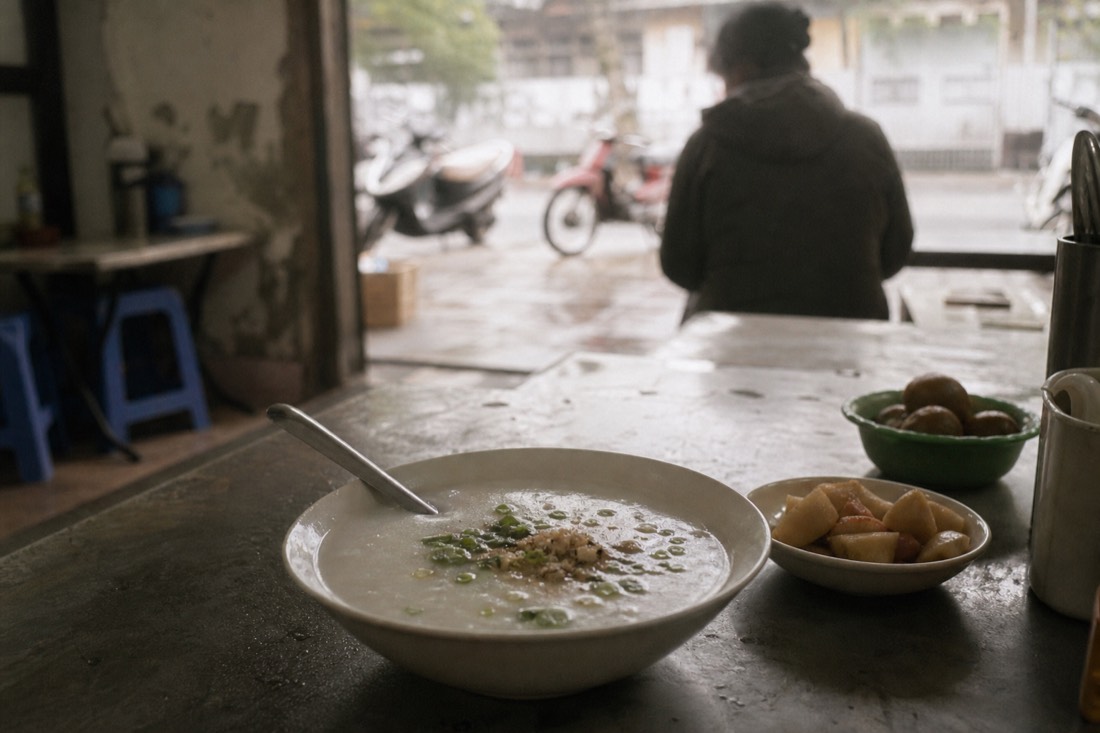
The last one is the hardest to watch. A guest wakes up unwell on day three, decides not to waste the day, and eats a full grilled dinner that night. Then they lose two days instead of one. Locals treat a bad stomach with chao, plain rice porridge, and an afternoon of doing very little. Take the porridge day. The stalls will still be there tomorrow, and the pacing people learn during that quiet day is often what makes the rest of the trip work.
What does a careful first day of eating in Hanoi look like?
Start hot and simple, then widen. A boiling breakfast bowl, bottled water in the bag, something grilled to order at lunch from a stall with a local queue, and one unfamiliar texture in the evening rather than five. By day two your signal reading is calibrated and you can eat much more freely.
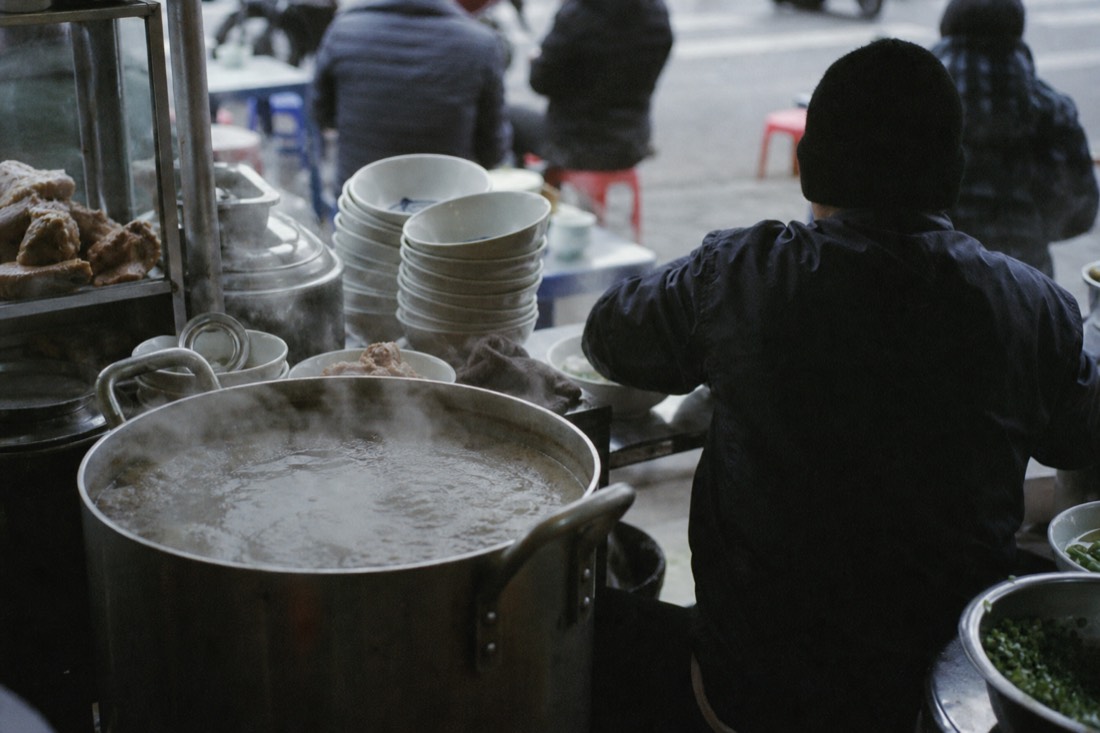
Jet lag is a bigger factor than most safety advice admits. A tired stomach on day one reacts badly to volume, novelty and heat all at once, and travellers then blame the stall rather than the sequencing. Front-load the day with dishes that arrive at temperature, keep the afternoon light, and leave the experimental eating for a night when you have slept.
The shape below also happens to suit the city's own rhythm. Hanoi eats breakfast seriously and early, quietens at midday, then comes back out after dark, so a first day built this way puts you at each counter when it is busiest and freshest. Once you have that pattern, a longer three-day eating plan is just this repeated with more ambition.
The timings below are planning allowances we use when pacing a first day of eating, not published guidance or medical advice.
| Time of day | What to eat | Why it works as a first-day choice |
|---|---|---|
| Around 7 a.m. | Pho at a counter where office workers are queuing | Broth has boiled for hours and turnover is at its fastest |
| Mid morning | Hot egg coffee, sitting down | Made over hot water, so there is no ice decision to make |
| Around noon | Bun cha grilled to order | Charcoal does the work in front of you |
| Mid afternoon | Water and shade, no eating | Heat ruins more first days in Hanoi than bacteria do |
| Early evening | Banh cuon or another steamed dish | Cooked to order and light on a jet-lagged stomach |
| After dark | One new thing, one drink | Curiosity paced at a single item rather than five |
Two habits carry over from this day into the rest of the trip: eat where the queue is, and stop before you are full. The rest of the city's food, mapped dish by dish in the street food overview, opens up from there.
What should you do if you get sick anyway?
Most traveler stomach upsets pass in one to two days with rest, bottled water and oral rehydration salts from any pharmacy. See a doctor for high fever, blood, or symptoms beyond 48 hours. Hanoi has strong English-speaking private care, and a clinic visit will not wreck a budget.
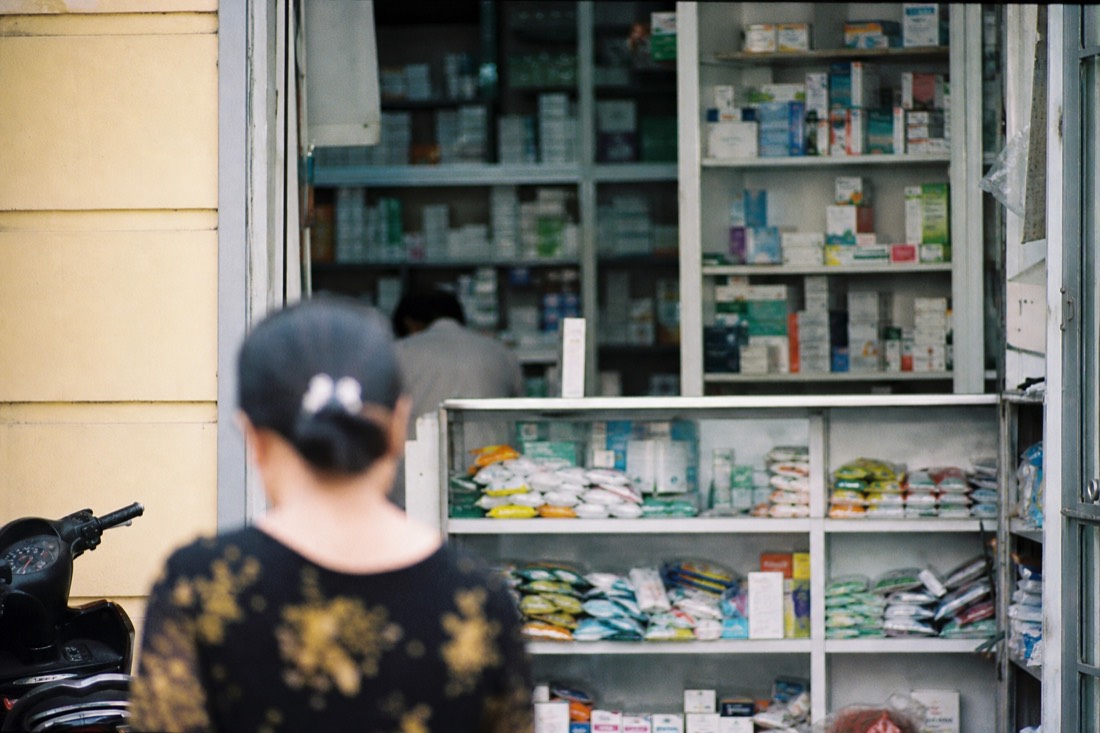
Perspective matters here. Even careful eaters occasionally catch something, at street stalls and hotel buffets alike, and the standard case is unpleasant rather than dangerous. Pharmacies are everywhere in the Old Quarter and stock rehydration salts cheaply. Skip street food for a day, eat plain rice porridge, and you will usually be back on the stools within 48 hours.
| Situation | Where to go | Typical cost |
|---|---|---|
| Mild upset, no fever | Pharmacy: rehydration salts, rest | Trivial |
| Persistent symptoms | Private clinic with English-speaking staff | 800,000-1,500,000 VND per visit |
| High fever, blood, dehydration | Hanoi French Hospital, 24-hour emergency | Direct billing with major insurers |
Note what those clinic numbers mean in context: roughly 30 to 60 US dollars at current rates for a private consultation. Travel insurance still makes sense, but a stomach bug in Hanoi is not a financial emergency. For the scam-shaped risks that actually cost tourists more money than food ever does, see what to avoid in Hanoi, and for what everything should cost, the food price guide keeps you oriented.
Is street food in Hanoi safe for tourists?
Broadly yes, with basic habits. Choose busy stalls where food is cooked hot to order, drink only bottled or boiled water, and be thoughtful about ice and raw herbs. These rules follow CDC traveler guidance, and the dishes visitors most want, pho, bun cha, grilled meats, are served at temperatures that make them low risk. Millions of residents eat this way daily.
Can you brush your teeth with tap water in Hanoi?
Cautious travelers use bottled water for brushing, which matches the conservative end of official guidance since tap water in Hanoi is not treated to drinking standard. Many visitors do use tap for brushing without issues, but on a short trip the bottled habit costs almost nothing, so most safety-minded travelers simply keep a bottle by the sink.
Is it safe to eat pho from a street stall?
Pho is one of the safest street dishes in Hanoi. The broth sits at or near a rolling boil all day, noodles and meat are dunked in it to order, and busy pho counters turn ingredients over within hours. If you are cautious about the raw garnishes, dunk herbs into the hot broth for several seconds or skip them entirely.
Should you avoid ice in drinks in Vietnam?
Not as a blanket rule. Nearly all cafes and drink stalls use factory ice made from treated water, recognizable as cylinders with a hole through the middle. That ice is fine. Reserve caution for crushed ice of unknown origin at very informal setups, and when in doubt order the hot version of your drink instead.
What is the safest way to try street food on a first night?
Take a guided food tour on your first evening. Guides eat at the same handful of stalls daily and drop any that slip, so you inherit a vetted list immediately, then revisit those stalls on your own for the rest of the trip. Small group tours in Hanoi run about three hours and price in the tens of dollars.
Your next Hanoi experience
Check your date before planning the rest of the day
Private Old Quarter food walk
Explore the Old Quarter with a guide dedicated to your own party.
Old Quarter pickup or 38 Bat Su. Tastings included. Confirm specific dietary and access needs before booking.
An editorial starting point. Confirm your party’s requirements with the operator.
Choose a date to see scheduled departures. Final availability and price are confirmed on Viator.
No verified option fits those requirements. Adjust your choices or reset to explore the general recommendations.
Compare options, fit your schedule & check your budget
Private Old Quarter food walk · 3h. Explore the Old Quarter with a guide dedicated to your own party. Old Quarter pickup or 38 Bat Su. Tastings included. Confirm specific dietary and access needs before booking.
Small-group Hanoi food walk · 3h. Taste a changing selection of Hanoi dishes with a local guide in a group of up to eight. Old Quarter pickup; otherwise 41 Luong Van Can. Food tastings and a drink included. Menu varies; dietary requests need advance confirmation.