What to Eat in Hanoi: The 10 Dishes That Define the City
Ten dishes, a handful of legendary shopfronts, and the real prices you should pay, drawn from verified 2026 listings and the stalls Hanoians still queue for.
 Written with Mai Trần, Hanoi food tour guide and culinary specialist
Short answer
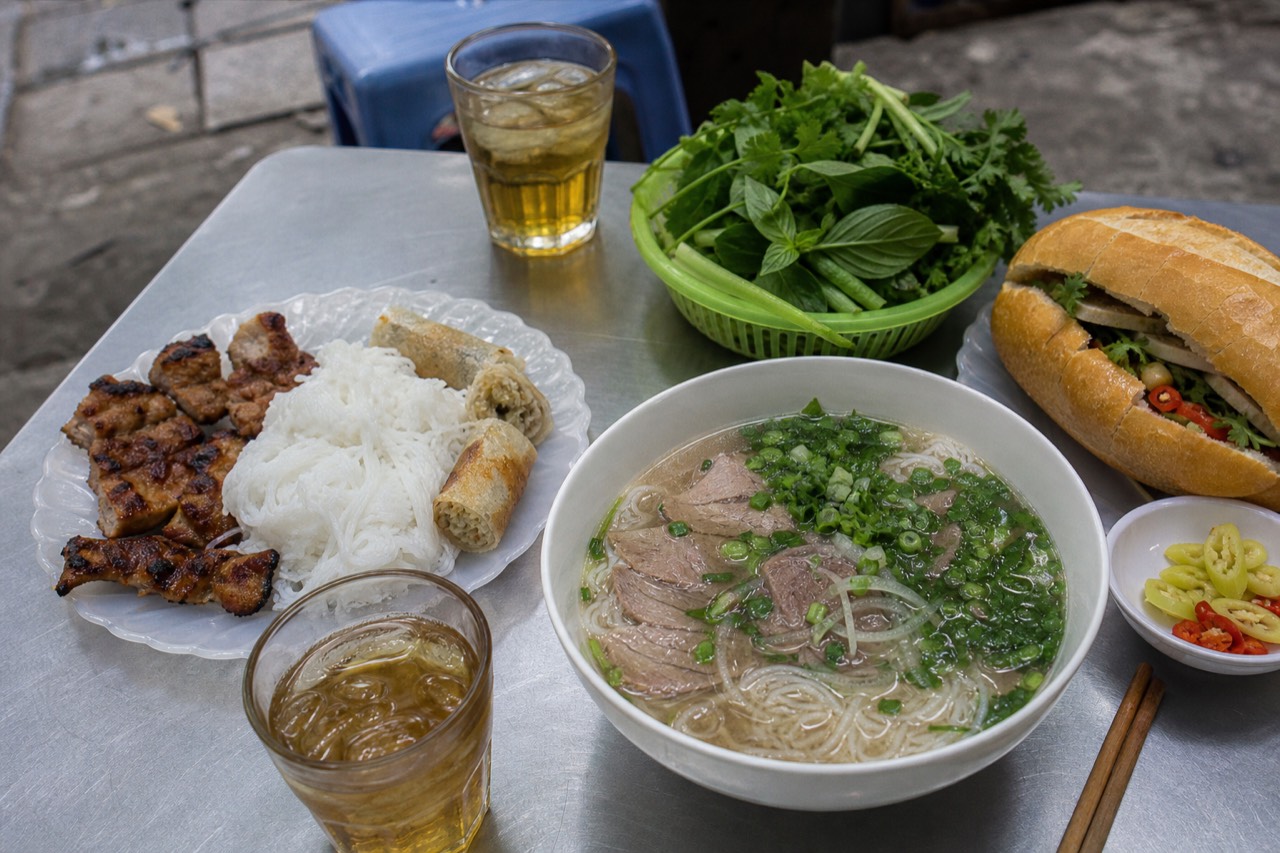
Hanoi's essential dishes are pho bac (beef noodle soup in a clear, restrained broth), bun cha (grilled pork with noodles, a Hanoi original), banh mi, banh cuon steamed rice rolls, cha ca turmeric fish, egg coffee, che sweet soups, and bia hoi draft beer. Street portions run roughly 20,000 to 90,000 VND, about $1 to $3.60. Start with morning pho, eat bun cha at lunch, and finish on a plastic stool with bia hoi.
By 6:30 in the morning the queue outside 49 Bat Dan Street is already spilling past the neighbouring shopfronts. Pho Gia Truyen ladles beef pho at that address in two windows only, 6 to 11 in the morning and 5 to 9 at night, and a bowl costs 60,000 to 80,000 VND. That queue is the fastest lesson in how this city eats: one dish per shop, perfected over generations, sold at prices that rarely pass three dollars.
What food is Hanoi famous for?
Hanoi is famous for pho bac, the northern original of Vietnam's beef noodle soup, and for bun cha, charcoal-grilled pork patties served with noodles and a dipping broth. Around those two sit banh mi, banh cuon, cha ca turmeric fish, egg coffee, che sweet soups, and bia hoi, the cheapest fresh draft beer anywhere.
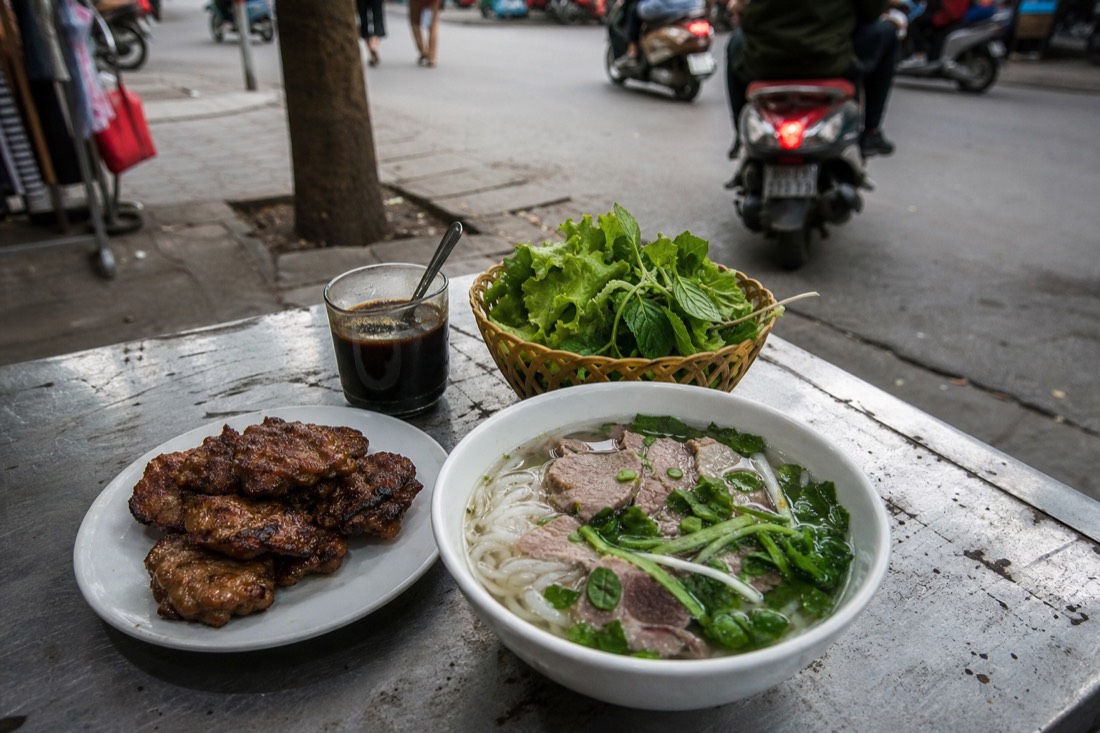
The city's food identity is built on restraint. Northern cooking uses less sugar and fewer garnishes than the south, and it shows in every bowl. Hanoi pho arrives with a clear broth and almost nothing on the side. No plate of bean sprouts, no hoisin squeezed over the top. The kitchen decided the flavour already.
That confidence has been getting outside recognition. The Michelin Guide has covered Vietnam since 2023, and the 2026 selection announced on June 4 gave Hanoi four One-Star restaurants and 23 Bib Gourmands, with Gia, Hibana by Koki, ONVIT and Tam Vi holding the stars. The Bib Gourmand list is where the street classics live.
Here is how the Hanoi versions differ from what you may have eaten elsewhere:
| Dish | The Hanoi way | What changes in the south |
|---|---|---|
| Pho | Clear, restrained broth; no bean sprouts or hoisin on the table | Sweeter broth with plates of sprouts, extra herbs and sauces |
| Bun cha | Born in Hanoi; charcoal patties, sometimes pressed with betel leaf | Rare outside the north, and adapted where it appears |
| Egg coffee | Invented here in 1946 during a milk shortage | A novelty import in southern cafes |
| Cha ca | Turmeric fish grilled at the table, served on Cha Ca Street since 1871 | Essentially absent |
What are the must-try dishes in Hanoi?
Ten dishes cover the essentials: pho bac, bun cha, banh mi, banh cuon, cha ca, nom bo kho, banh goi, che, egg coffee, and bia hoi. All ten are street-level orders sold for between 10,000 and 200,000 VND, and nearly every one has a specific shop or street where Hanoians think it peaks.
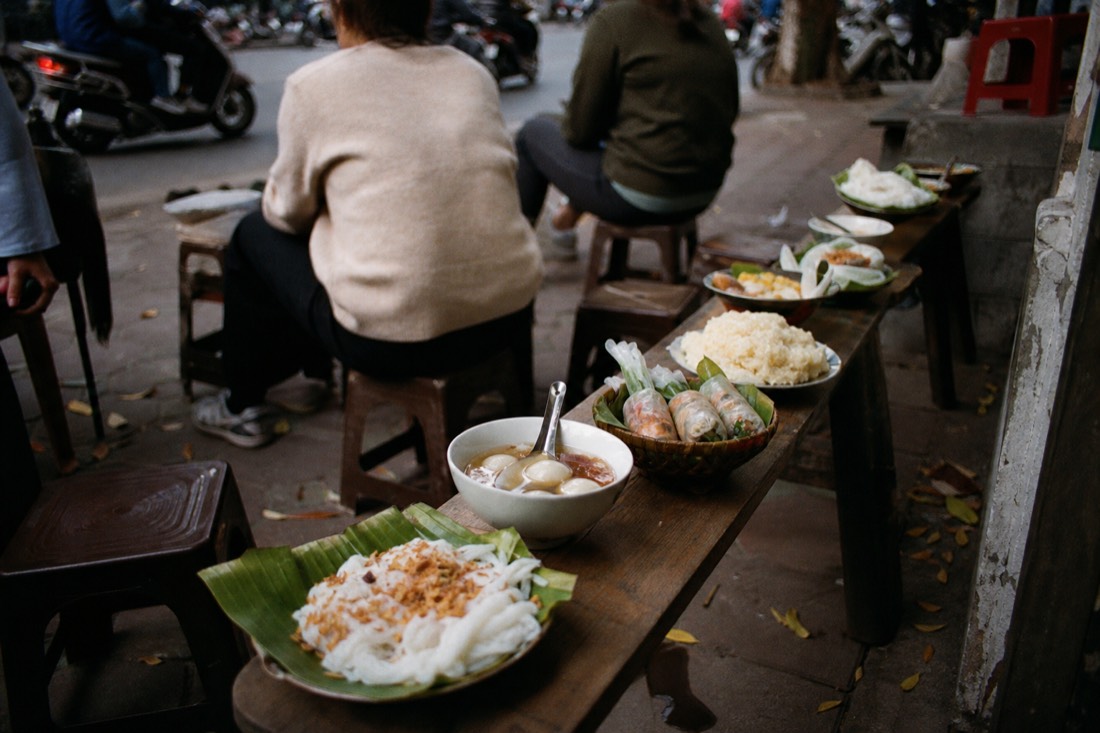
The top 10, in the order most visitors meet them:
| # | Dish | What it is | Where it peaks |
|---|---|---|---|
| 1 | Pho bac | Beef noodle soup, clear broth, flat rice noodles | Pho Gia Truyen, 49 Bat Dan |
| 2 | Bun cha | Grilled pork patties, cold noodles, dipping broth | Bun Cha Dac Kim, 1 Hang Manh |
| 3 | Banh mi | Crisp baguette with pate, cold cuts, pickles, herbs | Old Quarter carts, 20,000 to 40,000 VND |
| 4 | Banh cuon | Steamed rice rolls with minced pork and wood ear | Breakfast shops across the Old Quarter |
| 5 | Cha ca | Turmeric-marinated fish grilled tableside with dill | Cha Ca La Vong, 14 Cha Ca Street |
| 6 | Nom bo kho | Green papaya salad with dried beef | Evening snack stalls |
| 7 | Banh goi | Deep-fried "pillow" pastry with pork and mushroom | Afternoon street fryers |
| 8 | Che | Sweet soup of beans, jellies and coconut milk | Dessert counters, eaten late |
| 9 | Egg coffee | Whipped egg yolk cream over strong dark coffee | Cafe Giang, 39 Nguyen Huu Huan |
| 10 | Bia hoi | Fresh draft beer brewed for same-day drinking | Ta Hien Street, 10,000 to 15,000 VND a glass |
A few of these need context. Banh cuon is a breakfast dish, steamed to order from fermented rice batter so thin you can see the filling through it. Nom bo kho and banh goi are the snacks Hanoians eat standing up between meals; the small-group Eat Like a Local evening walk builds its route around exactly this tier of food, ten-plus tastings including both, plus che and bia hoi.
Egg coffee deserves its own stop. It was invented in 1946 by Nguyen Van Giang during a wartime milk shortage, whisked egg yolk standing in for condensed milk, and Cafe Giang at 39 Nguyen Huu Huan is still run by his family. A cup there costs 35,000 VND. If the drink hooks you, a dedicated coffee tasting session runs through six brewing styles in about three hours.
What is the signature dish of Hanoi?
Bun cha has the strongest claim to signature status: it was born in Hanoi, stays rare elsewhere in Vietnam, and it is the dish Anthony Bourdain chose when he brought Barack Obama to Bun Cha Huong Lien in May 2016. Pho bac is the icon, but bun cha is the local answer.
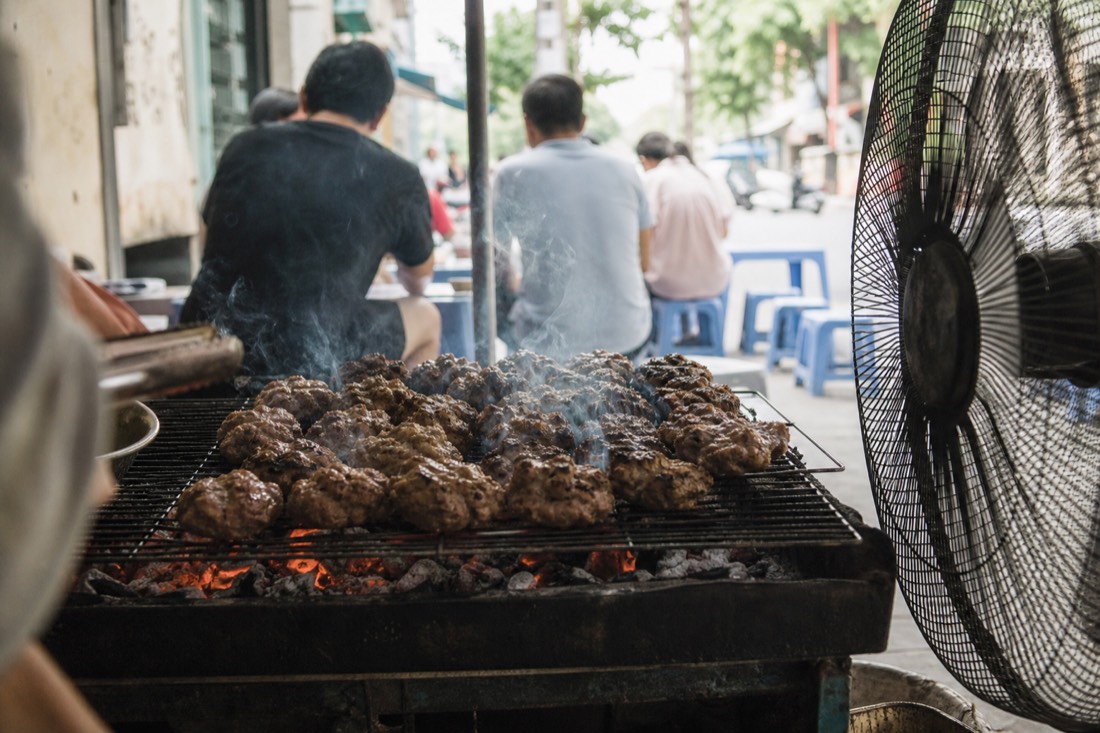
The dish is a lunch ritual. Pork patties and slices of belly come off a charcoal grill into a bowl of light, sweet-sour dipping broth with green papaya, and you pull cold bun noodles and herbs through it. Bun Cha Huong Lien holds a Michelin listing and still serves the Obama Combo for around 100,000 VND, the same beer-and-bun-cha order from that 2016 dinner.
Locals will complicate the story for you. Many rate Bun Cha Dac Kim at 1 Hang Manh above the famous one, at 70,000 to 90,000 VND for a full set, and its grill only runs from 10:30 to 3. The full pilgrimage, both shops included, is mapped in the guide to where Obama and Bourdain actually ate.
How much does eating in Hanoi cost?
Street dishes in Hanoi cost 20,000 to 90,000 VND, roughly $0.80 to $3.60 at 2026 rates of 25,000 to 26,000 VND per dollar. Bia hoi runs 10,000 to 15,000 VND a glass. Even destination restaurants like Cha Ca La Vong stay near 200,000 VND per person.
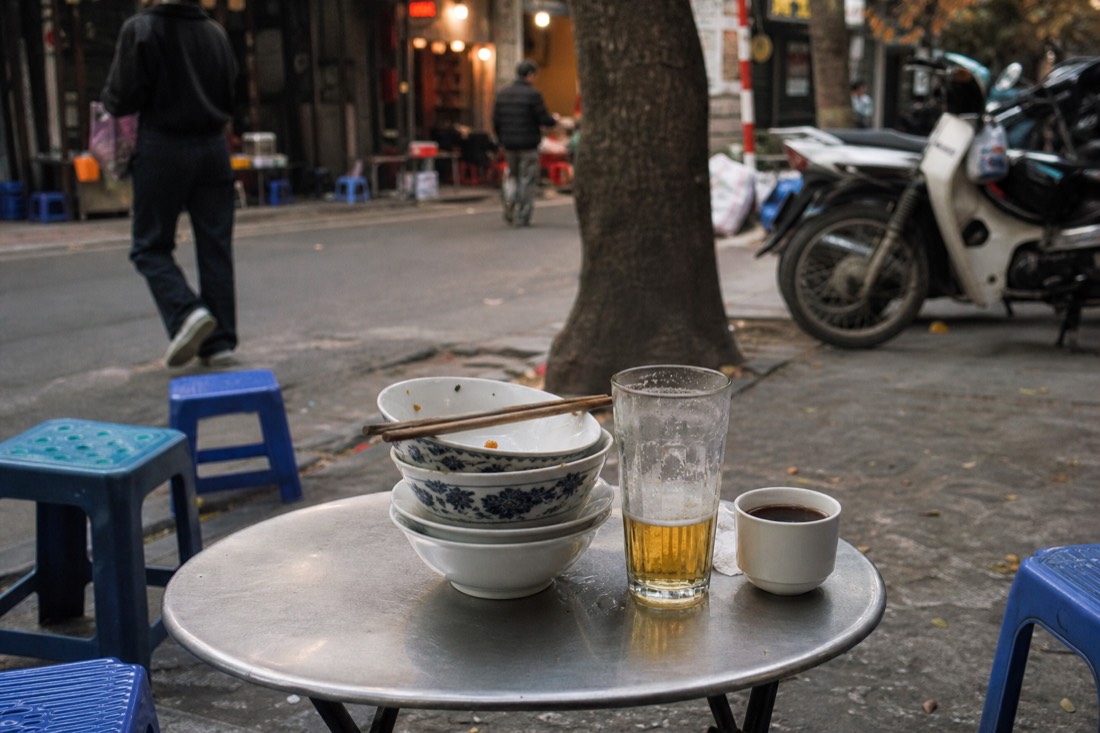
The 2026 street prices, in one place:
| Item | 2026 price (VND) | Approx. USD |
|---|---|---|
| Pho, typical street bowl | 40,000 to 60,000 | $1.55 to $2.40 |
| Pho at Pho Gia Truyen, Bat Dan | 60,000 to 80,000 | $2.30 to $3.20 |
| Bun cha, typical | 40,000 to 80,000 | $1.55 to $3.20 |
| Full set at Bun Cha Dac Kim | 70,000 to 90,000 | $2.70 to $3.60 |
| Banh mi | 20,000 to 40,000 | $0.80 to $1.60 |
| Egg coffee | 30,000 to 45,000 | $1.15 to $1.80 |
| Bia hoi, per glass | 10,000 to 15,000 | $0.40 to $0.60 |
| Obama Combo at Huong Lien | ~100,000 | ~$4 |
| Cha Ca La Vong, per person | ~200,000 | ~$8 |
Carry small notes. Stalls quote in thousands, and nobody wants to break a 500,000 note for a 25,000 banh mi. Tipping is not expected at street level; rounding up is appreciated, and 5 to 10% is normal only in sit-down restaurants.
Which Hanoi dishes are easy to start with, and which take nerve?
Most of the famous list is gentle: grilled pork, rice noodles, a pate baguette, sweet coffee. The nerve arrives later, with the shrimp paste on the cha ca table, the vinegar-sharp dried beef salad, and sweet soups served in colours no savoury eater expects. Nothing in the classic ten is extreme.
The reputation of Vietnamese street food as a test of courage comes from other cities and other dishes. Hanoi's core menu is built on pork, rice and herbs, cooked over charcoal or in broth, and a nervous eater can work through most of the ten without meeting anything stranger than an unfamiliar texture. The genuine adjustments are about intensity rather than ingredients: fermented condiments on the side, herbs eaten raw by the fistful, and sweets that use beans where a European palate expects fruit.
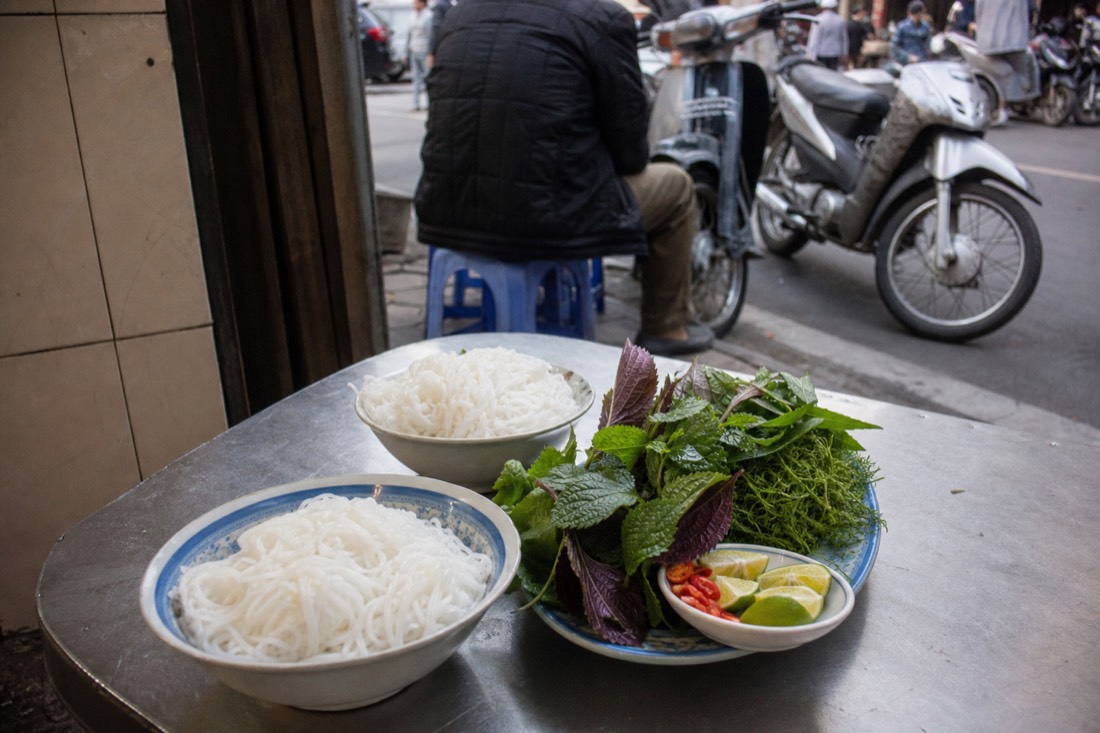
This ladder is our own ordering, not a published ranking.
| Dish | How it lands on day one | The part that surprises people |
|---|---|---|
| Banh mi | Easy start | How restrained the filling is next to overseas versions |
| Pho bac | Easy start | The plainness; the kitchen seasons the bowl, not you |
| Bun cha | Easy start | It is a dipping bowl to pull noodles through, not a soup to drink |
| Banh goi | Easy start | Nothing at all, which is why it converts sceptics |
| Banh cuon | Middle ground | The slippery texture of steamed rice sheets |
| Kem xoi | Middle ground | Ice cream served over warm sticky rice |
| Che | Middle ground | Sweet beans and jellies as dessert |
| Nom bo kho | Middle ground | Vinegar and dried beef, sharper than it looks |
| Cha ca | For the curious | The fermented shrimp paste offered alongside |
| Bia hoi | Easy start | Light and brewed for same-day drinking, so it is a session, not a hit |
The snack tier in the middle of that table is the part independent eaters skip, because it has no famous address attached. That is exactly the tier a guided evening exists to cover, and the small-group tasting walk built around ten-plus stops leans on it heavily. What to be genuinely careful about, as opposed to merely unfamiliar, sits in the what to avoid guide.
What should you eat with one day in Hanoi, or three?
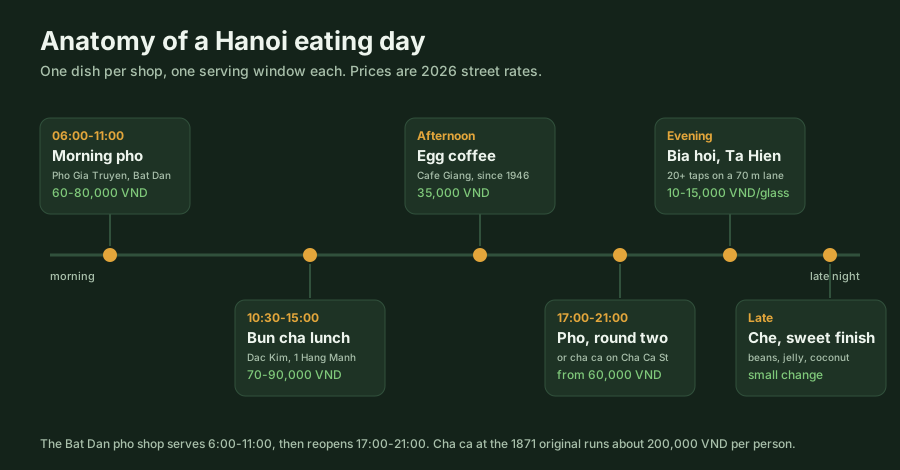
One day: pho at breakfast, bun cha at lunch, egg coffee mid-afternoon, bia hoi after dark. Two days adds banh cuon and a cha ca dinner. Three days reaches the snack tier, nom bo kho, banh goi and che, and still leaves a second pho window free for the shop you liked best.
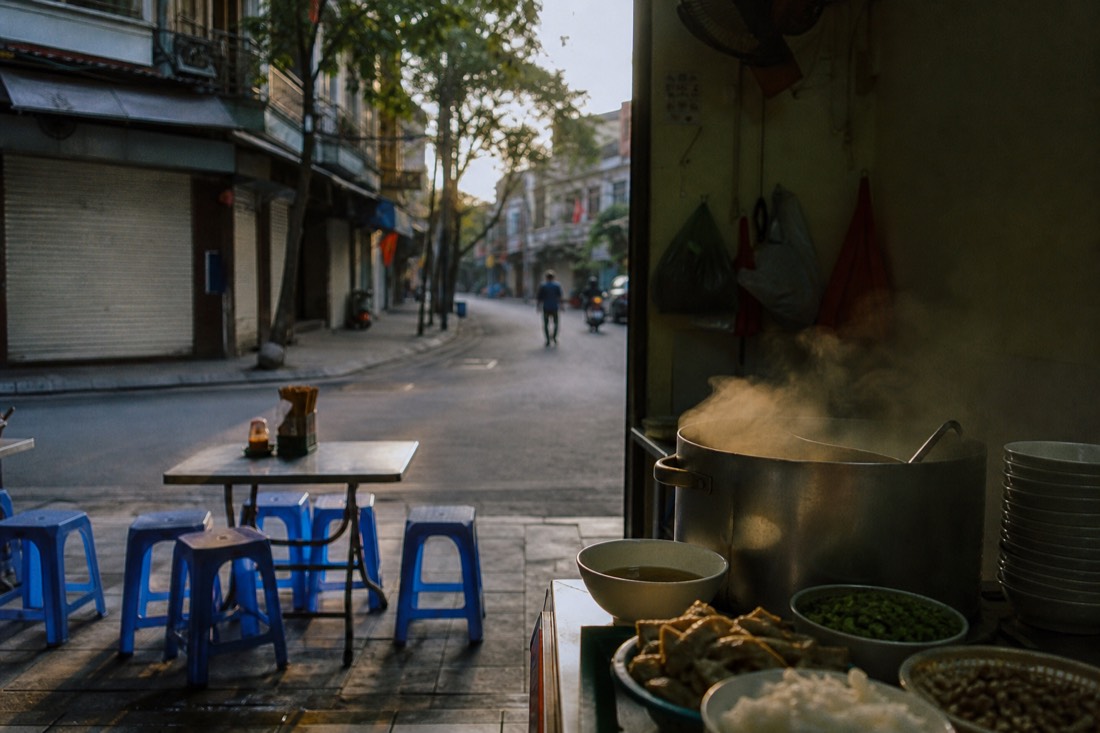
Trip length changes the strategy more than the list. On a single day the goal is coverage of the icons, which means accepting the serving windows and building around them: pho before 11, bun cha between 10:30 and 3, and the evening loose. Two days lets you split breakfast between pho and banh cuon and gives up one evening to a sit-down meal, usually cha ca at around 200,000 VND per person, the only dish here that behaves like a restaurant.
Three days is where Hanoi opens up. You stop chasing landmarks and start eating the way locals graze: something fried in the afternoon, a sweet cup, a bowl of noodles you did not plan on. It is also long enough to repeat a dish at a second address and understand why people argue about them.
These are planning allowances we use when pacing a trip's eating, not published figures.
| Trip length | Morning | Midday | Afternoon | Evening |
|---|---|---|---|---|
| One day | Pho bac before 11 | Bun cha, 11 to 1 | Egg coffee, cafe row | Bia hoi and grilled snacks |
| Two days | Add banh cuon on day two | Repeat bun cha or a rice plate | Banh goi from an afternoon fryer | Cha ca dinner, sit down |
| Three days | Second pho window at a rival shop | Market grazing near Dong Xuan | Nom bo kho and che | Bia hoi again, later and slower |
The compressed version of that, hour by hour with addresses, is the Hanoi food itinerary. If the trip lands between June and August, plan more indoor cafe time: those months run hot, humid and wet, and eating outdoors at 35C is its own discipline.
Which Hanoi dishes disappoint visitors, and why?
The complaints repeat: pho tastes plain, egg coffee is too rich, cha ca feels expensive against street prices, and bun cha eaten at 5 pm is a reheated imitation. Each is a mismatch between expectation and the way Hanoi actually cooks, not evidence of a bad shop.
Hanoi's food is regional, and the region is restrained. Northern kitchens use less sugar, fewer garnishes and a lighter hand with chilli than the south, so a visitor whose reference point is a Saigon-style bowl overseas will read the original as under-seasoned. The fix is almost never to add sauce. It is to eat the dish at the hour it was built for, at a shop still turning over its pot.
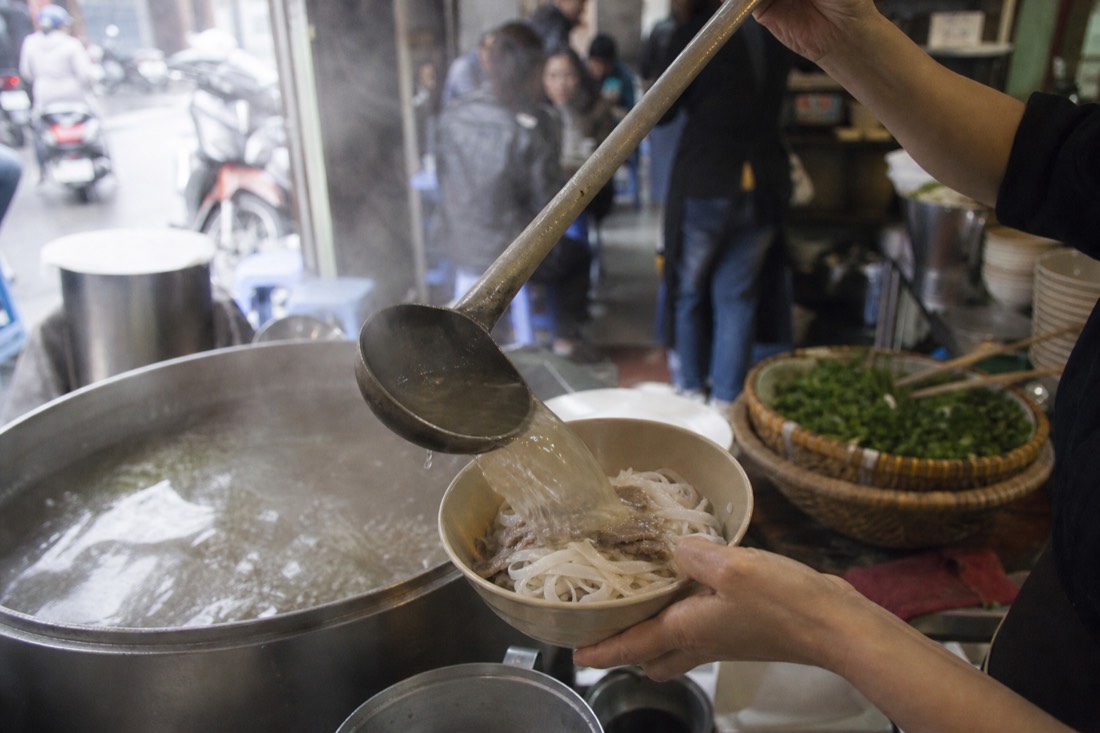
Timing explains most of the rest. The benchmark shops sell one dish in one window, so the version available at an off hour is by definition not the version people rave about. Price complaints follow a similar logic: street dishes sit at 20,000 to 90,000 VND, and a 200,000 VND restaurant meal only feels steep because it is being compared against a 40,000 VND bowl rather than against dinner anywhere else.
| The complaint | What is actually happening | The fix |
|---|---|---|
| Pho tastes bland | Northern restraint; the broth is seasoned in the pot, no sprouts or hoisin on the table | Eat it between 6 and 8 am, when the pot is freshest |
| Egg coffee is too heavy | It is closer to dessert than to a caffeine hit | One cup between two, sipped slowly, not gulped as breakfast |
| Bun cha was disappointing | Eaten after 3 pm, when the benchmark grills have stopped | Treat 11 to 1 as the only real window |
| Cha ca feels expensive | Around 200,000 VND per person, a sit-down destination meal, not street food | Budget it as your one restaurant dinner |
| Banh mi was ordinary | Bought at a transit cart instead of a busy Old Quarter counter | Choose the cart with the queue, at 20,000 to 40,000 VND |
| Bia hoi tastes thin | Brewed for same-day drinking at 10,000 to 15,000 VND a glass | Drink it cold, early, and by the glass |
Two of these are worth a deeper look. Why the northern bowl is built the way it is gets unpacked in the pho guide, and the wartime origin that made egg coffee a dessert drink in the first place runs through the egg coffee guide.
How does a local guide order for two people?
Order fewer dishes than you think, and share nearly all of them. Two people eating across an evening do far better with a shared opener and a chain of small stops than with a full portion each at the first stall. The exception is breakfast pho, which nobody should split.
I am Mai Trần. I have guided food walks in Hanoi since 2015, more than a thousand travellers by my own count, and the single mistake I correct most often is portion size at the opening stop. Street servings here are not small. A full bun cha set is a meal, not a taster, which is why the local habit is to order one and pick.
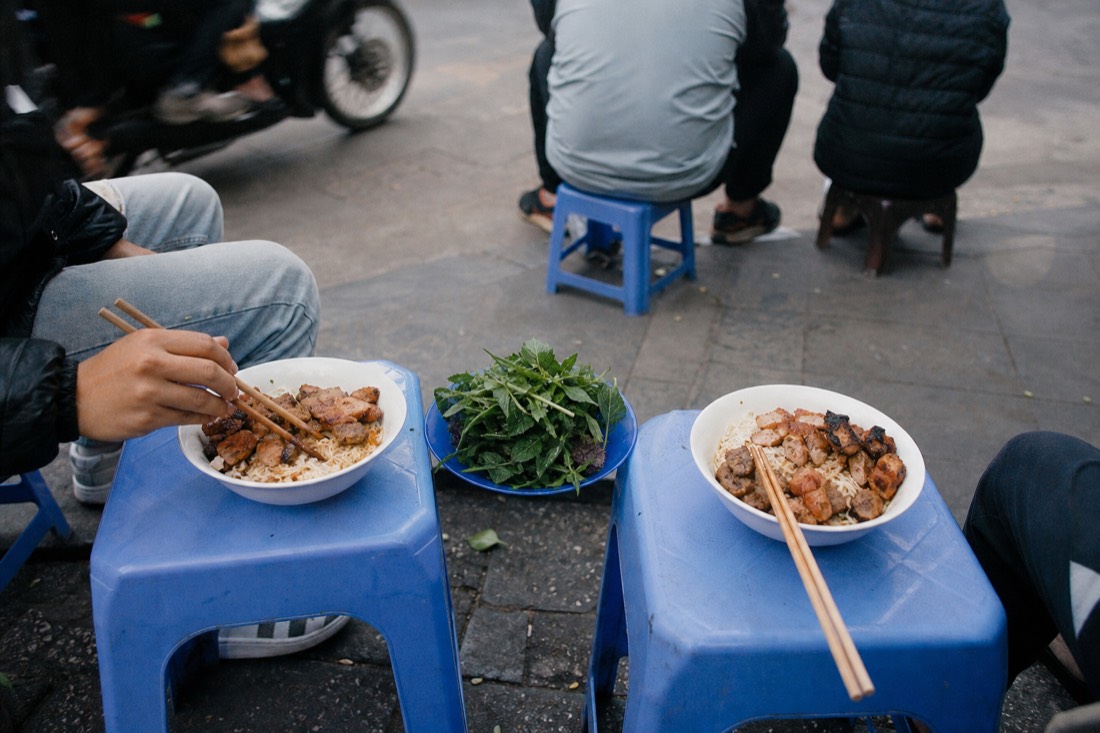
There is one dish I never split: breakfast pho. Noodles soften fast in hot broth and a shared bowl is a sad bowl by the second minute. Everything else is fair game, and the fried snacks are better shared anyway, because they arrive hot in twos and threes and go soft if you sit on them.
Water matters more than people expect in this climate. I order bottled water at every stop, partly for the heat and partly because it keeps the pace honest. Herbs I treat by turnover: at a packed shop I eat everything on the plate, at a quiet counter I leave the raw leaves alone. That habit tracks the standard travel guidance on food and water in Vietnam, and it has kept a decade of guests upright.
These are planning allowances I use when pacing a meal for two, not published figures.
| Course | What I order for two | Why |
|---|---|---|
| Opener | One bun cha set, two sets of chopsticks | It is a full meal; splitting keeps appetite alive |
| Snack | Two or three fried pieces | They come hot in small numbers and go soft quickly |
| Bowl | One pho each, never shared | Noodles soften in the broth within minutes |
| Coffee | One egg coffee each, plus water | Rich enough that a shared cup satisfies nobody |
| Dessert | One che each | Small cups, and everyone wants their own colour |
| Drinks | One glass of bia hoi at a time | It is poured fresh; ordering ahead means warm beer |
If you want the same dishes cooked rather than bought, a market-basket cooking session with a local kitchen covers the shopping first, which is where most of the useful knowledge actually lives.
What is the easiest way to eat through this list?
A guided evening walk clears six or more of the ten dishes in three to four hours, with someone else picking the stalls and translating the orders. The rest, morning pho and a bun cha lunch above all, are easy solo missions once you know the shop names and their serving windows.
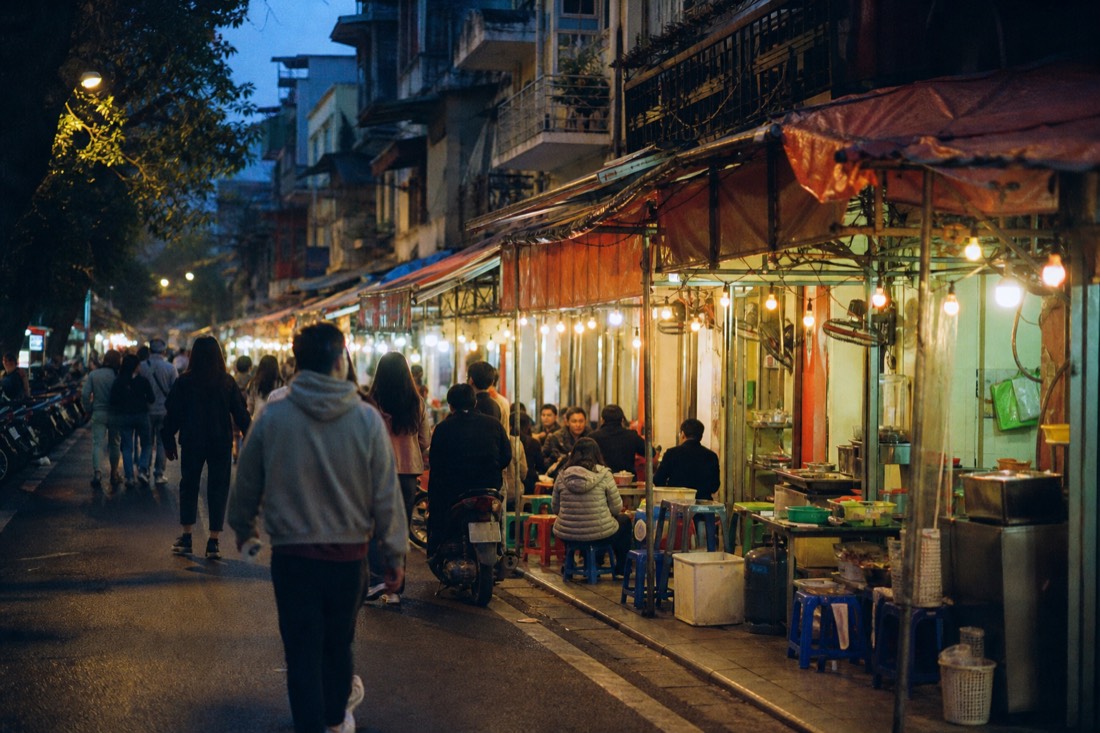
The scheduling matters more than people expect. The classic shops sell one dish in one window and then close, so a plan beats wandering. Morning belongs to pho and banh cuon. Bun cha is strictly a lunch order. Egg coffee fills the afternoon, and the evening splits between cha ca, a second pho window, and bia hoi on the pavement. How that plays out across the famous streets is covered in the street food guide and the Old Quarter deep dive.
If you would rather cook the list than just eat it, market-basket cooking classes run about four hours and usually cover two or three of the ten dishes, shopping included.
What is the number one food to try in Hanoi?
Pho bac, the northern original of beef noodle soup, eaten at breakfast. The benchmark bowl is at Pho Gia Truyen, 49 Bat Dan, for 60,000 to 80,000 VND during its morning window. If you only have one meal beyond that, make it bun cha at lunch, the dish that was actually born in Hanoi.Is pho from Hanoi or Saigon?
Pho is northern. The Hanoi style, pho bac, is the older form: clear broth, flat noodles, minimal garnish, no bean sprouts or hoisin on the table. The southern version came later and is sweeter and more heavily garnished. Eating pho in Hanoi is eating the dish closest to its origin.How much money do you need per day for food in Hanoi?
Street eaters do fine on 200,000 to 400,000 VND a day, about $8 to $16: pho for breakfast (40,000 to 60,000), bun cha lunch (40,000 to 80,000), an egg coffee (30,000 to 45,000), dinner and a couple of bia hoi glasses at 10,000 to 15,000 each. A cha ca splurge adds around 200,000 per person.What is the Obama Combo?
Bun cha, a fried seafood roll and a Hanoi beer, the order Barack Obama and Anthony Bourdain shared at Bun Cha Huong Lien in May 2016. The restaurant, now Michelin-listed, still serves it for around 100,000 VND. Locals often prefer the bun cha at Dac Kim on Hang Manh.Do you tip at food stalls in Hanoi?
No. Tipping is not expected at street stalls, and handing back a small overpayment usually gets refused. Rounding up is a polite gesture. In sit-down restaurants 5 to 10% is appreciated but optional, and guides on food walks are commonly tipped 100,000 to 200,000 VND for a good day.Your next Hanoi experience
Check your date before planning the rest of the day
Small-group Hanoi food walk
Taste a changing selection of Hanoi dishes with a local guide in a group of up to eight.
Old Quarter pickup; otherwise 41 Luong Van Can. Food tastings and a drink included. Menu varies; dietary requests need advance confirmation.
An editorial starting point. Confirm your party’s requirements with the operator.
Choose a date to see scheduled departures. Final availability and price are confirmed on Viator.
No verified option fits those requirements. Adjust your choices or reset to explore the general recommendations.
Compare options, fit your schedule & check your budget
Small-group Hanoi food walk · 3h. Taste a changing selection of Hanoi dishes with a local guide in a group of up to eight. Old Quarter pickup; otherwise 41 Luong Van Can. Food tastings and a drink included. Menu varies; dietary requests need advance confirmation.
Rose Kitchen market and cooking class · 4.5h. Shop at a local market, cook a selected Vietnamese menu and share the meal in a garden-villa kitchen. Allow 4–4.5 hours depending on option. Menu choices vary; pho or bun cha must be selected. Check pickup option. Vegan menu available by arrangement.