Egg Coffee in Hanoi: The 1946 Invention, Cafe Giang, and Where to Drink It
A whipped egg yolk, condensed milk, and strong robusta coffee: Hanoi's most famous drink was born from a shortage, not a recipe book. Here is the history, the method, and the two family cafes that still own it.
 Written with Mai Trần, Hanoi food tour guide and culinary specialist
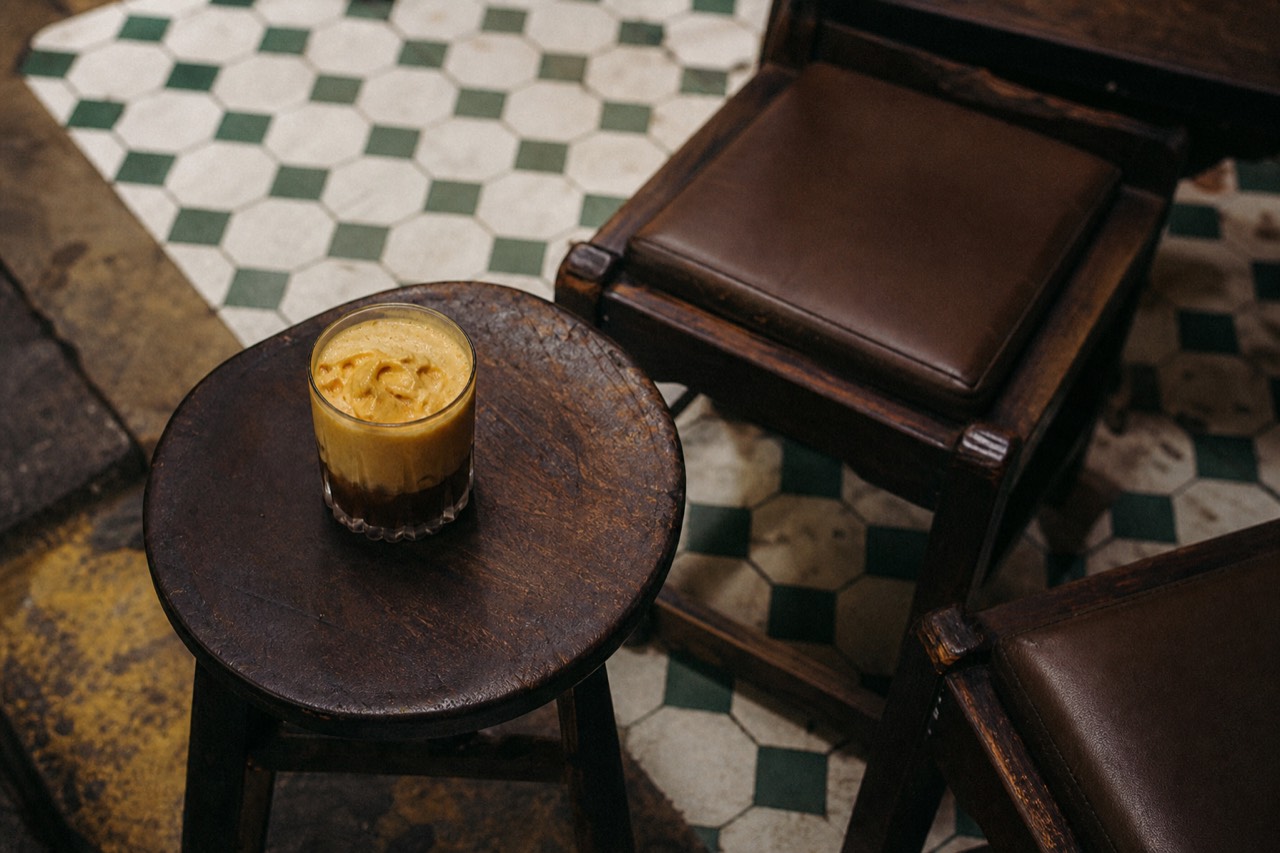
Short answer
Egg coffee, ca phe trung, is a Hanoi drink of hot robusta coffee topped with a thick cream of egg yolk whipped with sweetened condensed milk. Nguyen Van Giang invented it in 1946 during a wartime milk shortage. His family still serves the original at Cafe Giang, 39 Nguyen Huu Huan, and a cup around town costs 30,000 to 45,000 VND.
Order an egg coffee at 39 Nguyen Huu Huan and it arrives sitting in a small bowl of hot water, like a soft-boiled egg being kept warm. The cup holds two distinct layers: black robusta below, a dense golden foam above that tastes closer to liquid tiramisu than to anything involving breakfast. The bowl-of-water trick is original equipment. So is the recipe, which has not meaningfully changed since 1946.
This guide covers what the drink actually is, the shortage that created it, how the layers are built, and where in Hanoi to drink the real thing without paying tourist prices.
What is egg coffee?
Egg coffee, ca phe trung, is a Hanoi specialty of strong Vietnamese robusta coffee topped with a whipped cream of egg yolk and sweetened condensed milk. The yolk is beaten until thick and airy, so the top layer drinks like a warm custard foam rather than anything eggy. It comes hot or iced, and a cup costs 30,000 to 45,000 VND.
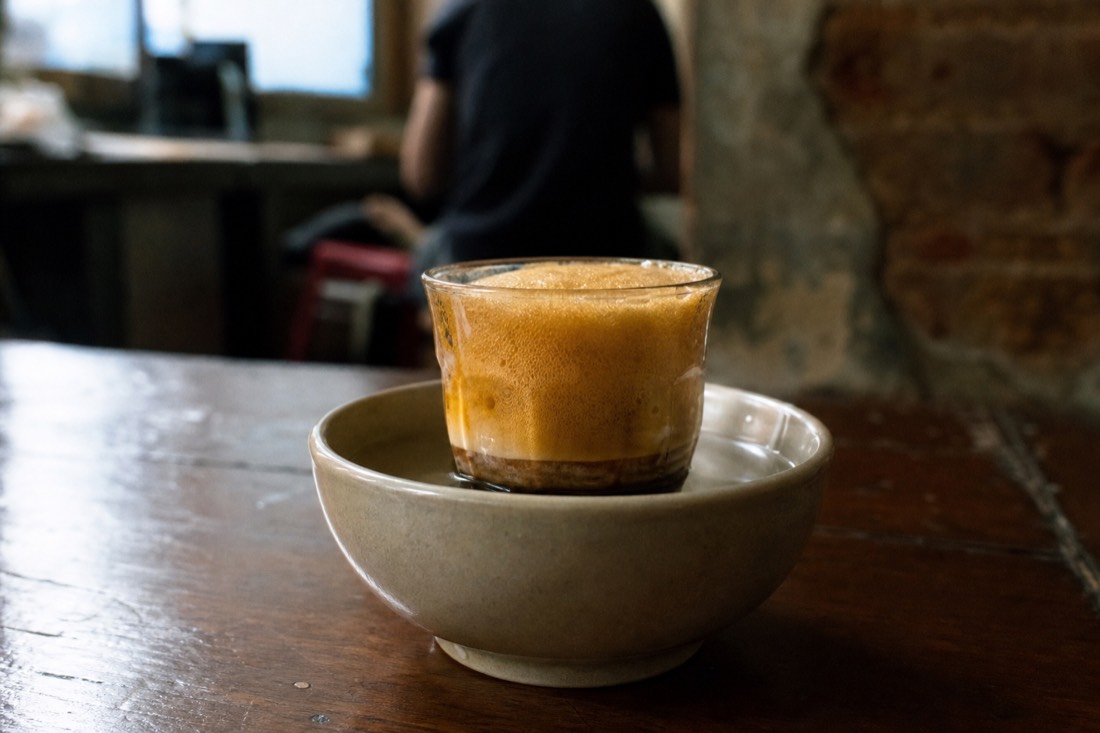
The texture is the whole game. Properly made, the foam is dense enough to sit on the coffee without mixing, and you drink through it so every sip carries bitter robusta and sweet cream at once. Hanoians treat it as a dessert as much as a coffee, an afternoon or after-dinner order rather than a morning jolt.
It belongs to a wider northern coffee tradition that grew up around condensed milk, because fresh dairy was scarce for most of the 20th century. Coconut coffee, yogurt coffee, and salted cream coffee are all branches of the same tree. Egg coffee is the oldest branch and the one with a birth certificate.
Who invented egg coffee?
Nguyen Van Giang, a bartender at Hanoi's Metropole hotel, invented egg coffee in 1946, when a wartime milk shortage left him without fresh dairy for cappuccino-style drinks. He whipped egg yolk with condensed milk as a substitute for steamed milk, and the improvisation outlived the shortage. He later opened his own cafe to serve it.
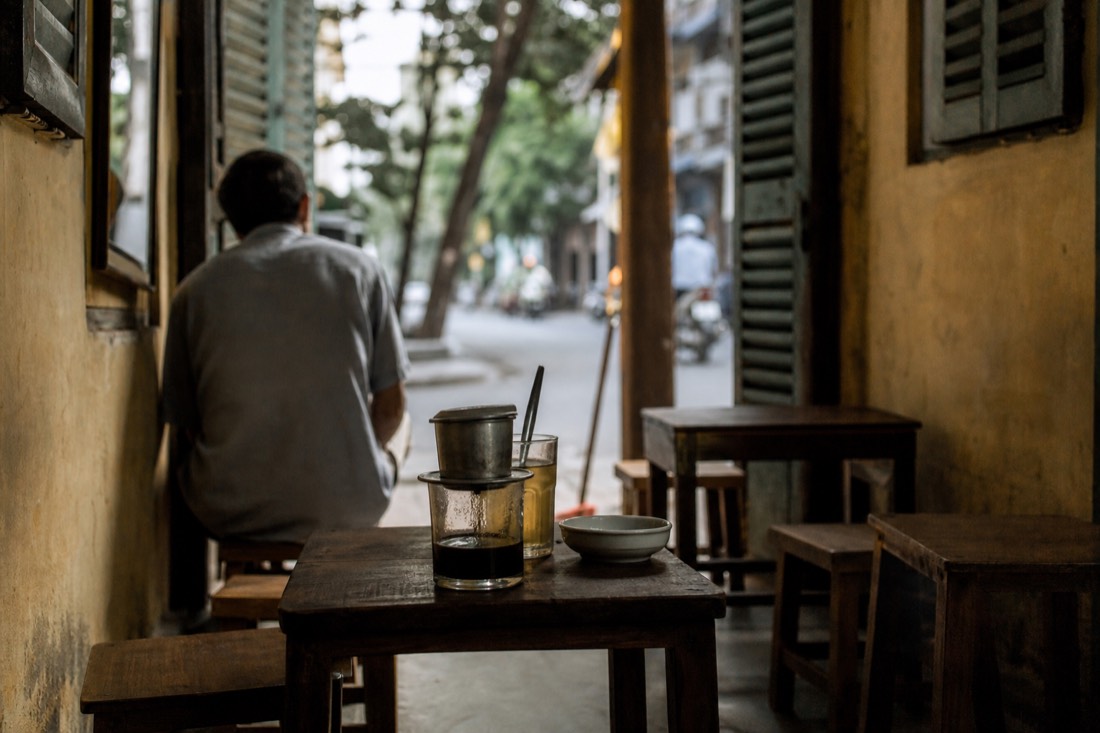
The origin story is well documented: Vietcetera's history of egg coffee traces the drink from Giang's Metropole experiment through the founding of Cafe Giang and the drink's spread across Vietnam. What began as a workaround became a signature, then a family business, then a city icon.
The family part matters for drinkers today, because the founder's children split the inheritance into two cafes rather than one. Cafe Giang at 39 Nguyen Huu Huan carries the name and the original recipe, run by one of Giang's sons after the founder's passing in 1987. His daughter opened Cafe Dinh the same year, a hidden second-floor room overlooking Hoan Kiem Lake, working from the same family method. Hanoi coffee people argue about which pours the better cup. Nobody argues about the lineage.
How is egg coffee made?
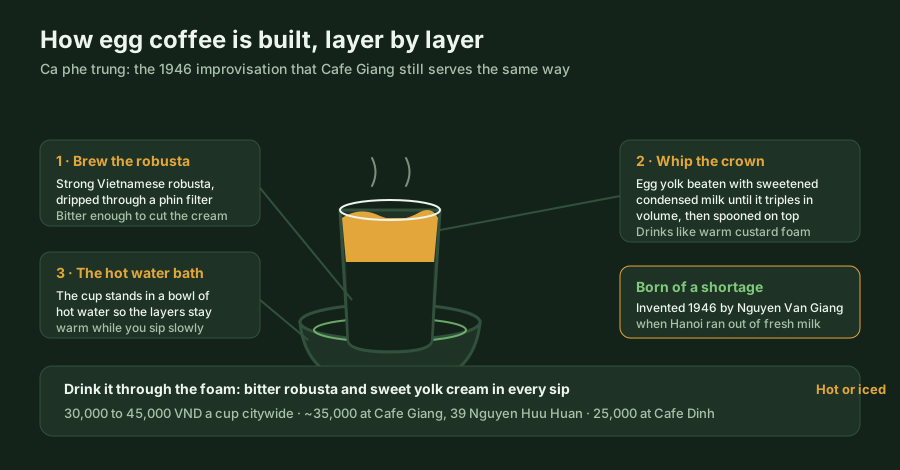
A shot of strong robusta is brewed through a phin filter into a small cup. Separately, egg yolk is whipped with sweetened condensed milk until it triples in volume and holds soft peaks, then spooned over the coffee. The cup is served standing in a bowl of hot water so the layers stay warm while you drink.
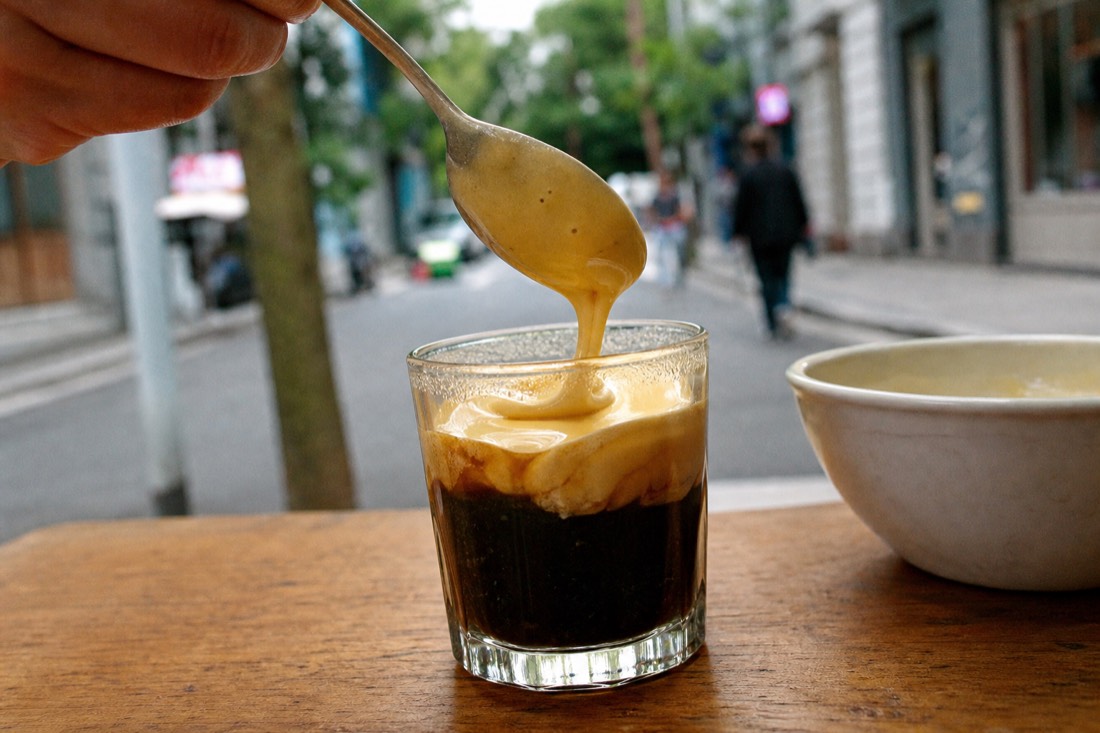
Each element earns its place. Robusta, the dominant Vietnamese bean, is bitter and strong enough to cut through the sweet foam; a mild arabica would drown. Condensed milk both sweetens and stabilises the yolk. The hot-water bath keeps the drink at temperature for the ten slow minutes it deserves, and it gently continues warming the yolk cream sitting on hot coffee.
On the raw egg question: the yolk is whipped rather than cooked through, though it sits on near-boiling coffee over a hot-water bath. The established family cafes run enormous daily volume, which is exactly the high-turnover signal the CDC's food and water safety guidance tells travellers to look for. Pick busy, long-established places for this drink and the risk calculus looks like any other cooked-adjacent street food.
Where should you try egg coffee in Hanoi?
Start at the source: Cafe Giang, 39 Nguyen Huu Huan in the Old Quarter, open 7am to 10pm, where the founder's recipe survives and a cup runs about 35,000 VND. The main rival is Cafe Dinh, the founder's daughter's second-floor cafe at 13 Dinh Tien Hoang, cheaper still at 25,000 VND.
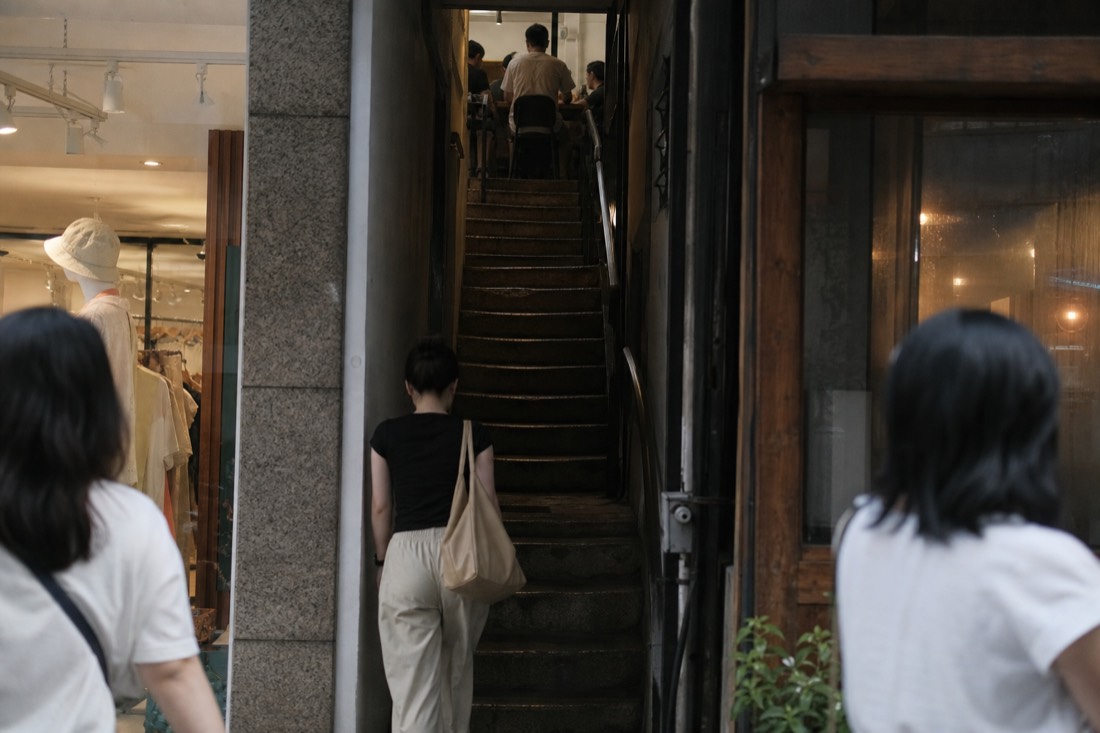
Both cafes are pilgrimage sites with unglamorous entrances: Giang down a narrow corridor, Dinh up a staircase past a family living space. That is part of the appeal. The Giang family has also expanded, with branches in LotteMall Tay Ho and on Trang Tien Street for those who want the original cup in newer surroundings.
| Cafe | Address | Family link | Price and hours |
|---|---|---|---|
| Cafe Giang (original) | 39 Nguyen Huu Huan | Run by the founder's son | ~35,000 VND; 7am to 10pm daily |
| Cafe Dinh | 2nd floor, 13 Dinh Tien Hoang | Founded 1987 by the founder's daughter, Mrs. Bich | 25,000 VND hot, 30,000 egg-cocoa; 7am to 10pm |
| Cafe Giang, LotteMall Tay Ho | 3rd floor, LotteMall Tay Ho | Family branch | 9:30am to 10pm |
| Cafe Giang, Trang Tien | 57 Trang Tien | Family branch | Hours vary by day |
Nguyen Huu Huan street itself is a coffee row on the eastern edge of the Old Quarter, an easy add-on to any Old Quarter food walk. Egg coffee has also become the standard closing act of Hanoi food tours: the Train Street food tour finishes with a cup at a track-side cafe, which pairs the drink with the spectacle covered in the Train Street guide.
How much does egg coffee cost?
Between 30,000 and 45,000 VND in 2026, which is roughly $1.20 to $1.80. The famous family cafes sit at or below the middle of that band: 25,000 VND at Cafe Dinh, about 35,000 at Cafe Giang. Hotel lounges and polished tourist cafes charge more for the same layers.
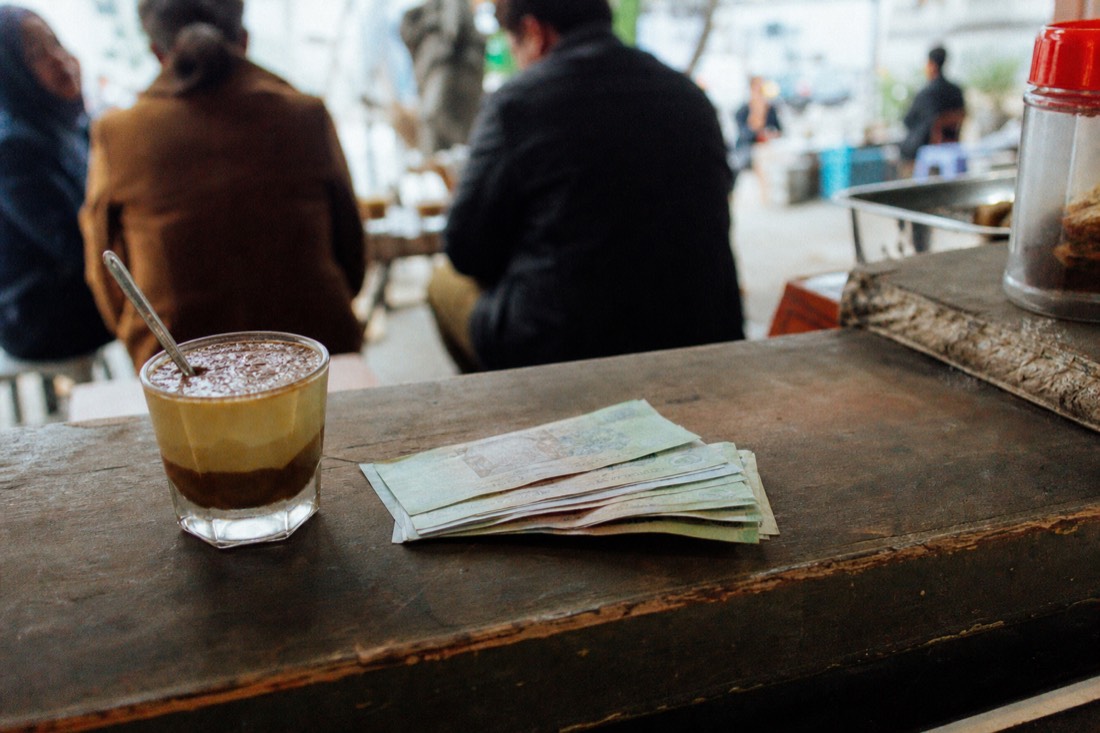
For a drink this famous, the price floor is remarkably low, and it slots neatly into a day of eating that rarely crosses $15 in total.
| Drink or snack | 2026 price (VND) | Approx. USD |
|---|---|---|
| Egg coffee, family cafes | 25,000 to 35,000 | $1.00 to $1.40 |
| Egg coffee, citywide range | 30,000 to 45,000 | $1.20 to $1.80 |
| Egg-cocoa version at Cafe Dinh | 30,000 | $1.20 |
| Bia hoi, per glass | 10,000 to 15,000 | under $0.60 |
| Banh mi alongside | 20,000 to 40,000 | $0.80 to $1.60 |
Conversions use the mid-2026 rate of roughly 25,000 to 26,000 VND per dollar. Where the drink fits in a full day's eating budget is mapped in the Hanoi food prices guide.
Is a coffee tour worth it, or should you just go to Cafe Giang?
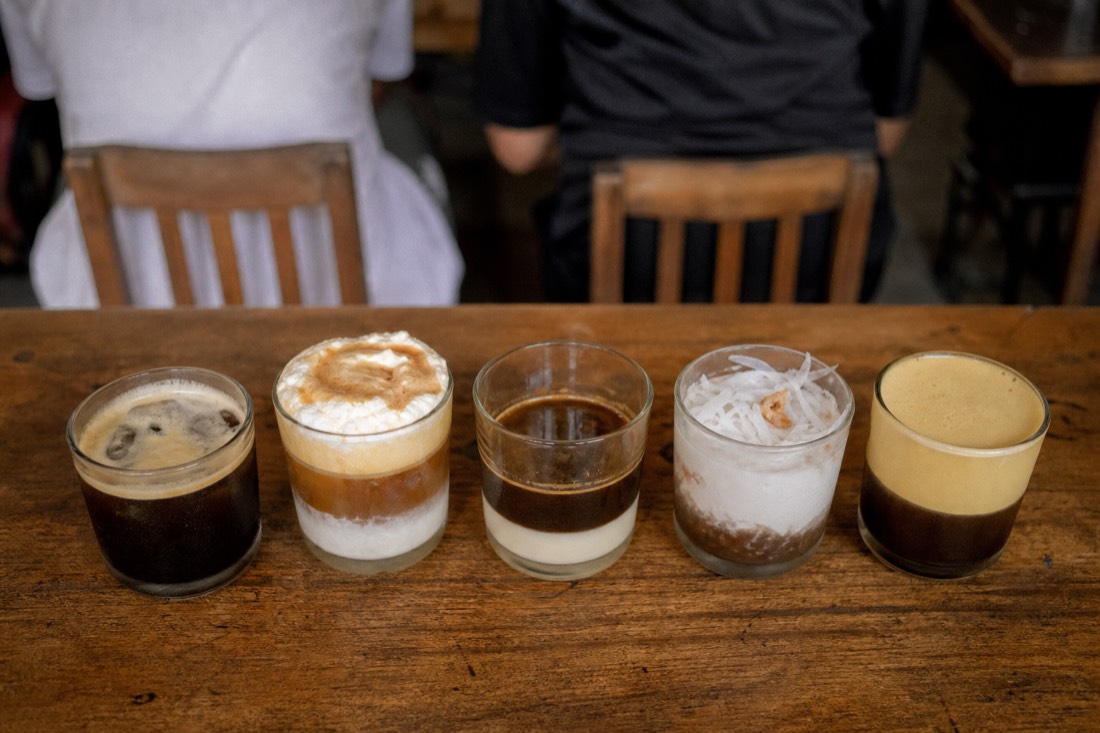
Do both if you care about coffee. The cafes give you the original cup for pocket change; a guided tasting gives you the whole Vietnamese coffee system in one sitting, from phin technique to the condensed-milk family of drinks, with someone explaining why robusta rules here. On a short trip, the tasting compresses a week of cafe-hopping into two hours.
| DIY cafe crawl | Guided coffee tasting | |
|---|---|---|
| Drinks covered | One or two cups per stop | 6 brews, 9 recipes, 3 liquor tastings |
| Time needed | An afternoon across several cafes | About 2 hours in one sitting |
| Cost | 25,000 to 45,000 VND per cup | Live price on the listing |
| What you learn | Whatever the menu reveals | Phin technique, bean styles, recipe logic |
| Best for | Slow wandering and people-watching | Understanding the whole coffee system fast |
Then go back to Nguyen Huu Huan the next afternoon and order the original with better-educated taste buds. It will still cost less than the croissant you skipped at the hotel.
What does egg coffee taste like?
Like a warm, boozeless tiramisu with a bitter backbone. The whipped yolk and condensed milk layer is sweet, dense, and custard-like, while the robusta underneath is strong and dark. Drunk together through the foam, the two balance each other. There is no eggy or sulphurous flavour in a properly made cup.
Who invented egg coffee and when?
Nguyen Van Giang, then a bartender at Hanoi's Metropole hotel, in 1946. A wartime milk shortage left him without fresh dairy, so he whipped egg yolk with condensed milk as a substitute. He went on to found Cafe Giang, which his family still runs at 39 Nguyen Huu Huan.
Where is the best egg coffee in Hanoi?
The two family cafes lead every serious list: Cafe Giang at 39 Nguyen Huu Huan, run by the inventor's son, and Cafe Dinh on the 2nd floor of 13 Dinh Tien Hoang, founded by his daughter in 1987. Expect to pay 25,000 to 35,000 VND, and expect the entrances to be easy to walk past.
Is egg coffee safe to drink?
At the established, high-volume cafes, broadly yes: the yolk is whipped and sits on very hot coffee over a hot-water bath, and busy shops turn ingredients over fast, which aligns with standard traveller food-safety advice. Anyone avoiding undercooked egg for medical reasons should skip it or choose the iced version cautiously.
How much should egg coffee cost in Hanoi?
Between 30,000 and 45,000 VND citywide in 2026, about $1.20 to $1.80. Cafe Dinh charges 25,000 VND and Cafe Giang about 35,000. If a menu asks triple that, you are paying for air conditioning and a lake view, not a better recipe.
Your next Hanoi experience
Check your date before planning the rest of the day
Hanoi six-brew coffee workshop
Make and compare phin, egg and coconut coffee with an English-speaking coffee host.
Three hours; ingredients, equipment and snacks included. Travel to the Hoang Hoa Tham meeting point yourself. Some tastings contain alcohol; confirm alternatives and child participation.
An editorial starting point. Confirm your party’s requirements with the operator.
Choose a date to see scheduled departures. Final availability and price are confirmed on Viator.
No verified option fits those requirements. Adjust your choices or reset to explore the general recommendations.
Compare options, fit your schedule & check your budget
Hanoi six-brew coffee workshop · 3h. Make and compare phin, egg and coconut coffee with an English-speaking coffee host. Three hours; ingredients, equipment and snacks included. Travel to the Hoang Hoa Tham meeting point yourself. Some tastings contain alcohol; confirm alternatives and child participation.
Rose Kitchen market and cooking class · 4.5h. Shop at a local market, cook a selected Vietnamese menu and share the meal in a garden-villa kitchen. Allow 4–4.5 hours depending on option. Menu choices vary; pho or bun cha must be selected. Check pickup option. Vegan menu available by arrangement.