Hanoi Food Prices 2026: What Meals Cost and What 20,000 Dong Buys
The dong-by-dong reality of eating in Hanoi, why a US ten dollar note covers a full day of very good food.
 Written with Mai Trần, Hanoi food tour guide and culinary specialist
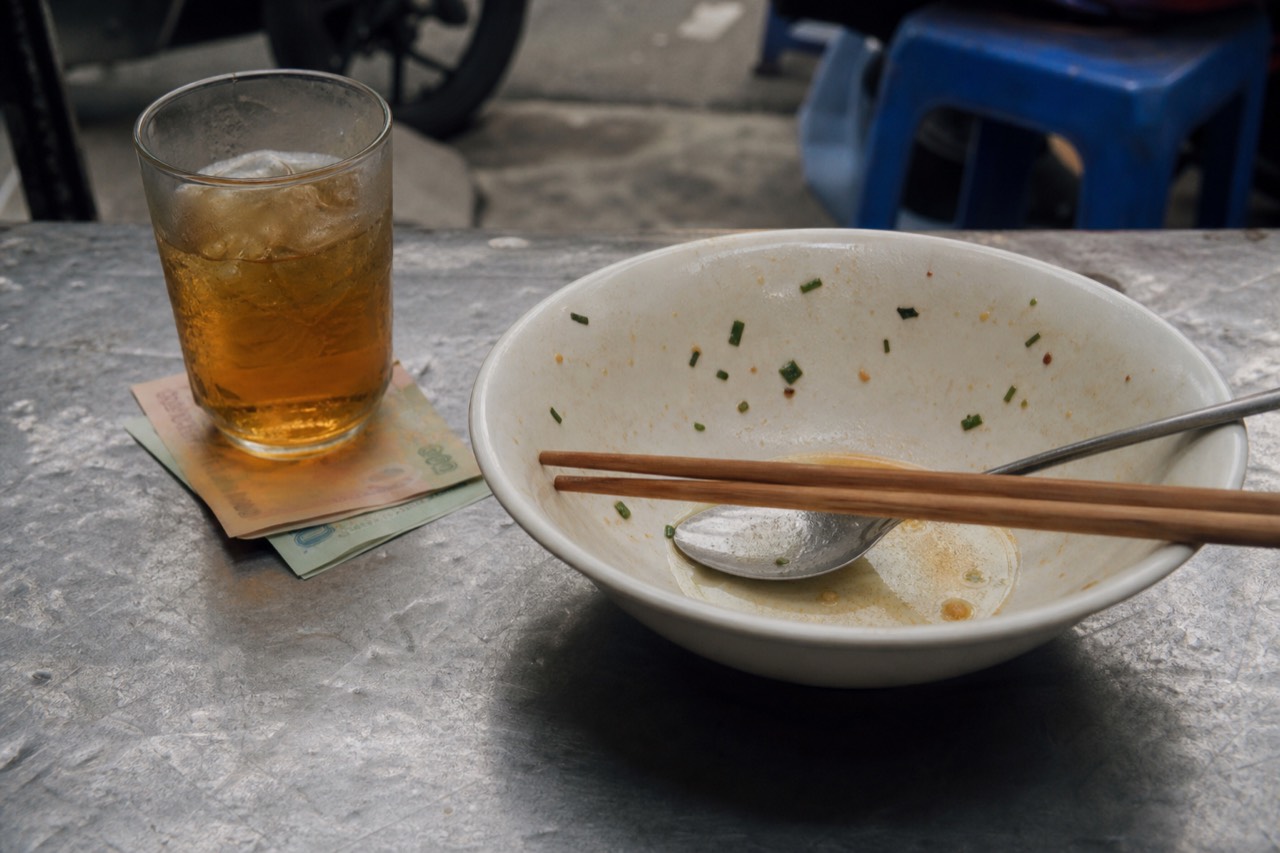
Short answer
Street food in Hanoi is cheap. Pho runs 40,000 to 60,000 VND, bun cha 40,000 to 80,000, banh mi 20,000 to 40,000, egg coffee 30,000 to 45,000, and a glass of bia hoi 10,000 to 15,000. At roughly 25,000 to 26,000 VND per US dollar, a full day of eating costs under ten dollars. Carry cash for stalls, since cards and Apple Pay work mainly in cafes and restaurants, and tipping stays optional.
The first shock of a Hanoi menu is the zeros. A bowl of pho listed at 50,000 sounds alarming until the exchange rate does its work and the price lands at two dollars. Once your brain recalibrates, the second shock arrives: the cheapest food in the city is often the best of it, cooked by one family, on one street, for decades.
How much does food cost in Hanoi?
Street food classics cost between 10,000 and 80,000 VND, roughly forty US cents to three dollars. Pho sits at 40,000 to 60,000, bun cha at 40,000 to 80,000, banh mi at 20,000 to 40,000, egg coffee at 30,000 to 45,000, and bia hoi at 10,000 to 15,000 a glass.
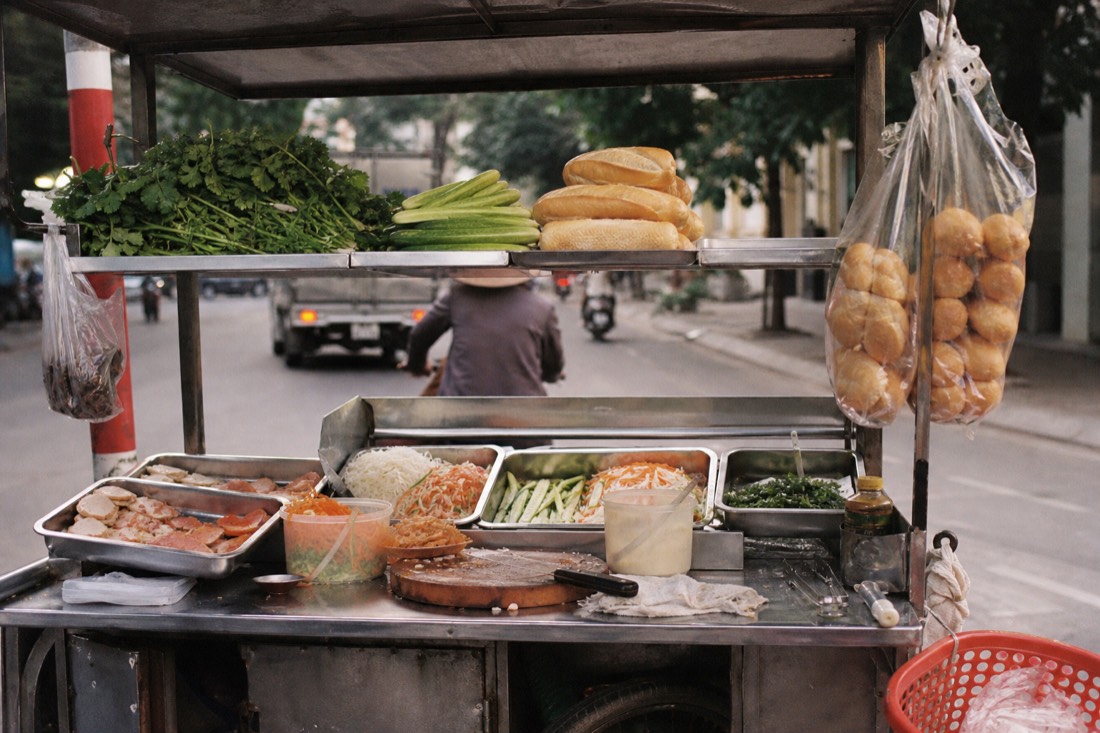
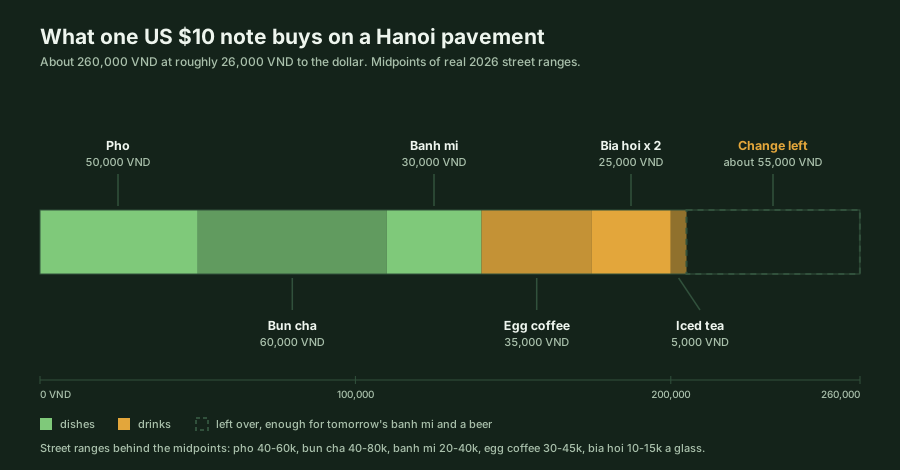
At the mid-2026 exchange rate of roughly 25,000 to 26,000 VND per US dollar, the arithmetic is friendly: three full street meals plus coffee and a beer rarely clear ten dollars. Fame barely moves prices either. Bun Cha Huong Lien, the Old Quarter shop where Barack Obama and Anthony Bourdain sat down in 2016, still sells its Obama Combo for around 100,000 VND, and the place carries a Michelin listing to go with the photograph on the wall.
| Dish | Typical price (VND) | Rough USD |
|---|---|---|
| Pho (beef or chicken) | 40,000 to 60,000 | $1.55 to $2.40 |
| Bun cha (grilled pork set) | 40,000 to 80,000 | $1.55 to $3.20 |
| Banh mi | 20,000 to 40,000 | $0.80 to $1.60 |
| Egg coffee | 30,000 to 45,000 | $1.15 to $1.80 |
| Bia hoi (glass) | 10,000 to 15,000 | $0.40 to $0.60 |
Within those bands, position matters more than quality. A banh mi from a cart on a quiet street sits at the bottom of its range; the same sandwich from a shop with an English sign near Hoan Kiem sits at the top. Neither is a ripoff, both are lunch. What to spend all this money on, dish by dish, is mapped in the what to eat guide.
What can 20,000 dong buy in Hanoi?
More than it should. A 20,000 dong note, about eighty US cents, buys a basic banh mi from a street cart, or a glass and a half of bia hoi, or four to six glasses of iced tea, or a banana, a skewer, or a doughnut from a market vendor. It will not quite stretch to a bowl of pho.
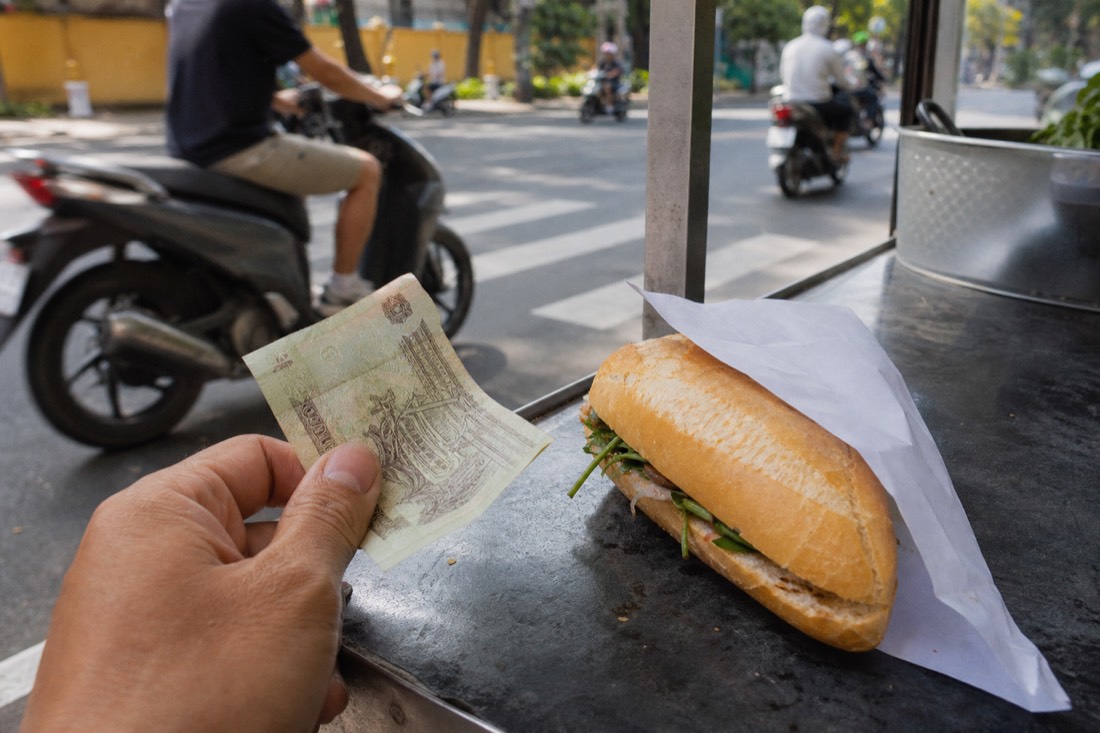
The 20,000 note is Hanoi's snack currency. Trà đá, the iced tea served on every pavement, costs 3,000 to 5,000 VND, which means the blue note covers tea for a whole table. Street carts at the bottom of the banh mi range will hand you a plain pate-and-herb baguette for exactly this money. And at a proper bia hoi corner, where fresh beer runs 10,000 to 15,000 a glass, the note covers your first round with change for peanuts.
What it no longer buys, in 2026, is a main dish. Pho starts around 40,000, bun cha the same, and even simple noodle soups at markets have crept past the 20,000 line. Treat the note as the unit of snacking and the 50,000 note as the unit of meals, and street budgeting becomes automatic.
Can you use cards or Apple Pay in Hanoi?
At street stalls, no. The pavement economy runs on cash, and even famous shops can be cash only. Cards and Apple Pay work reliably at sit-down restaurants, modern cafes, and hotels, and Vietnamese QR payments are everywhere but tied to local bank accounts. Carry 300,000 to 500,000 VND in small notes for a street day.
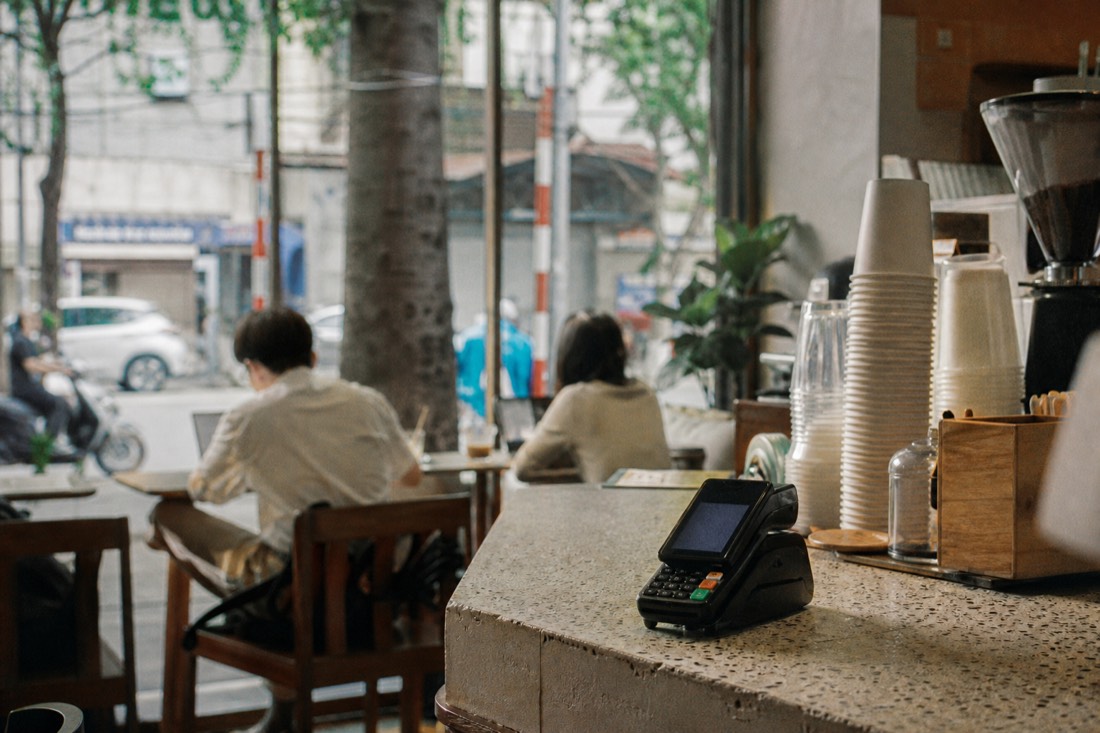
The pattern is consistent enough to plan around. The legendary pho shop with the dawn queue takes crumpled notes and nothing else; some of the best-known Old Quarter counters have never seen a terminal. One step up, at cafes with wifi passwords and restaurants with laminated menus, tap-to-pay on a foreign card or an iPhone generally works. Vietnamese locals meanwhile pay by bank-app QR codes at nearly every stall, but those rails need a local account, so visitors get to watch rather than join.
| Setting | Cash | Foreign card | Apple Pay / tap |
|---|---|---|---|
| Street stalls and carts | Only option | No | No |
| Bia hoi corners, markets | Only option | No | No |
| Modern cafes, chain coffee | Works | Usually | Usually |
| Sit-down restaurants | Works | Usually | Often |
| Hotels, malls, tours booked online | Works | Yes | Yes |
Practical setup: withdraw dong from bank-branded ATMs, break big notes at convenience stores, and keep small bills separate, since a stall owner facing a 500,000 note at 7 am will not love you for it. Booking your food experiences online sidesteps the cash question for the biggest line item of the day.
Do you tip in Hanoi?
Tipping is not expected in Vietnam and no bill will chase you for it. It is appreciated: rounding up at street stalls, five to ten percent at sit-down restaurants for good service, and 100,000 to 200,000 VND or more per day for a guide who earned it. Nobody is offended either way.
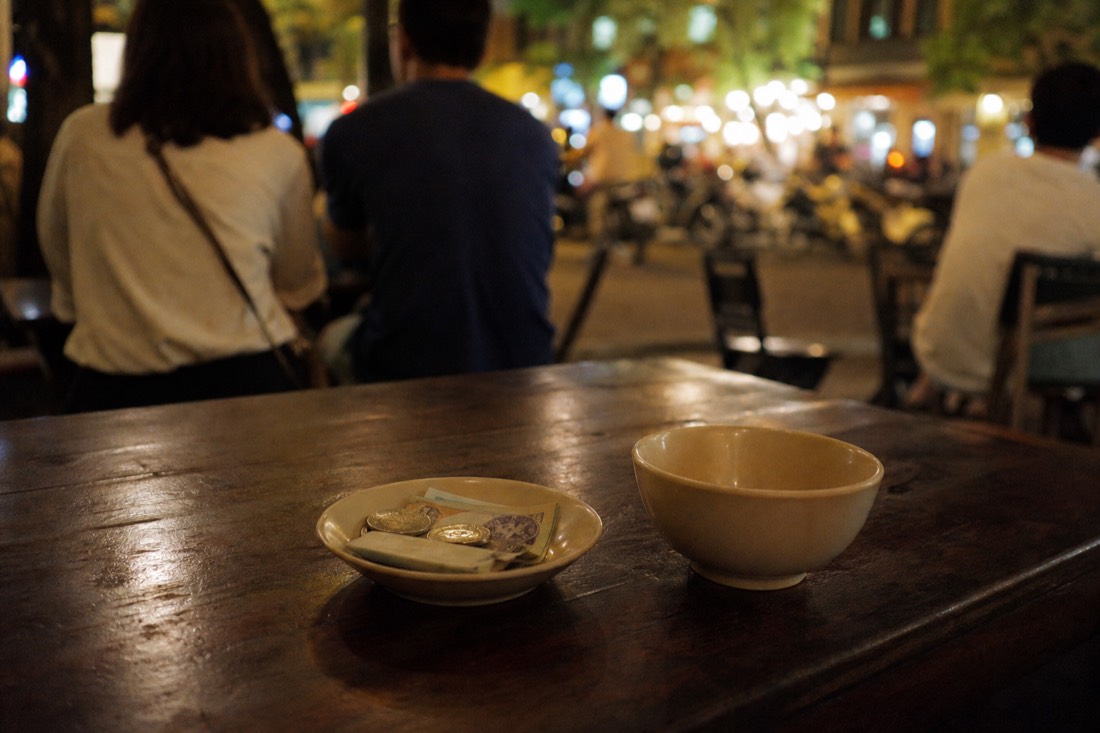
The absence of tipping pressure is part of why street food budgets hold. A 50,000 bowl costs 50,000, full stop. Where tipping does carry weight is with people whose service is personal: a food tour guide who tailored three hours to your allergies, a driver who waited through a downpour. The norms, amounts, and edge cases are laid out well in this Vietnam tipping guide, which matches what travelers consistently report on the ground.
| Situation | The norm |
|---|---|
| Street stall, bia hoi corner | No tip, round up if you like |
| Cafe or casual restaurant | No tip expected, loose change welcome |
| Sit-down restaurant, good service | 5 to 10 percent, cash preferred |
| Food tour guide, full day guide | 100,000 to 200,000+ VND per day |
| Grab driver | Not expected |
How do you convert dong to dollars in your head?
Drop the last three zeros, then divide by 25. A 50,000 bowl of pho becomes 50, then two dollars. An 80,000 bun cha set becomes 80, then a little over three. The real rate has been sitting between 25,000 and 26,000 VND to the dollar, so this trick errs slightly in your favour.
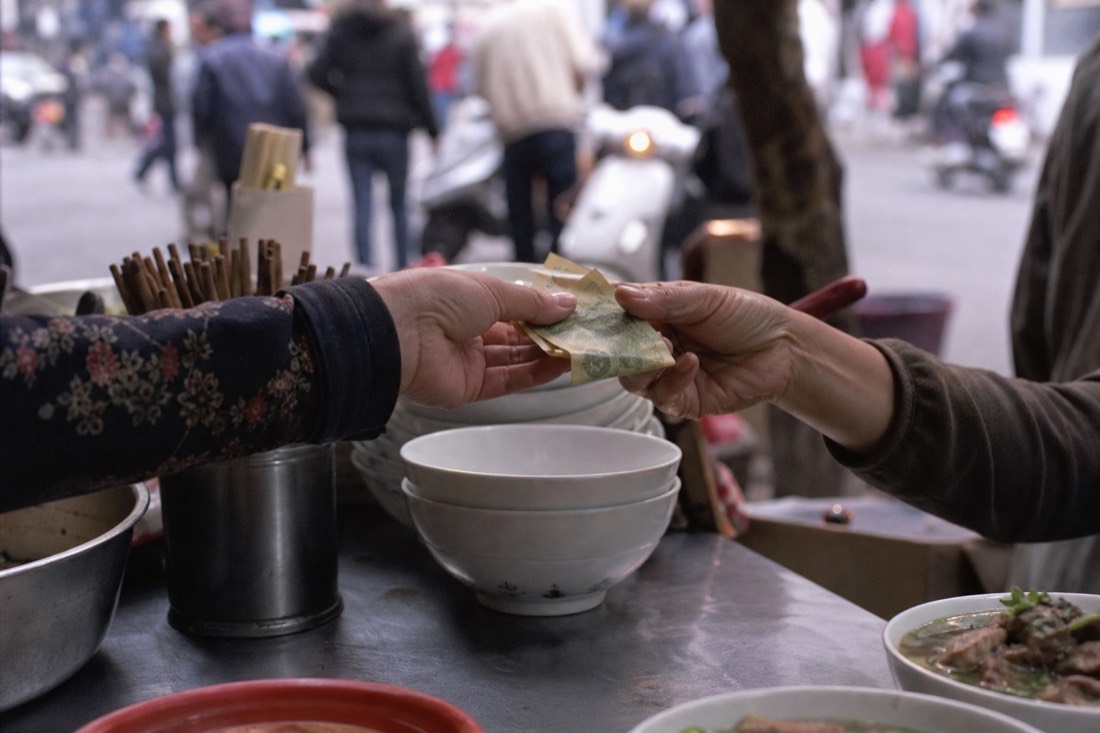
The zeros are what actually cause trouble, not the maths. Vietnamese prices are often written in shorthand, so a menu may show a bowl as 50 or 50k rather than 50,000, and the same dish appears as three different-looking numbers across three streets. Learn to read all three forms as the same price and the whole currency stops being confusing.
The second habit is learning the notes by colour and size rather than by counting zeros in a hurry. The 20,000 and the 500,000 are the two that catch visitors out, and handing over the wrong one at a busy counter is the classic tourist moment. Sorting your wallet once, on the first morning, is worth more than any conversion app.
Note that the dong has recently traded around 26,300 to the dollar at mid-market rates, so anything you paid with a card will settle slightly cheaper than the head maths suggests. That gap is small enough to ignore for street food and large enough to notice on a hotel bill. What it means in practice: your mental figure is a ceiling, not an estimate.
| Note | Roughly | What it actually covers |
|---|---|---|
| 10,000 VND | 40 US cents | A glass of bia hoi at a neighbourhood corner, or two glasses of iced tea |
| 20,000 VND | 80 cents | A basic banh mi from a cart, or tea for the whole table |
| 50,000 VND | About two dollars | A bowl of pho, the benchmark counter on Bat Dan included |
| 100,000 VND | About four dollars | The Obama Combo at Bun Cha Huong Lien, or two egg coffees |
| 200,000 VND | About eight dollars | Street-level dinner for two, with drinks |
| 500,000 VND | About nineteen dollars | A full day of eating for two, with change left over |
What does a full day of eating in Hanoi actually add up to?
Between roughly 153,000 and 260,000 VND per person, or about six to ten US dollars, for a day that includes a pho breakfast, egg coffee, a bun cha lunch, an afternoon banh mi, pavement iced tea and two glasses of bia hoi. That is a generous day of eating, not a frugal one.
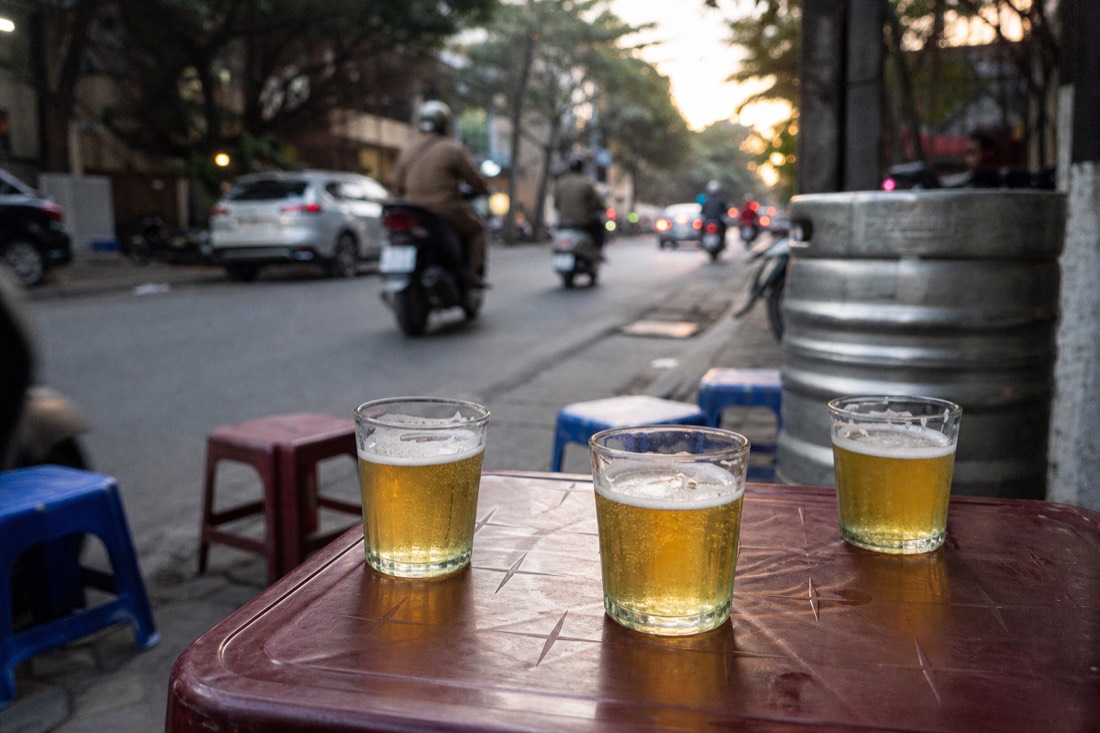
The table below simply adds up the price bands already established on this page, at the low end and the high end of each. Nothing is padded and nothing is trimmed, which is why the range is wide: where you eat inside each band matters more than what you order.
| Moment in the day | What you eat | Cost band |
|---|---|---|
| Around 7 a.m. | Pho, beef or chicken | 40,000 to 60,000 VND |
| Mid morning | Egg coffee, sitting down | 30,000 to 45,000 VND |
| Around noon | Bun cha set | 40,000 to 80,000 VND |
| Afternoon | Banh mi from a cart | 20,000 to 40,000 VND |
| Any pavement stop | Tra da, iced tea | 3,000 to 5,000 VND |
| Evening | Two glasses of bia hoi | 20,000 to 30,000 VND |
| Day total | 153,000 to 260,000 VND, roughly six to ten dollars |
Two things shift that total, and neither is the food itself. Location is the first: the same bia hoi that costs 5,000 to 10,000 VND at a neighbourhood corner runs 25,000 to 50,000 on the Ta Hien tourist strip, which alone can double the drinks line. The second is the tourist-menu premium, the subject of what to avoid in Hanoi, where the same dishes quietly arrive at two or three times these numbers.
A guided evening sits outside this budget as its own line item, with the live price on the operator's listing rather than here. Worth knowing before you compare: the walking formats are the cheaper end, the vehicle-based ones cost more, and both replace several of the rows above rather than adding to them.
How much cash should you carry, and in which notes?
Carry 300,000 to 500,000 VND for a street eating day, weighted heavily toward 10,000, 20,000 and 50,000 notes. Break anything larger at a convenience store before you need it. Keep the rest of your money in the room, since stalls, markets and bia hoi corners take nothing but cash.
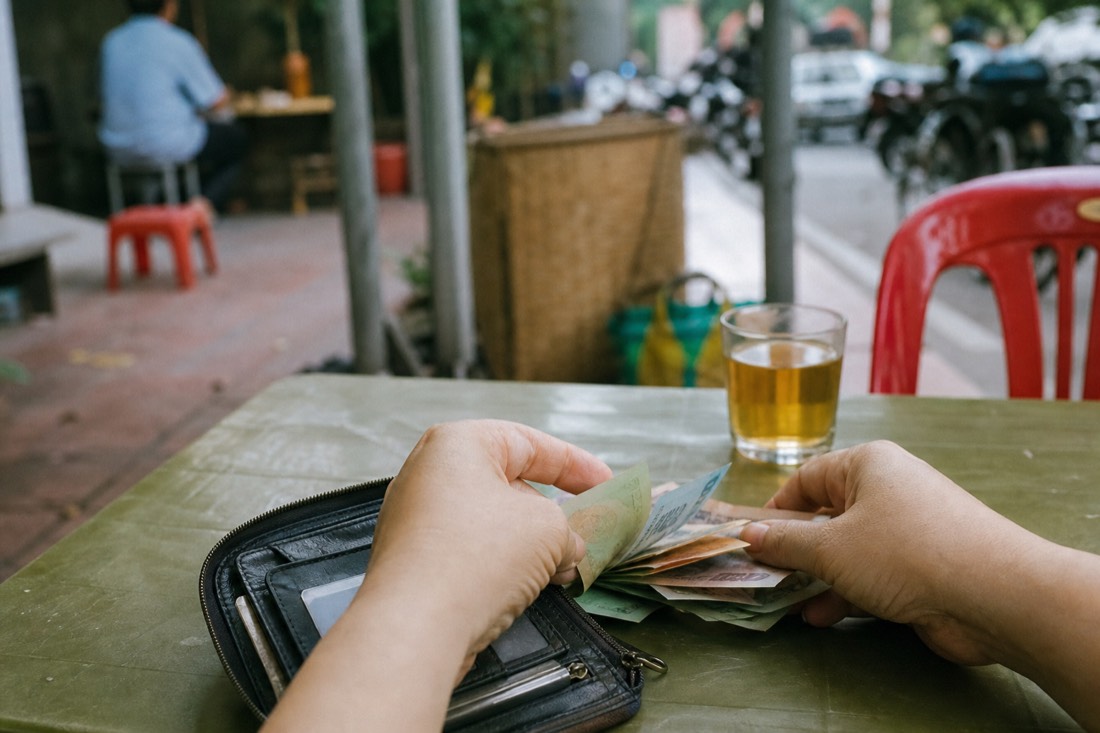
The reason to think about denominations at all is speed. A stall owner mid-service, with a queue behind you, does not want to unpick a 500,000 note for a 25,000 sandwich, and in the time it takes to find change you have lost your seat. Small notes are the difference between eating like a regular and eating like an obstacle.
Cash discipline also caps your downside. Carrying a day's eating money rather than a week's is the simplest protection against a lost or stolen wallet, and it costs you nothing, since bank ATMs are everywhere and the street food safety guide covers the rest of what belongs in a day bag.
The amounts below are planning allowances from our own experience budgeting a day of street eating, not published figures or a bank's advice.
| Kind of day | What we carry | Why that number |
|---|---|---|
| One person, street food only | 300,000 to 500,000 VND | Covers a full eating day with a wide margin |
| Two people, street food and drinks | 500,000 to 800,000 VND | Two full days of eating in one pocket, still small money |
| Day with a sit-down restaurant meal | Same cash, plus one card | Restaurants take cards, the stalls before them do not |
| Market morning | Small notes only, 10,000 to 50,000 | Vendors price in small amounts and hate breaking big notes |
| Arrival day | One larger note, broken early | Convenience stores give change without complaint |
How does Mai tell a fair price from a tourist price?
By what the stall does before you eat, not after. A price written up, or told to you plainly when you ask, is a fair price. A price that only appears once the bowl is empty, or that changes when it is quoted per person instead of per dish, is the one to question.
Mai Trần has guided food walks in Hanoi since 2015 and has taken more than 1,000 travellers through the city's stalls and wet markets. In her own words:
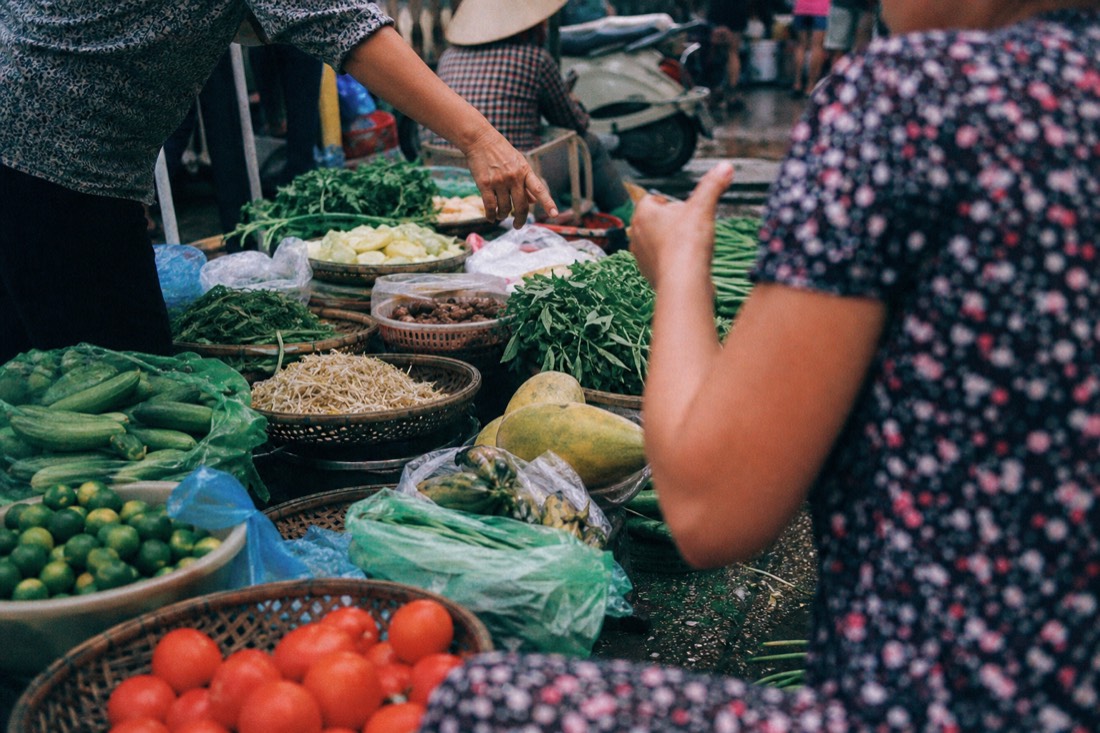
Visitors think fair pricing is a secret local knowledge thing. It is not. Almost every stall I use has one price for everybody, and the owner will tell you what it is in two seconds if you ask before you sit down. Ask first. It is not rude here, and it removes the entire problem.
When I want to check a place I have not used, I watch the person in front of me. What they hand over, what comes back, whether there is any conversation about it. A counter where locals pay without discussion is a counter with one price. A counter where the number seems to be assembled while looking at the customer is telling you something else.
The other tell is the per-person trick. Somebody orders a shared plate, and the bill arrives multiplied by the number of people at the table. This happens with cyclo rides more than food, and the fix is identical in both places: agree the total, out loud, before anything starts.
At wet markets I do something visitors rarely think to do, which is buy the way a local buys. Point, ask the price, then either accept it or move to the next stall without any drama. Bargaining hard over a few thousand dong makes nobody happy and saves the price of nothing. Knowing the normal bands for what you are buying does the work that haggling is supposed to do, and it does it faster.
One last thing I tell guests: a higher price is not automatically a rip-off. A famous shop with a queue at 6 a.m. can charge at the top of the band and be worth every dong. Pay attention to whether the number was honest, not whether it was low.
How do food tour prices compare to eating solo?
A self-guided street day costs a handful of dollars in food. Guided evening tours run in the tens of dollars, with motorbike and jeep formats higher, and the money buys curation, language, and stall vetting rather than just calories. Whether that trade is worth it depends on your night, not your wallet.
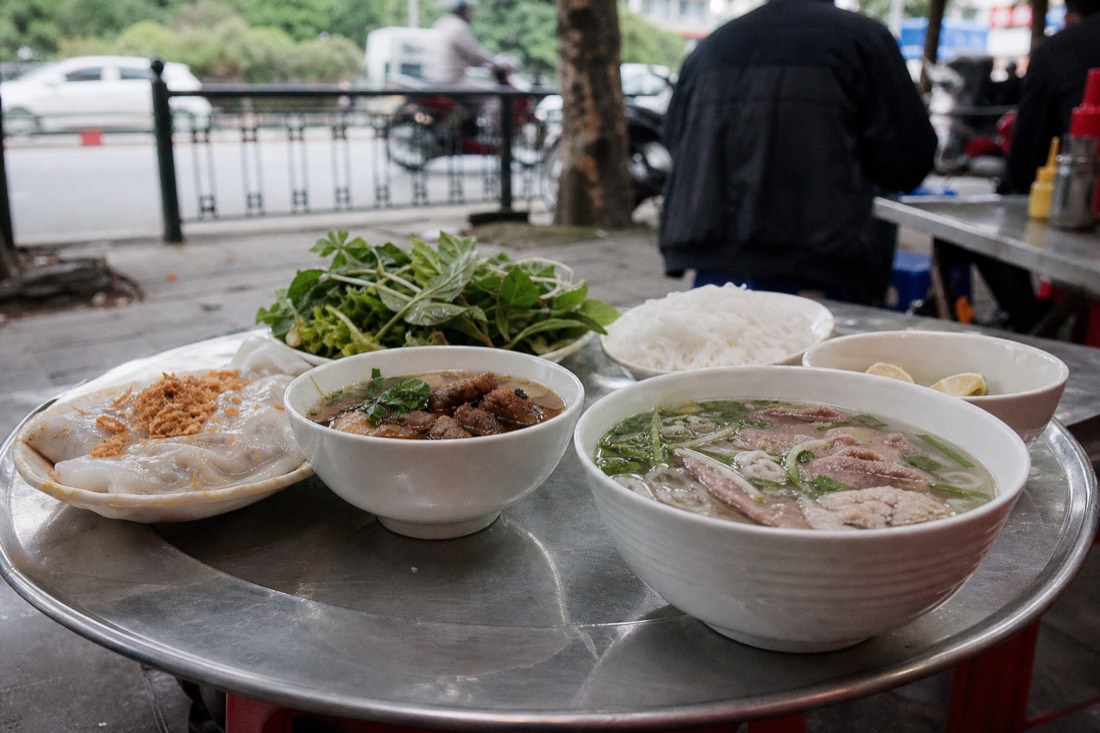
Read cold, the gap looks wide: two dollars for a solo bowl versus a tour ticket. But the tour ticket covers five to eight tastings, a guide who orders in Vietnamese, and three hours of stall knowledge you would otherwise spend days assembling. The full argument for and against is worked through in the DIY versus guided comparison, and riders can see the pricier end of the spectrum on the motorbike food tours hub.
Budget honestly and Hanoi becomes the rare city where money stops being the constraint. The constraint is stomach space, which is a better problem, and the three-day eating itinerary is built around managing exactly that.
How much does street food cost in Hanoi?
Between 10,000 and 80,000 VND per item in 2026. Pho costs 40,000 to 60,000, bun cha 40,000 to 80,000, banh mi 20,000 to 40,000, egg coffee 30,000 to 45,000, and bia hoi 10,000 to 15,000 a glass. At roughly 25,000 to 26,000 VND to the dollar, a generous full day of street eating comes in under ten dollars.
What can 20,000 dong actually buy?
A basic banh mi from a street cart, a glass of bia hoi with change, four to six glasses of pavement iced tea, or a market snack like a banana, skewer, or doughnut. It no longer covers a bowl of pho, which starts around 40,000 VND. Think of 20,000 as snack money and 50,000 as meal money.
Can you pay with Apple Pay or card at Hanoi street stalls?
No. Stalls, carts, markets, and bia hoi corners are cash only, and even some famous pho shops take nothing but notes. Cards and Apple Pay work at modern cafes, sit-down restaurants, hotels, and for tours booked online. Carry 300,000 to 500,000 VND in small bills for a street day and pay electronically everywhere else.
Do you tip in Hanoi?
Tipping is not expected anywhere and never appears on a street bill. It is appreciated: round up at stalls, leave 5 to 10 percent at sit-down restaurants for good service, and give a guide 100,000 to 200,000 VND or more for a strong day. Grab drivers do not expect anything. Nobody will be offended by no tip at all.
Your next Hanoi experience
Check your date before planning the rest of the day
Small-group Hanoi food walk
Taste a changing selection of Hanoi dishes with a local guide in a group of up to eight.
Old Quarter pickup; otherwise 41 Luong Van Can. Food tastings and a drink included. Menu varies; dietary requests need advance confirmation.
An editorial starting point. Confirm your party’s requirements with the operator.
Choose a date to see scheduled departures. Final availability and price are confirmed on Viator.
No verified option fits those requirements. Adjust your choices or reset to explore the general recommendations.
Compare options, fit your schedule & check your budget
Small-group Hanoi food walk · 3h. Taste a changing selection of Hanoi dishes with a local guide in a group of up to eight. Old Quarter pickup; otherwise 41 Luong Van Can. Food tastings and a drink included. Menu varies; dietary requests need advance confirmation.
Private Old Quarter food walk · 3h. Explore the Old Quarter with a guide dedicated to your own party. Old Quarter pickup or 38 Bat Su. Tastings included. Confirm specific dietary and access needs before booking.