Hanoi Train Street in 2026: Still Open, but the Rules Keep Moving
Trains still squeeze between the cafes, but access runs through barriers, escorts and a mandatory drink. Here is how visiting actually works right now.
 Written with Mai Trần, Hanoi food tour guide and culinary specialist
Short answer
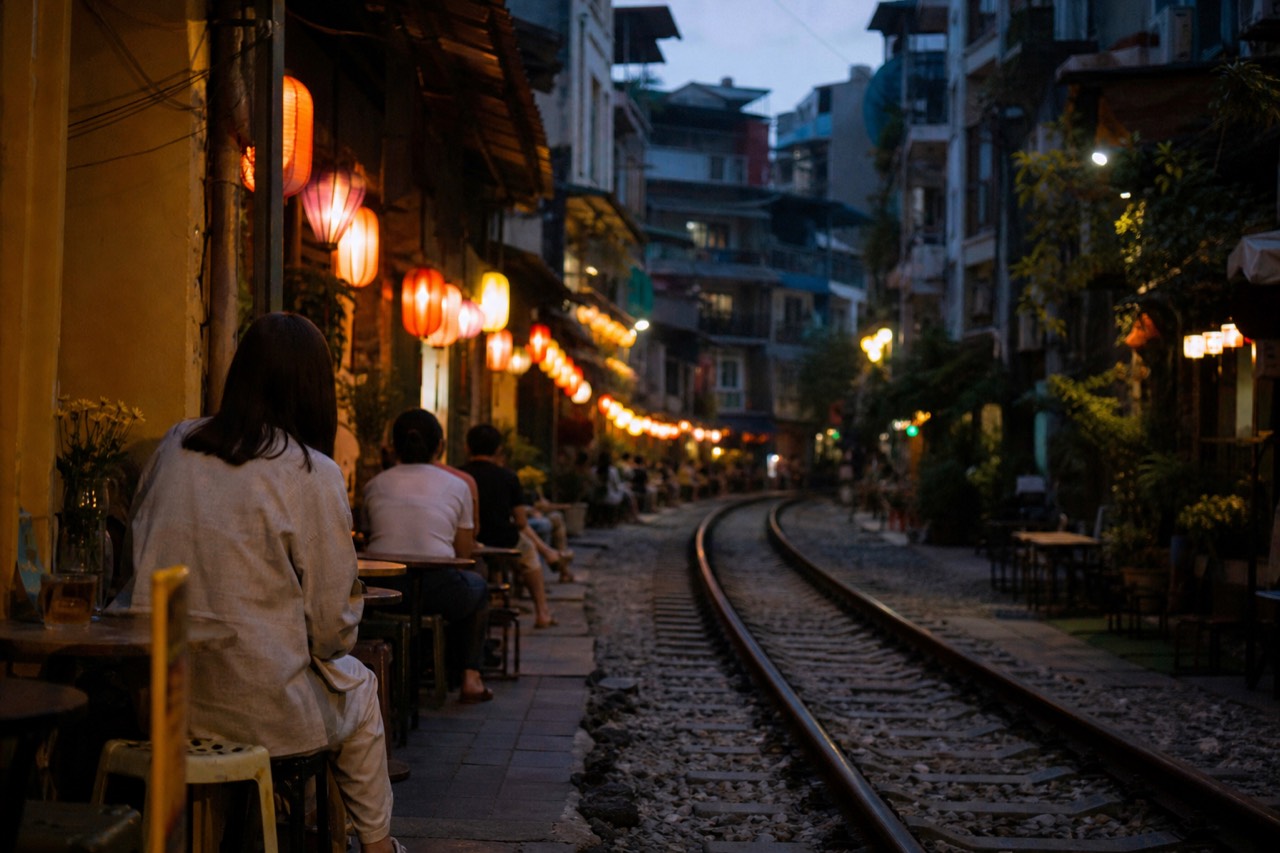
Hanoi Train Street is open in 2026, but on the famous Old Quarter section you enter as the customer of a track-side cafe, past manned barriers, not as a free walker. A drink at 60,000 to 80,000 VND works as the entry fee. The most reliable weekday trains pass around 19:00 and 19:45. The city has agreed in principle to reroute most trains, so rules can shift with little notice.
A few minutes before the evening train, the cafe owners along the rails start folding chairs and waving customers back against the walls. The corridor between the houses is barely wider than the carriages that thunder through it. That squeeze is the whole attraction, and it is also why the city keeps rewriting the rules for who gets to stand there.
Is Hanoi Train Street still open in 2026?
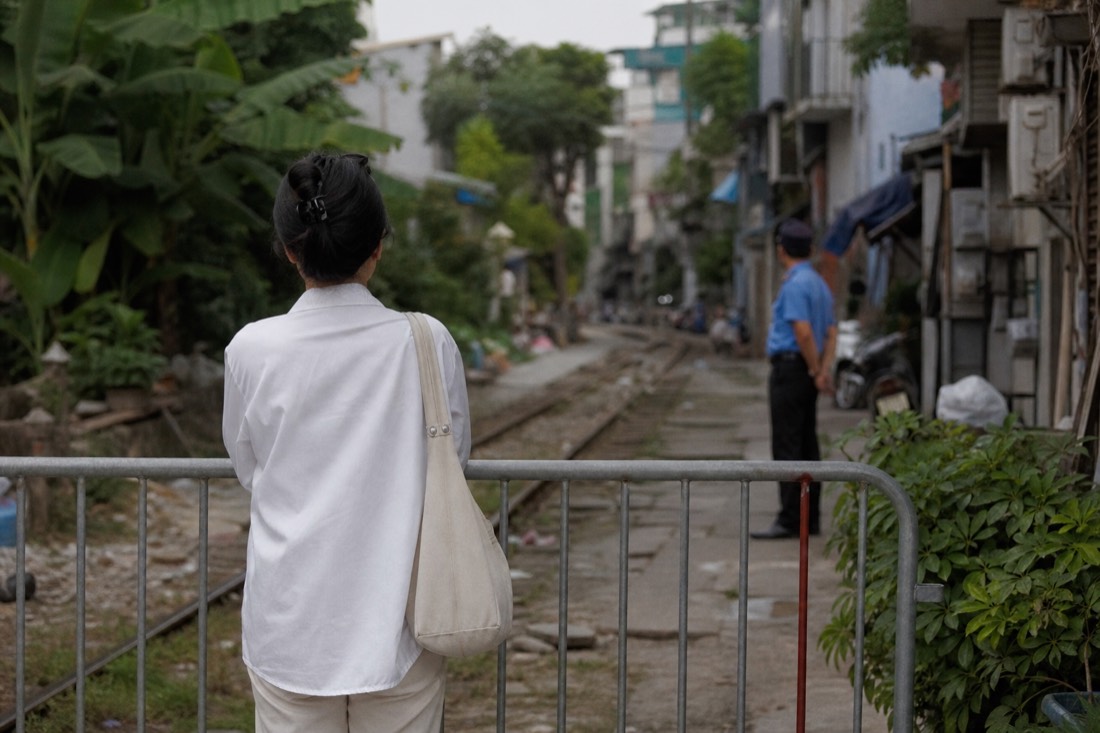
Yes, with conditions. The famous Old Quarter section operates behind metal barriers, and entry works one way: as the escorted customer of a licensed track-side cafe. Independent walking on the rails is blocked, group tours have been banned since March 2025, and a second section near Le Duan Street remains fully open.
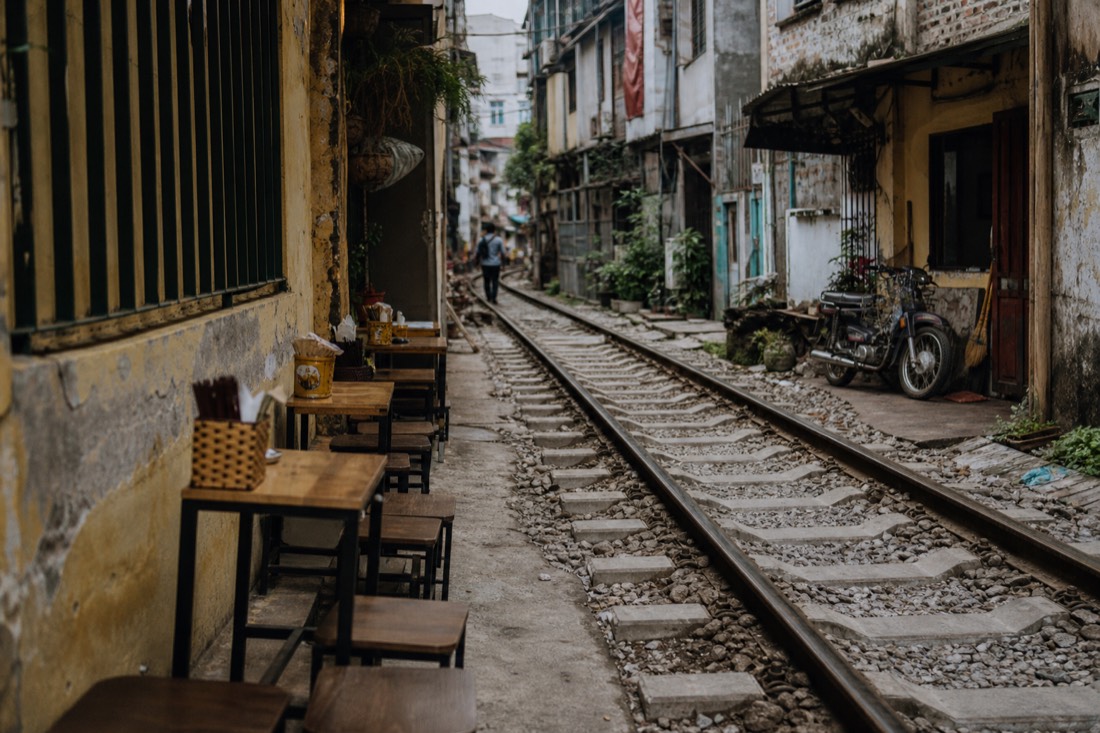
"Open" therefore means something specific. The cafes are trading, trains are passing, and visitors are sitting a metre from the carriages with egg coffees in hand every evening. What no longer exists is the free-roaming version from old photos, where crowds wandered the tracks at will. Checkpoints went up after safety scares, and enforcement in 2026 is consistent rather than theatrical.
Treat every rule on this page as current but movable. Access policy here has flipped several times since 2019, and the newest pressure comes from the railway itself, covered below.
Can tourists visit Train Street?
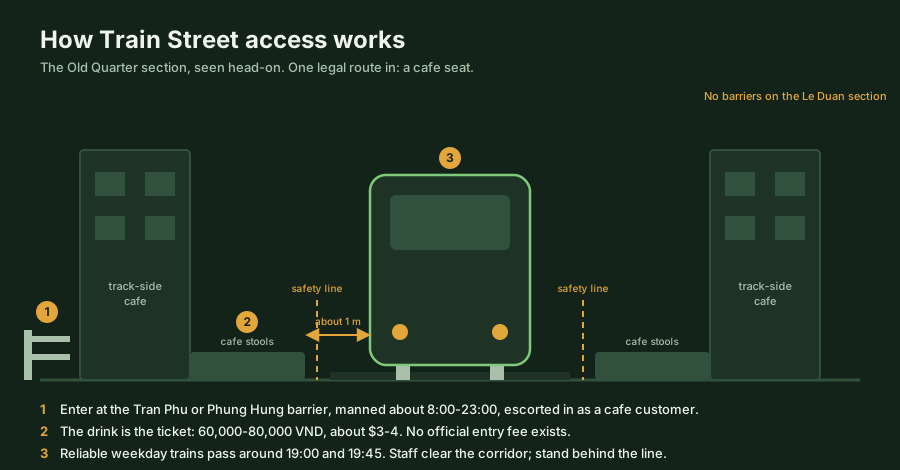
Yes. Walk up to a barrier at the Tran Phu or Phung Hung entrances, agree to visit a specific cafe, and staff or the guard wave you through as that cafe's customer. You buy a drink at 60,000 to 80,000 VND, take a seat by the rails, and stay behind the safety line when a train is due.
The system in detail:
| Access route | Who it works for | How it works in 2026 |
|---|---|---|
| Main section, Tran Phu / Phung Hung barriers | Individuals and couples | Barriers manned roughly 8:00 to 23:00; entry as an escorted cafe customer |
| Licensed track-side cafes | Anyone buying a drink | The drink is the de facto ticket; no official entry fee exists |
| Guided food tours | Small groups | Visit as seated cafe customers; large group tours banned since March 2025 |
| Le Duan section, near the main station | Independent visitors | No barriers or escort requirement on this stretch |
| Walking the rails freely | Nobody | Blocked at the main section; guards turn walkers back |
Budget-wise, the visit is cheap even by Hanoi standards. The mandatory drink is the only cost, and it prices like a tourist-cafe coffee rather than a ticket:
| Cost item | 2026 price (VND) | Approx. USD |
|---|---|---|
| Drink at a Train Street cafe | 60,000 to 80,000 | $3 to $4 |
| Official entry ticket | None exists | $0 |
| Egg coffee at a regular Old Quarter cafe, for comparison | 30,000 to 45,000 | $1.15 to $1.80 |
| Evening food tour ending at Train Street | Tens of dollars, live price on the listing | Varies |
The premium over a normal egg coffee is real but modest, and it buys the only legal seat in the corridor.
What time do trains pass Train Street?
Trains pass multiple times a day and the timetable shifts, but the dependable weekday slots at the main section are around 19:00 and 19:45 in the evening, with 19:45 widely treated as the best single train to plan around. Cafes track the day's schedule and tell seated customers when to expect the next one.
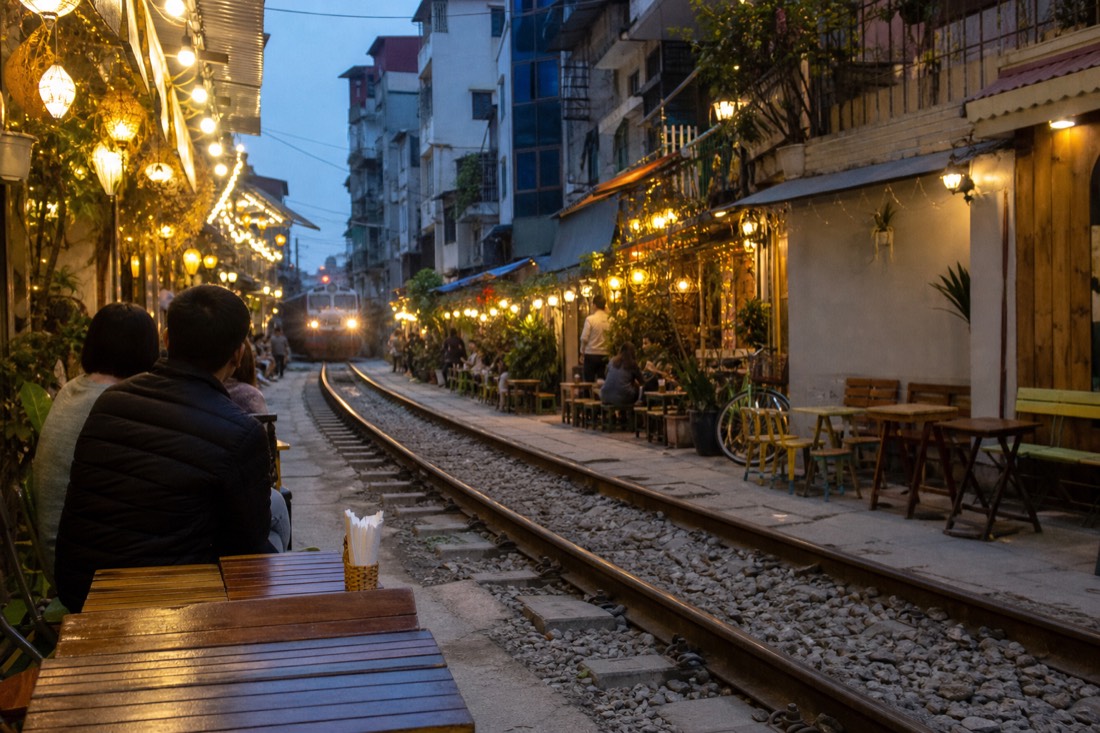
That evening window is why most visits happen after dark. Arrive 30 to 45 minutes ahead, claim a seat, and let the cafe manage the countdown; staff clear the corridor and tuck stools away as the horn approaches. Between trains, the street functions as a long, narrow cafe terrace, and photography is unrestricted from your seat.
Schedules genuinely vary, including by day of the week and season. Anyone whose evening depends on seeing a train should treat the times above as strong likelihoods rather than a printed timetable, and confirm with the cafe on arrival.
Will the trains keep running through Train Street?
Uncertain. The city has debated rerouting for years, and in February 2026 national and city authorities agreed to reduce passenger trains and suspend freight on this section, terminating services at Hanoi and Gia Lam stations, with implementation reported for around mid-2026. The cafes remain open through the transition, and timing keeps slipping.
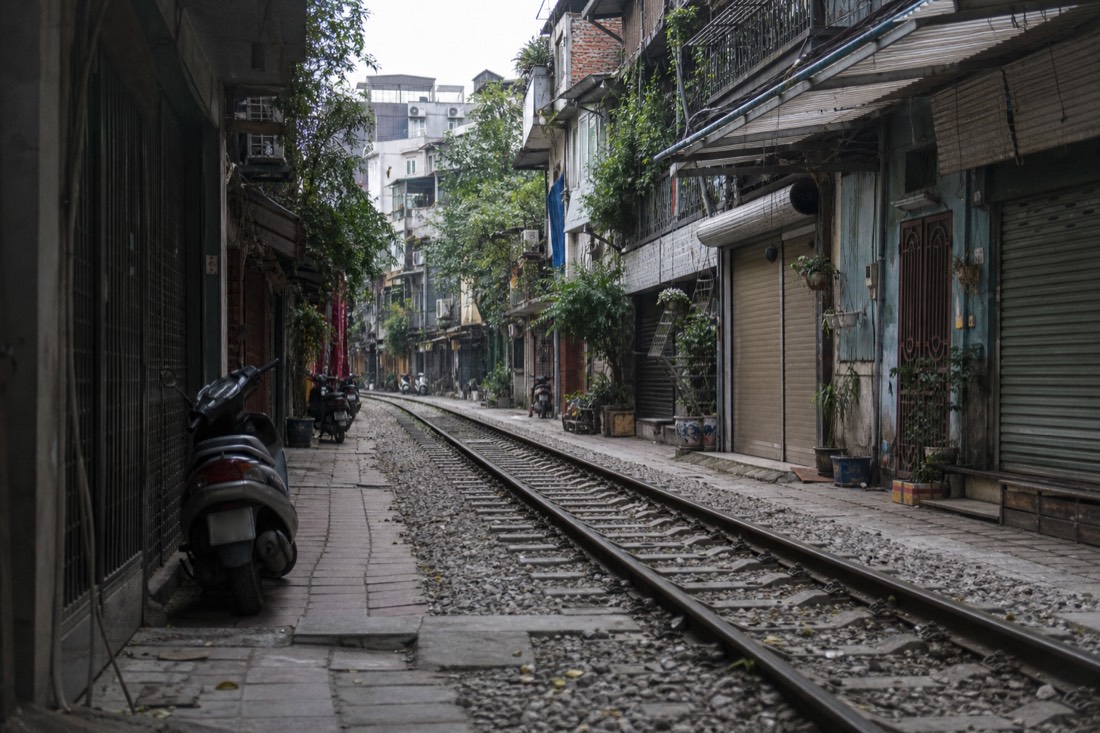
The February 27, 2026 agreement between the Ministry of Construction and Hanoi authorities is the most concrete step so far: fewer passenger trains through the corridor and Long Bien Bridge, no freight, southbound services stopping at Hanoi Station and northbound at Gia Lam. Whether that ends the spectacle or just thins it is the open question, and reporting through 2026 frames the plan as agreed in principle rather than fully executed.
| Date | What changed |
|---|---|
| March 2025 | Group tours to Train Street officially banned over safety and crowding |
| Through 2026 | Barriers at Tran Phu and Phung Hung entrances manned daily, roughly 8:00 to 23:00 |
| February 27, 2026 | Authorities agree to cut passenger frequency and suspend freight through the corridor |
| Reported for mid-2026 | Rerouting plan's implementation window, with execution still unfolding |
For travellers the practical reading is simple: go soon rather than late in the trip, and hold the plan loosely.
Is Train Street worth visiting?
Yes, as one stop in an evening rather than the whole plan. The train passing at arm's length is a genuine only-in-Hanoi moment, the cafe seat costs $3 to $4, and the surrounding streets hold the best eating in the city. It disappoints only when treated as a standalone attraction with no train due.
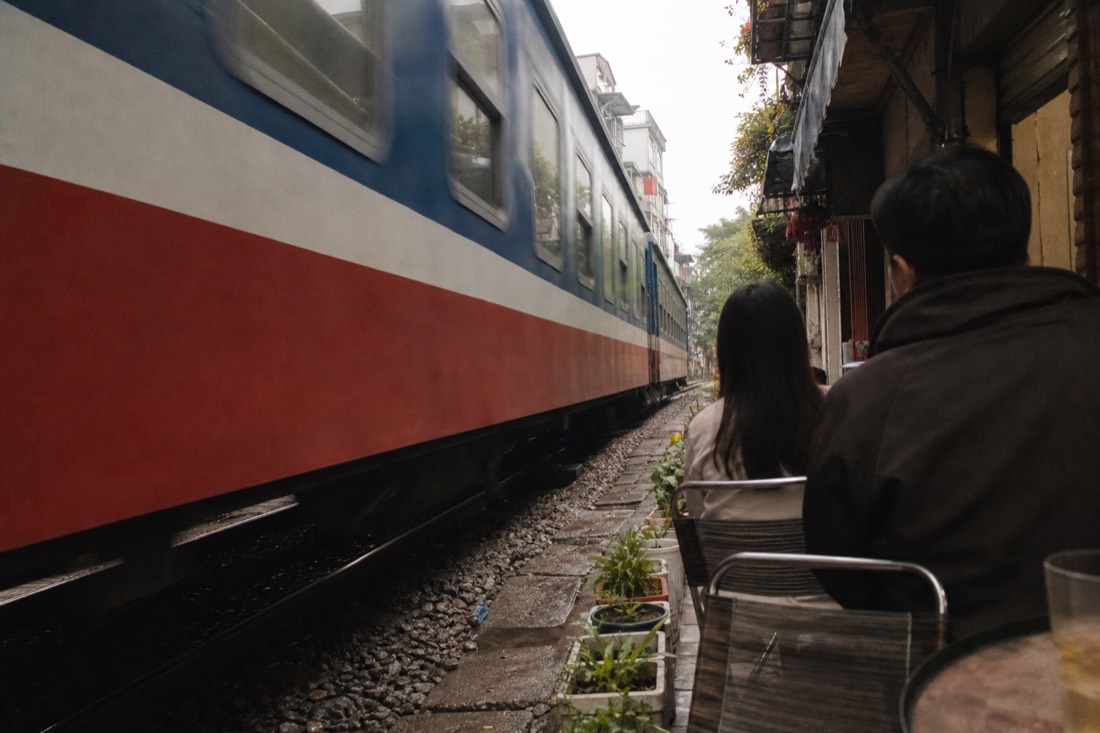
A quieter alternative: the small-group Eat Like a Local walk offers Train Street as an optional add-on rather than the headline, useful if your priority is the food itself. Either way, the corridor sits minutes from everything covered in the what to eat in Hanoi list, so nothing about the visit costs you a meal.
How does the cafe-customer entry actually work, step by step?
You walk to a manned barrier at Tran Phu or Phung Hung, agree to visit a specific cafe, and pass through as that cafe's escorted customer. A drink at 60,000 to 80,000 VND stands in for a ticket, because no ticket exists. You sit where staff seat you, stand behind the safety line when a train is due, and leave the way you came.
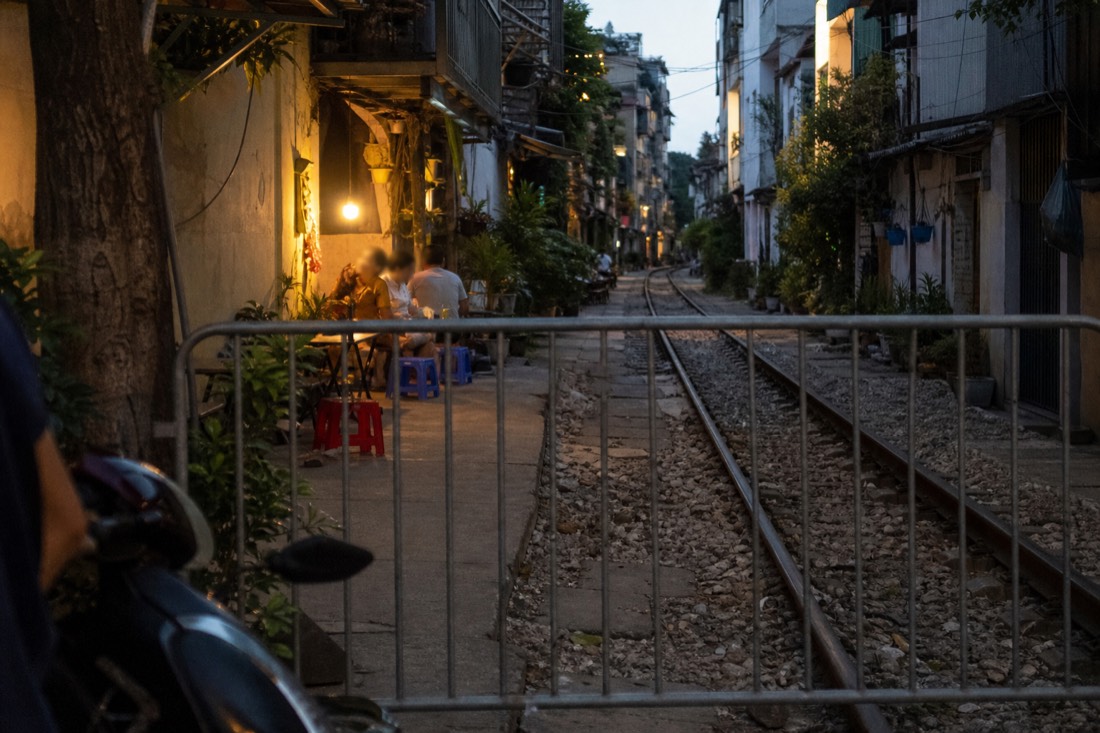
The sequence is worth knowing before you arrive, because the barrier is not a place for hesitation. Everything happens in under a minute: someone asks where you are going, you name a cafe or accept the one being offered, and you are through. Travellers who freeze at the barrier and start asking whether they are allowed in tend to get waved away, not because the rule is different for them but because the answer is a cafe, not a permission.
| Step | What happens | What you do |
|---|---|---|
| 1. Reach Tran Phu or Phung Hung | Barriers are staffed roughly 8:00 to 23:00 | Arrive on foot and expect to be stopped |
| 2. Agree a cafe | Entry works as a named cafe's customer, not as a walker | Accept the escort, or say which cafe you want |
| 3. Order the drink | The 60,000 to 80,000 VND drink is the de facto entry fee | Order before you settle in, and carry cash |
| 4. Take the seat you are given | Cafes control the seating line, which is how the corridor stays managed | Keep bags and feet inside the marked line |
| 5. Ask about the next train | Cafes track the day's schedule for their customers | Ask on arrival rather than guessing from a timetable |
| 6. The train passes | Chairs fold, everyone stands against the wall, it is over in under a minute | Film from where you stand, never from the rails |
| 7. Leave | Same barrier, same logic in reverse | Settle the bill early if you plan to walk out straight after |
None of that applies on the Le Duan stretch near the main station, which has no barriers and no escort requirement. If the process above sounds like more friction than you want on a first night, that section is the low-effort version of the same idea. The cost gap matters too: a track-side drink runs a couple of dollars above what you pay in an ordinary Old Quarter coffee house, and that premium buys the seat rather than the coffee.
What are the safety and etiquette rules once you are inside?
Behave like a customer in someone's narrow front room, because that is what the corridor is. Stay behind the marked line, keep bags off the rails, stand when staff clear the space, and never step onto the track for a photograph. Carriages pass roughly a metre from the seating at low speed, and the pressure wave is real.
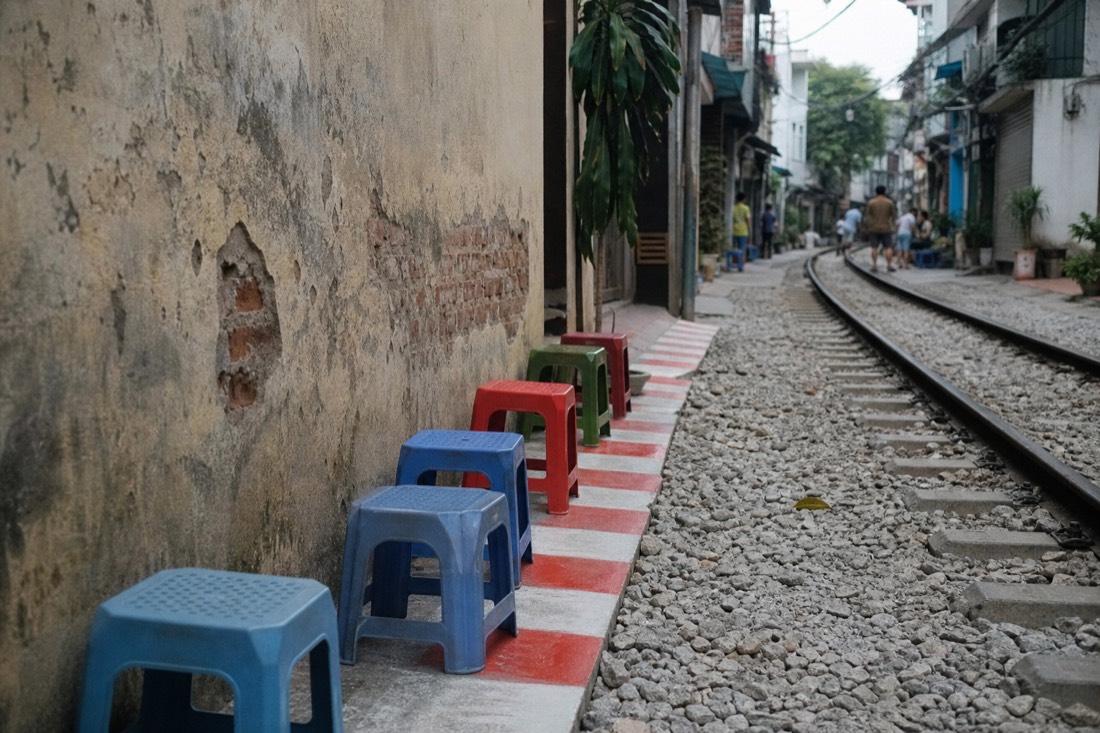
Etiquette here is not decorative. The cafes hold their trading position by managing visitors well, and every viral video of somebody leaning into a moving train makes the next round of enforcement stricter. Group tours were banned in March 2025 on exactly those grounds. Sitting properly, paying properly, and standing when told is what keeps the corridor open for the people behind you.
| Rule | Why it exists | What it looks like at the table |
|---|---|---|
| Stand behind the marked safety line | The carriages pass about a metre from the seating | Staff move the stools, and you move with them |
| No walking on the rails | Independent walking is blocked at the main section | Photograph from your seat, which is unrestricted |
| Clear the corridor early | Cafes start folding chairs several minutes before the horn | Finish your camera setup before the countdown starts |
| Keep the group small | Large group tours have been banned since March 2025 | Small-group food walks seat guests as ordinary customers |
| Prefer the hot drink on a first night | CDC travel guidance flags ice and untreated water | Egg coffee arrives hot, which suits an unsettled stomach |
| Pay before the train if you are leaving after | The corridor empties fast once the carriages have gone | Settle up, then watch |
The ice question comes up constantly and deserves a straight answer rather than a scare. The official guidance is about care with ice and untreated water, not about avoiding cafes, and plenty of travellers in their first day or two simply skip the ice while their systems adjust. The street food safety guide sets out the same logic for stalls, and the short version applies here: hot, fresh, busy.
What do you do if the rules change on the day you visit?
Have a fallback and you lose nothing. Access here has flipped several times since 2019, group tours went in March 2025, and the February 2026 agreement to thin train traffic is still being rolled out. If the barrier is shut, the cafes are full, or no train is due for hours, the Le Duan section and the Old Quarter are both minutes away.
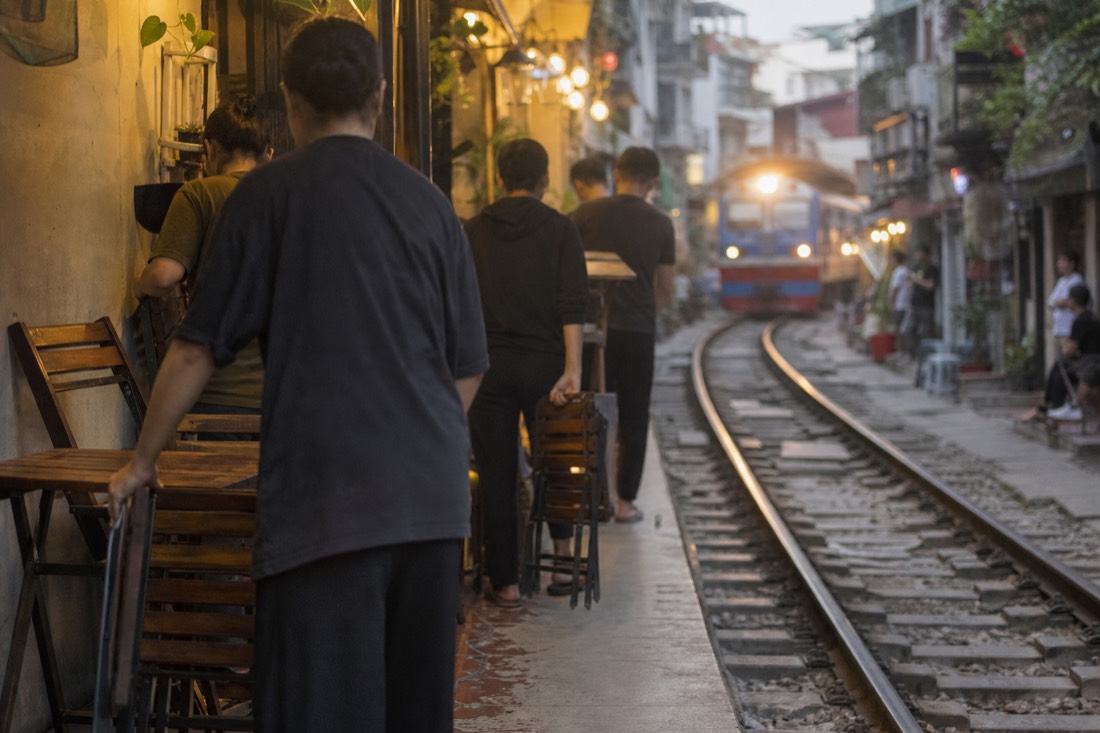
The useful mindset is that Train Street is a stop with a good chance of a train, not a scheduled show with a ticket. Plan the evening so that the corridor is the last thing on the list and the food is the first, and a closed barrier costs you a coffee rather than a night.
| What you find on the night | The likely reason | What to do instead |
|---|---|---|
| Barrier shut, nobody being let through | Enforcement tightens without notice, as it has before | Walk to the Le Duan stretch near the main station, which has no barriers |
| Cafes full, no seat by the rails | Evening trains concentrate everyone into a short window | Take a back row, or come back for the later slot |
| No train due for hours | Schedules shift by day and by season | Eat first and return closer to the evening window |
| Fewer trains than you expected | The February 2026 plan cuts passenger services and suspends freight | Treat the corridor and the cafe as the attraction |
| A group turned away | Group tours have been banned since March 2025 | Split into pairs, or join a small-group food walk that seats you as customers |
Two fallbacks are strong enough to be plans in their own right. Cafe Giang at 39 Nguyen Huu Huan still serves the egg coffee its founder invented in 1946, which is a better cup than anything by the rails and costs 30,000 to 45,000 VND. And from about 19:00 on Friday through Sunday night, the streets around Hoan Kiem close to traffic and fill with families, which is the single easiest evening in the city to walk without a plan. Timing your whole trip well helps too: the best months for walking Hanoi are the same months you want to be sitting outdoors in a corridor with no roof.
How does a Hanoi guide pace an evening that ends at Train Street?
Mai Trần, who has guided food walks in Hanoi since 2015, plans the corridor as dessert and not dinner. She eats first in the Old Quarter, walks to the barrier with time in hand for the 19:45 train, orders one hot drink, and treats the seat as somewhere to sit down after two hours of standing at stalls.
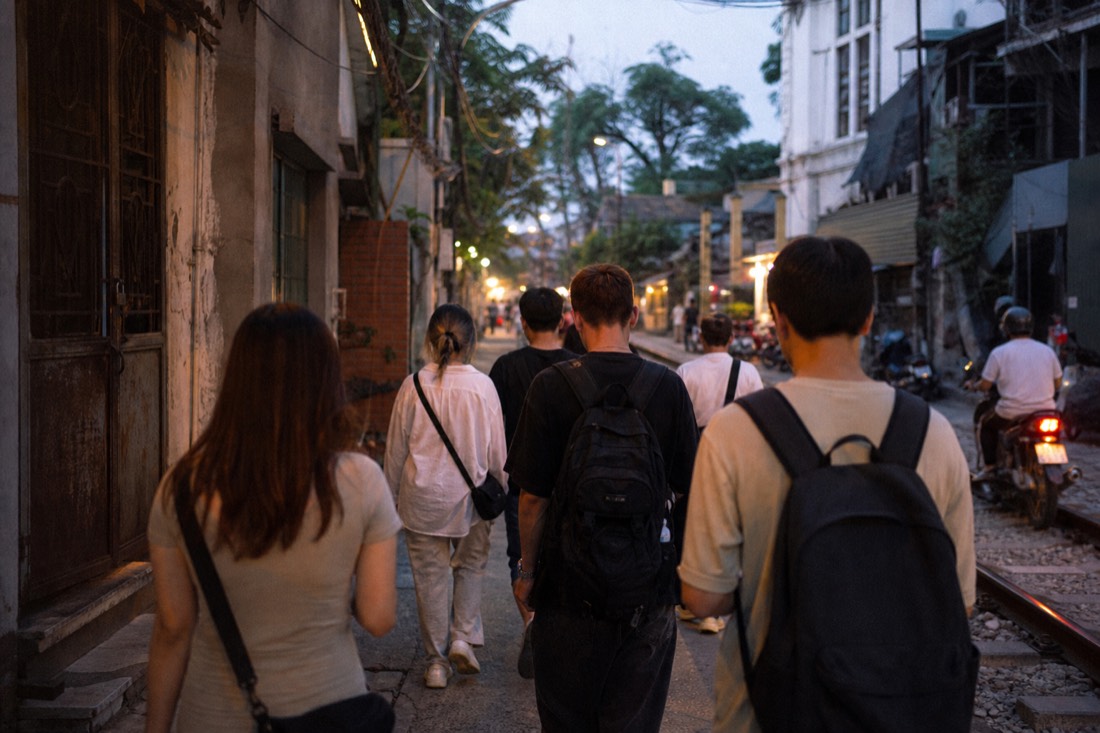
Almost every disappointed Train Street visitor I meet made the same scheduling error. They went at 18:00, sat for ninety minutes on an empty stomach waiting for a train, then ate badly afterwards because the good noodle shops had thinned out. Reverse it. Eat while the stalls are at their best, arrive at the rails with twenty or thirty minutes to spare, and the wait becomes a rest rather than an ordeal.
These are planning allowances I use when pacing an evening, not published timings.
| Clock, working back from a 19:45 train | What I allow |
|---|---|
| 17:45 | First savoury stop in the Old Quarter, something substantial |
| 18:30 | Second stop, lighter, plus a glass of bia hoi if the group wants one |
| 19:05 | Walk to the Tran Phu or Phung Hung barrier |
| 19:15 | Through the barrier, drink ordered, seat claimed |
| 19:45 | The train, which lasts under a minute |
| 20:00 | Settle up and walk back for something sweet |
Two practical habits I pass on to everyone. Carry small notes, because a corridor cafe at 19:40 is not the moment to hand over a large bill, and keep your bag on your lap rather than under the stool, since the stools move before you do. Neither is a rule anyone enforces. Both save the fluster that ruins the minute you came for.
I should be clear about what I am and am not describing. I guide my own walks in this city, I do not run the tours booked through this site, and their stops come from what the operators publish rather than from anything I have led. What I can speak to is pacing, which is the part travellers get wrong most often, whether they go with an operator or work the streets themselves. The corridor rewards people who arrive fed, unhurried, and holding a plan they are willing to drop.
Is Hanoi Train Street free to visit?
There is no ticket, but there is no free entry either at the main section. Access works by becoming a customer of a track-side cafe, which means buying a drink at 60,000 to 80,000 VND, about $3 to $4. The unbarricaded Le Duan section near the main station can be visited without buying anything.What happens when a train comes through?
Cafe staff clear the corridor several minutes ahead: chairs fold, tables slide back, and everyone stands behind the marked safety line against the walls. The train passes within roughly a metre of the seating at low speed, the pressure wave is real, and the whole event is over in under a minute.Can you still walk along the tracks?
Not on the famous Old Quarter section. Metal barriers at the Tran Phu and Phung Hung entrances are staffed daily from about 8:00 to 23:00, and guards turn back anyone trying to stroll the rails independently. Seated cafe customers can photograph freely. The Le Duan stretch remains open for those set on walking beside rails.Are group tours allowed on Train Street?
Large group tours have been banned since March 2025. Small-group food tours still include Train Street by seating guests as customers at a licensed cafe, which is the compliant route in 2026. Rules have changed several times in recent years, so operators adjust the stop when enforcement shifts.Will Train Street close completely?
Unresolved. In February 2026 authorities agreed to reroute most passenger trains and suspend freight through the corridor, with implementation reported for around mid-2026. The cafes continue trading either way, but the frequency of trains, the main spectacle, may drop. If Train Street is high on your list, visit early in your trip.Your next Hanoi experience
Check your date before planning the rest of the day
Old Quarter food walk
Follow an English-speaking guide between six or seven food and drink tastings.
Old Quarter pickup on foot or meet at 38 Bat Su. Train Street is an optional upgrade. Dishes depend on the day.
An editorial starting point. Confirm your party’s requirements with the operator.
Choose a date to see scheduled departures. Final availability and price are confirmed on Viator.
No verified option fits those requirements. Adjust your choices or reset to explore the general recommendations.
Compare options, fit your schedule & check your budget
Old Quarter food walk · 3h. Follow an English-speaking guide between six or seven food and drink tastings. Old Quarter pickup on foot or meet at 38 Bat Su. Train Street is an optional upgrade. Dishes depend on the day.
Hanoi six-brew coffee workshop · 3h. Make and compare phin, egg and coconut coffee with an English-speaking coffee host. Three hours; ingredients, equipment and snacks included. Travel to the Hoang Hoa Tham meeting point yourself. Some tastings contain alcohol; confirm alternatives and child participation.