Pho in Hanoi: Pho Bac, the Northern Original, and Where Locals Eat It
Pho was born in the north, and Hanoi still serves it the old way: clear broth, wide ladles, no herb plate, no apologies. Here is how pho bac works, where the famous bowls are, and what you should pay.
 Written with Mai Trần, Hanoi food tour guide and culinary specialist
Short answer
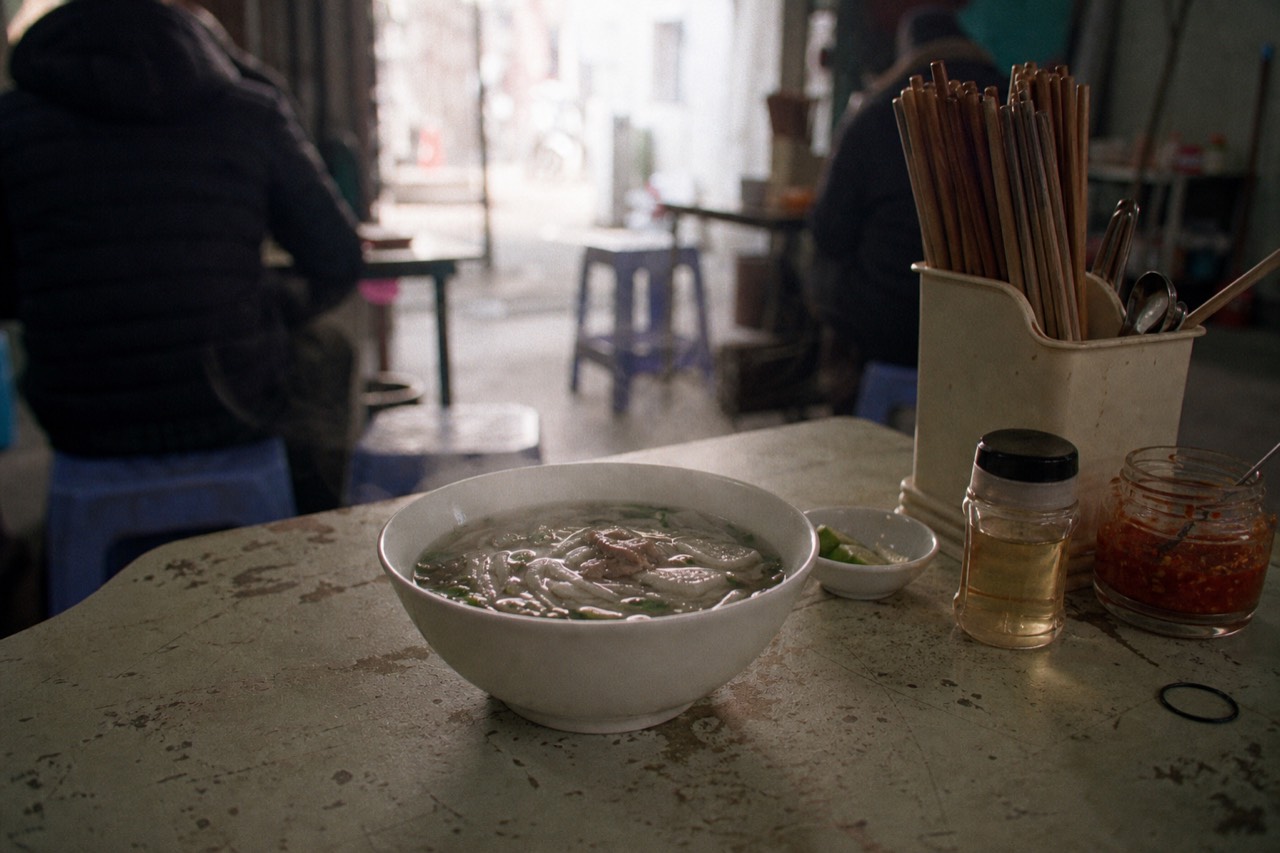
Pho is Vietnamese. The modern dish emerged between 1900 and 1907 in Nam Dinh Province, just southeast of Hanoi, and the capital's version is called pho bac, northern pho. It is clearer, less sweet, and more restrained than Saigon's pho nam, served without the southern herb plate. A bowl in Hanoi runs 40,000 to 60,000 VND, roughly $2.
At 6 in the morning on Bat Dan Street, the queue is already ten deep, and nobody in it is confused about what they want. The shop serves beef pho, three cuts, nothing else. No menu deliberation, no herb basket, no hoisin bottle on the table. That austerity is the point. Hanoi treats pho less like a dish to customise and more like a finished argument, and the city has been making that argument for over a century.
This guide unpacks where pho actually comes from, what makes the northern bowl different, where locals eat it, and what you should hand over when the bill arrives.
Is pho Vietnamese or Chinese?
Pho is Vietnamese. The modern dish emerged between 1900 and 1907 in Nam Dinh Province, southeast of Hanoi, before spreading to the capital and eventually the world. Its ancestry absorbed outside influences, as most great dishes do, but pho as eaten today was created in northern Vietnam and belongs to it.
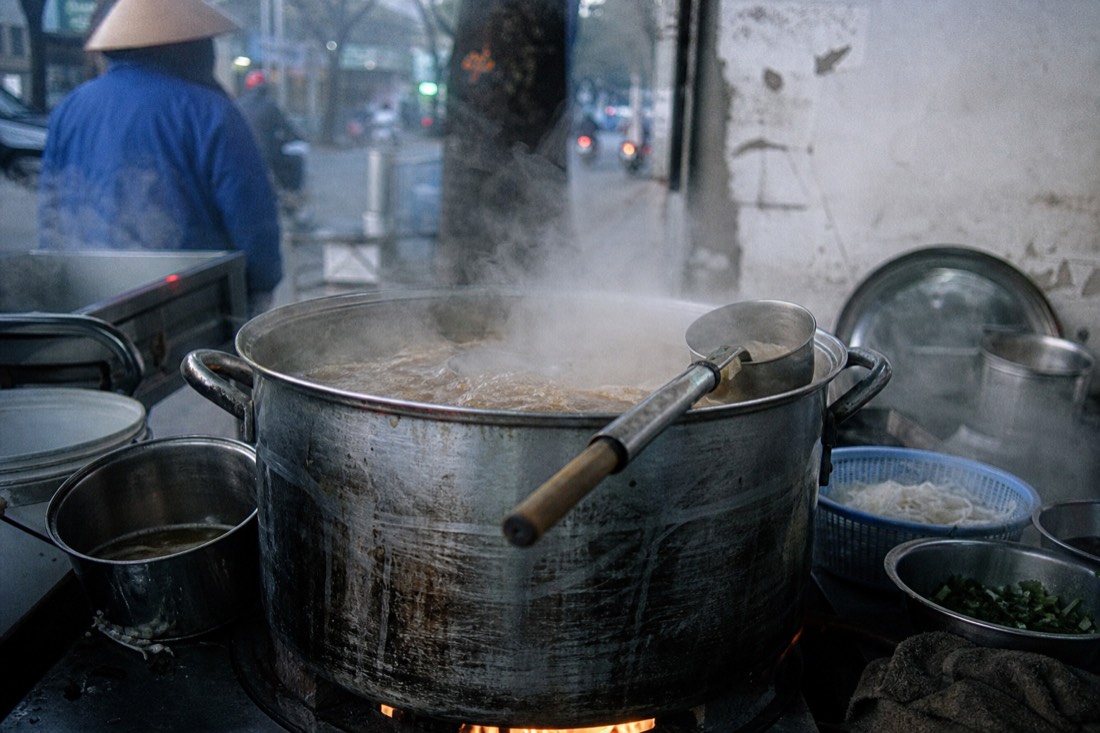
The confusion comes from pho's early ingredients and era. It appeared in the French colonial period, when beef became more available, and food historians still debate which noodle and broth traditions fed into it. None of that debate changes the origin: a northern Vietnamese dish, barely 120 years old, that became a national symbol. Vietnam even gives it a holiday. December 12 has been the official Day of Pho since 2017.
Hanoi's claim on pho is cultural rather than merely historical. The city codified the style: beef bones simmered into a clear broth, flat rice noodles, thin-sliced meat, spring onion, and restraint. Everything else, from bean sprouts to squeeze bottles, came later and further south.
What is northern-style pho called?
Northern-style pho is called pho bac, literally "northern pho", and Hanoi's version is its reference point. Some menus call it pho Ha Noi. The style means a clear, savoury broth, wider flat noodles, minimal garnish, and no side plate of herbs and sprouts. Lime, chili, and pickled garlic vinegar are the only condiments most shops offer.
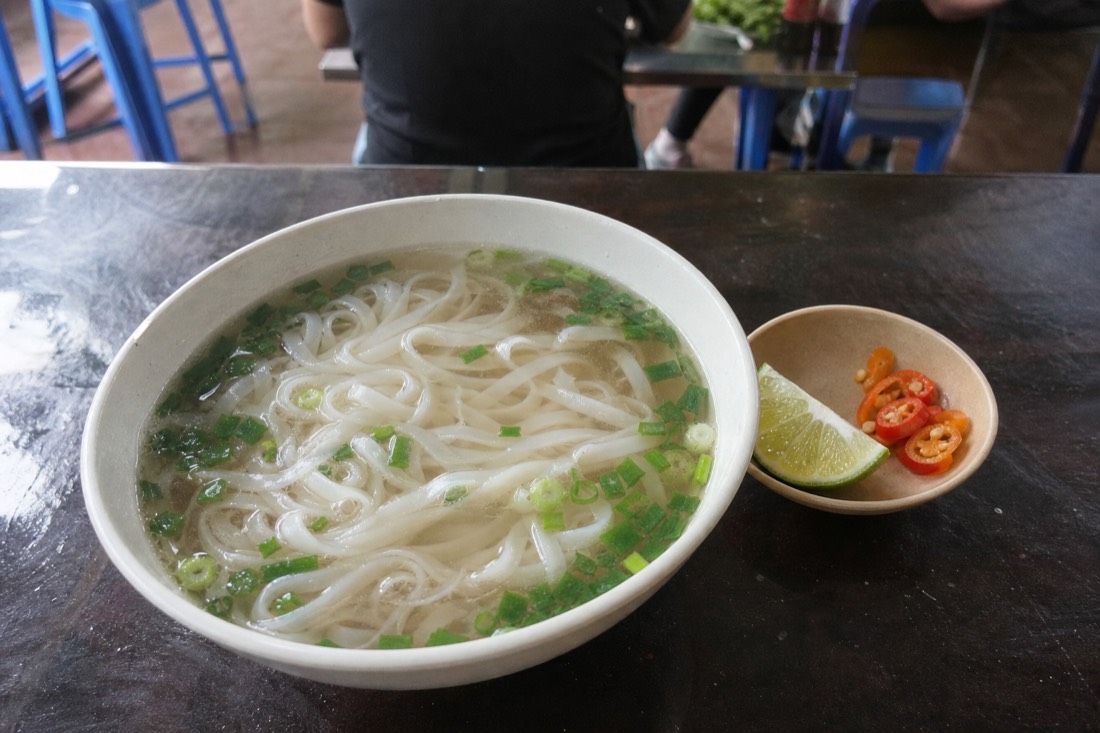
Pho bac splits by cut and preparation rather than by toppings. The core beef orders are tai (rare, cooked by the broth in the bowl), chin (well-done brisket), and nam (flank), with combinations like tai nam common. A few shops built entire reputations on one variation: Pho Thin at 13 Lo Duc has served a single dish, pho bo tai lan with beef flash-seared in a hot wok, since Nguyen Trong Thin opened it in 1979.
Chicken pho, pho ga, is the other northern pillar, and Hanoi also does a dry cousin: pho tron, mixed pho, where the noodles arrive sauced rather than submerged. Several food tours use it as a teaching dish, including the Train Street food tour, which folds dry mixed pho into its tasting lineup.
What is the difference between Hanoi pho and Saigon pho?
Hanoi pho is clear, savoury, and minimal; Saigon pho, pho nam, is sweeter, cloudier, and arrives with a garden. The southern bowl comes with a plate of basil, bean sprouts, sawtooth herb, and lime, plus hoisin and sriracha for mixing. A northern shop hands you the bowl as the cook intended it and expects few edits.
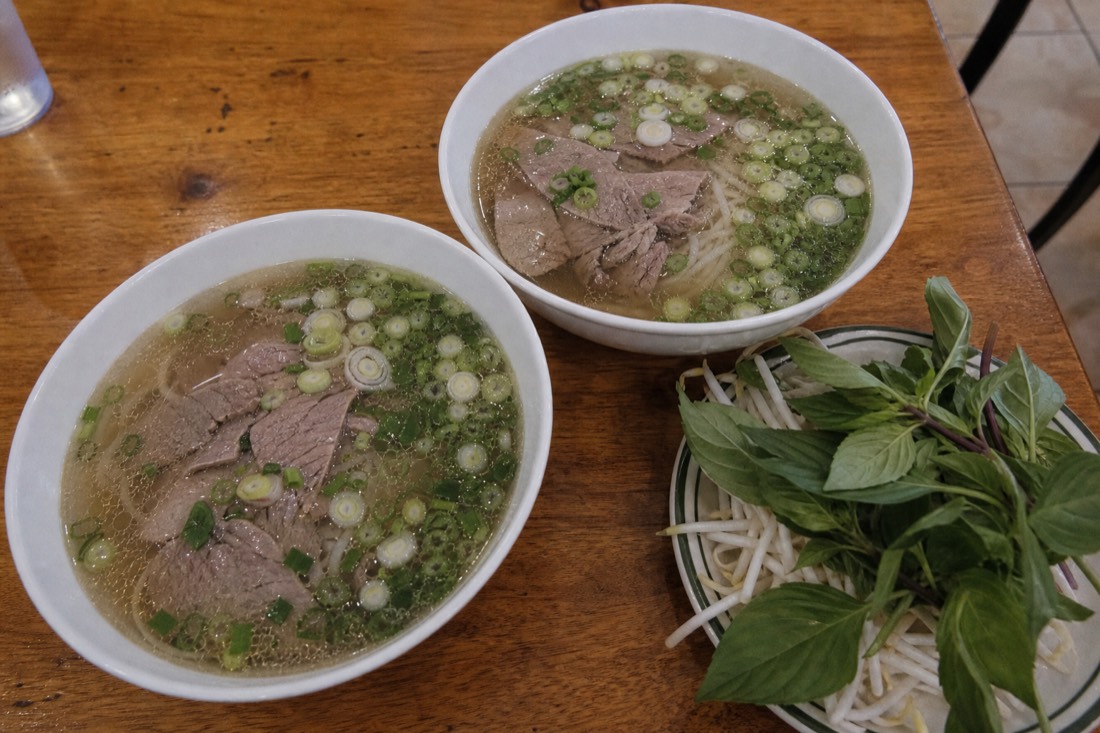
The differences run through every layer.
| Hanoi pho (pho bac) | Saigon pho (pho nam) | |
|---|---|---|
| Broth | Clear, savoury, beef-forward | Sweeter, richer, often cloudier |
| Noodles | Wider, flat rice noodles | Narrower rice noodles |
| Herb plate | None; spring onion in the bowl | Basil, sprouts, sawtooth herb, lime |
| Condiments | Lime, chili, pickled garlic vinegar | Hoisin, sriracha, chili in oil |
| Typical extras | Quay (fried dough sticks) for dunking | Extra meats, meatballs common |
| Philosophy | The cook finished the bowl | The diner finishes the bowl |
Pho Bat Dan illustrates the northern position perfectly: the shop serves no basil, mint, or bean sprouts at all, a deliberate contrast with southern practice. Travellers who first met pho abroad usually met the Saigon style, since it followed migration routes worldwide. Expect the Hanoi bowl to taste quieter at first spoonful, then deeper by the last.
A note on those raw herbs generally: they are one of the items the CDC's food and water guidance flags for travellers, alongside ice and tap water. Northern pho conveniently sidesteps the issue by leaving the raw greens off the table entirely.
Where do locals eat pho in Hanoi?
Locals eat pho at single-purpose shops that do one thing at volume, mostly at breakfast. The famous names cluster in and near the Old Quarter: Pho Gia Truyen at 49 Bat Dan for classic beef pho, Pho Thin at 13 Lo Duc for wok-seared tai lan, and Pho 10 Ly Quoc Su, which holds a Bib Gourmand in the 2026 Michelin selection.
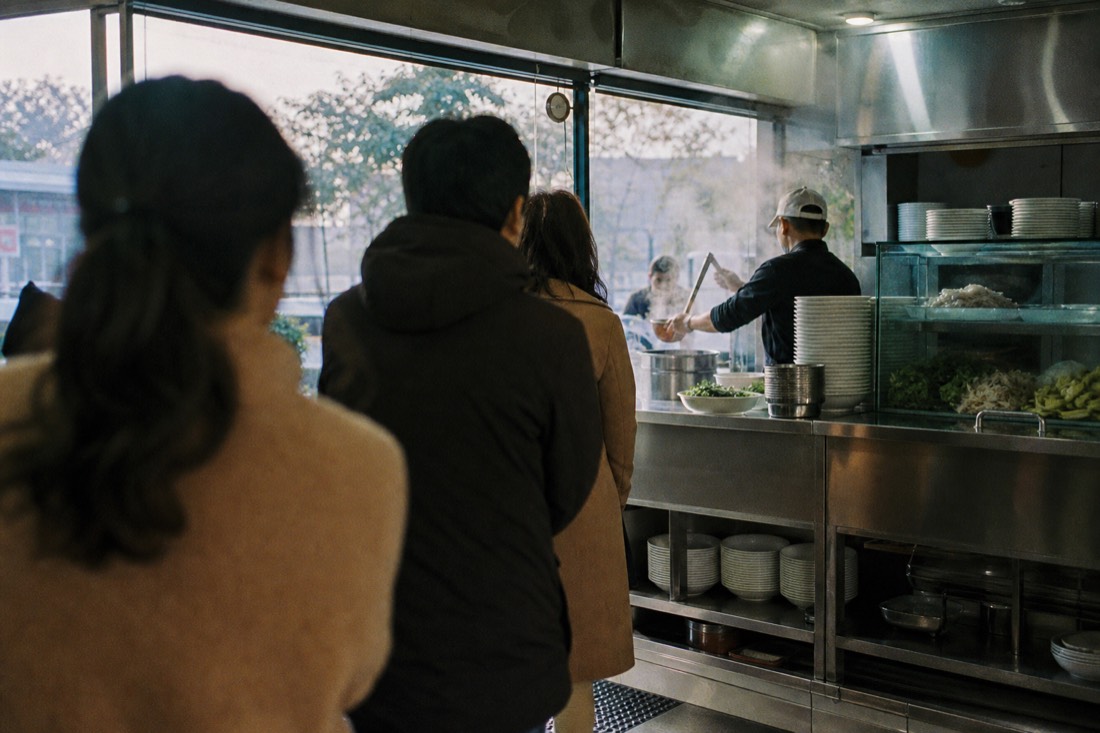
Each shop has its own ritual. At Bat Dan you queue, pay, carry your own bowl to a shared table, and the line typically takes about eight minutes. At Pho Thin the menu question is only "how many bowls". None of these places do ambience. All of them do turnover.
| Shop | Address | Known for | Worth knowing |
|---|---|---|---|
| Pho Gia Truyen (Pho Bat Dan) | 49 Bat Dan Street | Classic beef pho: tai, tai nam, chin | Open 6:00 to 10:00 and 17:00 to 21:30; self-service queue |
| Pho Thin | 13 Lo Duc Street | Pho bo tai lan, wok-seared beef | One dish only since 1979 |
| Pho 10 Ly Quoc Su | 10 Ly Quoc Su Street, Hoan Kiem | Polished beef pho near the cathedral | Bib Gourmand, 2026 Michelin Guide |
The Michelin layer is real: Hanoi's 2026 selection includes 23 Bib Gourmand spots, several of them noodle shops, and the Michelin Guide Hanoi breakdown maps where pho fits in that list. Timing matters more than star power, though. Pho is a morning dish. Arrive between 6:00 and 9:00 and you eat with the city; arrive at 14:00 and the broth pot may already be scraped.
How much is a bowl of pho in Hanoi?
A bowl of pho in Hanoi costs 40,000 to 60,000 VND in 2026, roughly $1.60 to $2.40 at the current rate of 25,000 to 26,000 VND per dollar. Famous shops sit at the top of that band, neighbourhood stalls at the bottom. Extras like a poached egg or fried dough sticks add 5,000 to 10,000 VND.
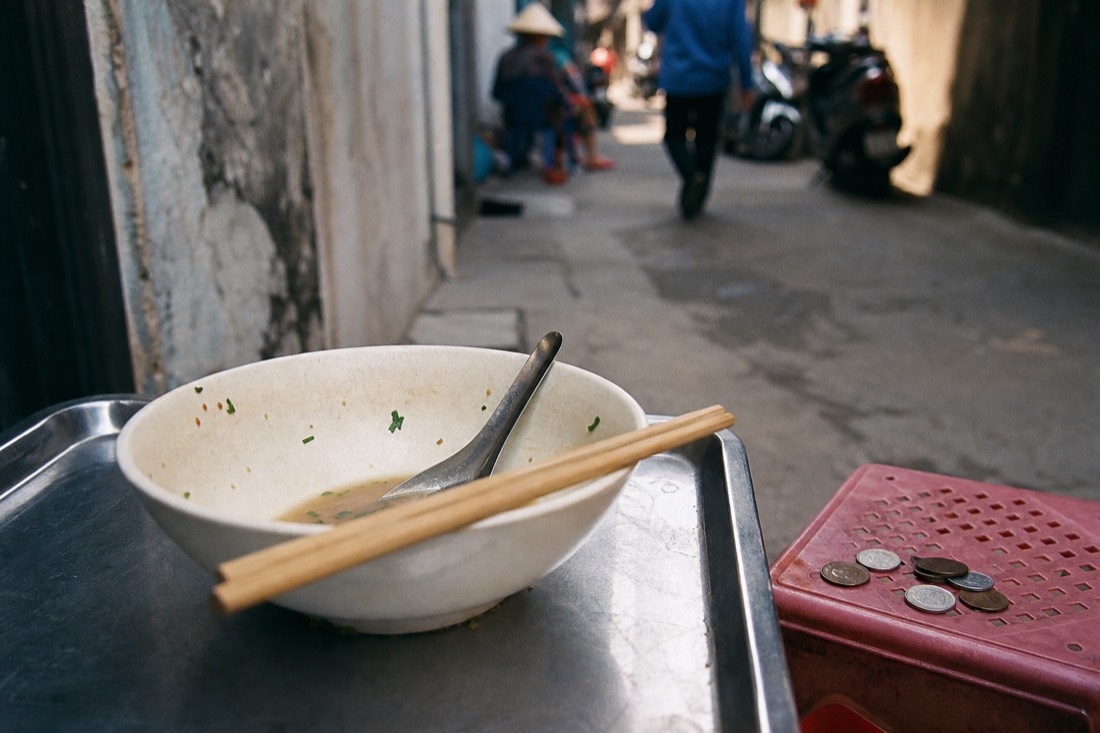
Pho sits mid-pack among Hanoi street food prices, cheaper than a bun cha set at the famous places, pricier than a banh mi.
| Item | 2026 price (VND) | Approx. USD |
|---|---|---|
| Bowl of pho | 40,000 to 60,000 | $1.60 to $2.40 |
| Extra egg in your pho | 5,000 | $0.20 |
| Quay, fried dough sticks | 10,000 | $0.40 |
| Bun cha | 40,000 to 80,000 | $1.60 to $3.20 |
| Banh mi | 20,000 to 40,000 | $0.80 to $1.60 |
| Egg coffee to finish | 30,000 to 45,000 | $1.20 to $1.80 |
If a bowl costs 90,000 VND in a tourist-street dining room, you are paying for the address. The full pricing picture, including how to spot foreigner markups, lives in the Hanoi food prices guide.
What actually goes into a bowl of pho bac?
Four things carry the bowl: broth simmered from beef bones with charred ginger and onion, flat banh pho rice noodles, thin-sliced beef chosen by cut, and spring onion. Table-side, northern shops offer little beyond lime, fresh chili, and pickled garlic vinegar. The quay you see locals dunking is ordered separately.
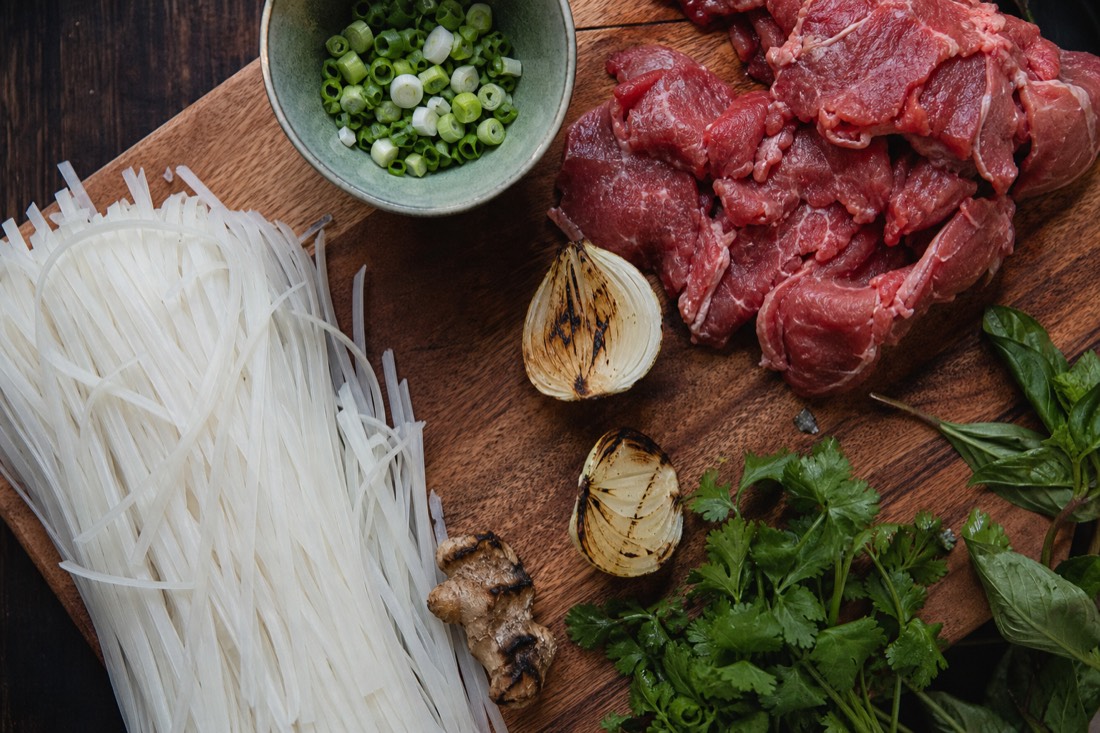
The diagram below labels the parts and the order they go in.
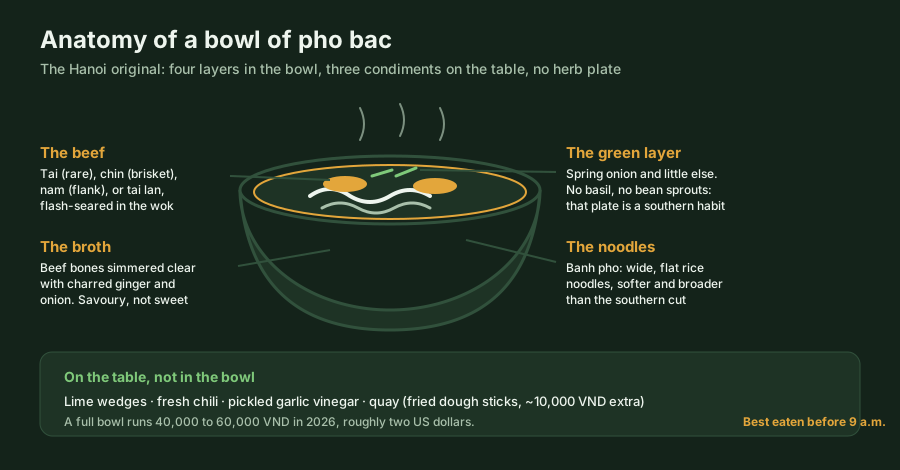
Read the broth first when judging a shop. It should be clear enough to see noodles through, taste of beef rather than sugar, and carry a faint smokiness from the charred aromatics. Cloudy, sweet broth in Hanoi usually signals a kitchen chasing southern or foreign palates.
Should you hunt pho alone or eat it on a tour?
Solo pho hunting is one of Hanoi's great pleasures and costs pocket change, but a guided evening buys range: a good tour stacks pho-adjacent noodle dishes, bun cha, banh cuon, and market snacks into one walk, with a local explaining each. First-timers usually get more from the guided version, then go solo the rest of the trip.
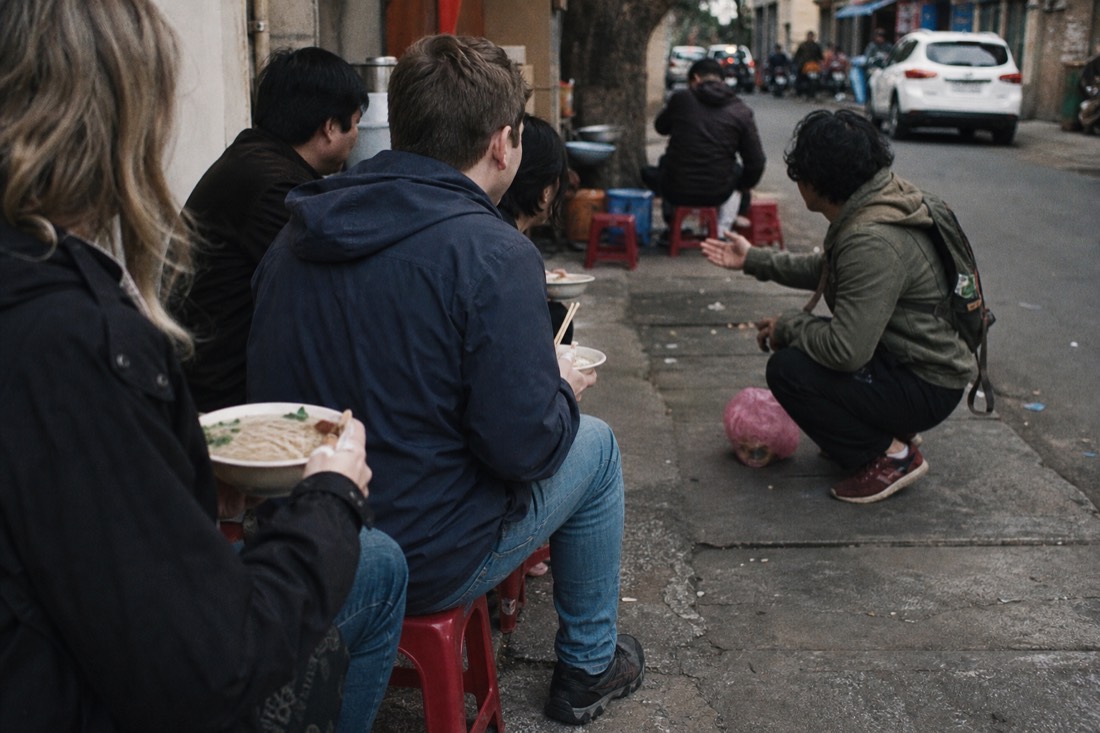
The queues, the self-service protocol, the one-dish menus: all easy once seen, opaque the first time.
Do the tour on night one, learn the rhythm, then spend the rest of your mornings queueing at Bat Dan with everyone else. The wider eating map beyond noodles is in the Hanoi street food guide.
Is pho from North or South Vietnam?
The north. The modern dish emerged between 1900 and 1907 in Nam Dinh Province, southeast of Hanoi, and the capital codified the classic style. The sweeter, herb-laden version most people meet abroad is pho nam, the southern adaptation that developed later in Saigon.
What is the difference between Hanoi pho and Saigon pho?
Hanoi pho has a clear, savoury broth, wider flat noodles, and almost no garnish beyond spring onion, with lime and chili on the table. Saigon pho is sweeter and richer and arrives with a plate of basil, bean sprouts, and lime plus hoisin and sriracha for mixing.
How much should pho cost in Hanoi?
Between 40,000 and 60,000 VND a bowl in 2026, about $1.60 to $2.40. Famous shops like Pho Bat Dan sit around 50,000 VND, with extras such as an egg (5,000) or fried dough sticks (10,000) on top. Prices far above that band usually reflect a tourist-district address, not a better bowl.
Where do locals actually eat pho in Hanoi?
At specialist shops, mostly at breakfast: Pho Gia Truyen at 49 Bat Dan for classic beef pho, Pho Thin at 13 Lo Duc for wok-seared tai lan, and Bib Gourmand pick Pho 10 Ly Quoc Su near the cathedral. Expect queues, shared tables, and short menus.
Is there chicken pho in Hanoi?
Yes. Pho ga, chicken pho, is a northern staple with its own devoted shops, and Hanoi also serves dry mixed variations where the noodles come sauced instead of in broth. Beef remains the benchmark, but a good pho ga broth is its own quiet achievement.
Your next Hanoi experience
Check your date before planning the rest of the day
Rose Kitchen market and cooking class
Shop at a local market, cook a selected Vietnamese menu and share the meal in a garden-villa kitchen.
Allow 4–4.5 hours depending on option. Menu choices vary; pho or bun cha must be selected. Check pickup option. Vegan menu available by arrangement.
An editorial starting point. Confirm your party’s requirements with the operator.
Choose a date to see scheduled departures. Final availability and price are confirmed on Viator.
No verified option fits those requirements. Adjust your choices or reset to explore the general recommendations.
Compare options, fit your schedule & check your budget
Rose Kitchen market and cooking class · 4.5h. Shop at a local market, cook a selected Vietnamese menu and share the meal in a garden-villa kitchen. Allow 4–4.5 hours depending on option. Menu choices vary; pho or bun cha must be selected. Check pickup option. Vegan menu available by arrangement.
Michelin-listed Hanoi street-food walk · 2.5h. Taste dry chicken pho, eel noodles and bun cha, then finish with egg coffee. Meet at 38 Bat Su; food and English-speaking guide included. Not suitable for vegetarians. Optional extras vary. Michelin-listed street food, not a starred tasting-menu reservation.