Vegetarian and Gluten-Free Eating in Hanoi, Honestly
The chay tradition makes Hanoi friendlier to vegetarians than it first looks, and rice makes it workable for celiacs, with caveats worth knowing before your first bowl.
 Written with Mai Trần, Hanoi food tour guide and culinary specialist
Short answer
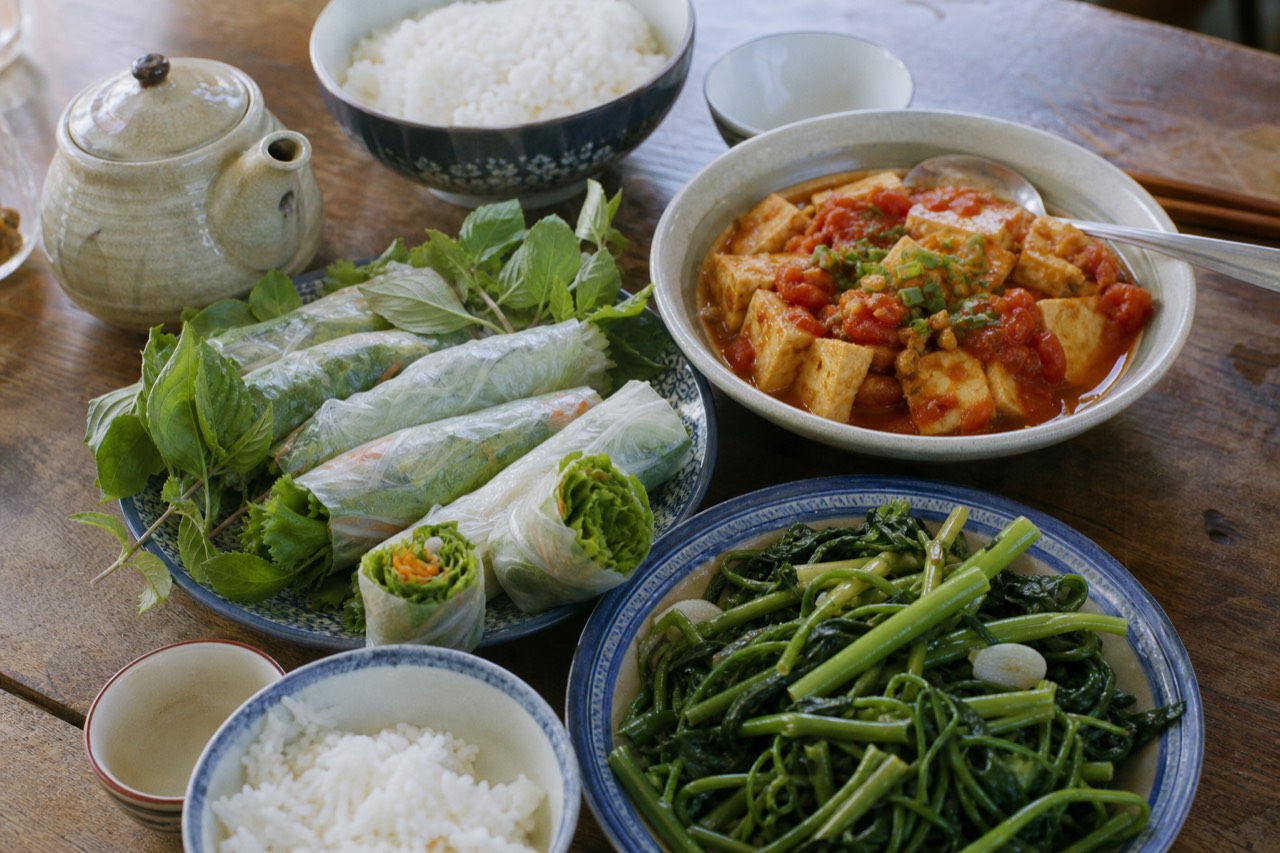
Hanoi is genuinely good for vegetarians thanks to its chay, or Buddhist vegetarian, tradition and a growing set of vegan kitchens, though fish sauce hides in many dishes. Celiacs get a workable base since rice noodles dominate, but soy sauce and fried snacks carry wheat. Learn a few phrases, favour chay eateries, and reach for pho, xoi, and che before banh mi.
Walk past any Hanoi pagoda around the full moon and the smell changes: mushroom broth, fried tofu, browning shallots. Twice a lunar month much of the city eats chay, the Buddhist vegetarian kitchen that has been part of northern Vietnamese life for centuries. That tradition is the reason a city built on grilled pork and fish sauce is still, quietly, one of Southeast Asia's easier places to eat meat-free.
Is Hanoi good for vegetarians?
Yes, better than its pork-heavy reputation suggests. Hanoi has a centuries-old chay tradition, dozens of dedicated vegetarian and vegan eateries, and rice-based staples that adapt easily. The catch is fish sauce, which seasons most mainstream dishes, so vegetarians eat brilliantly at chay places and carefully everywhere else.
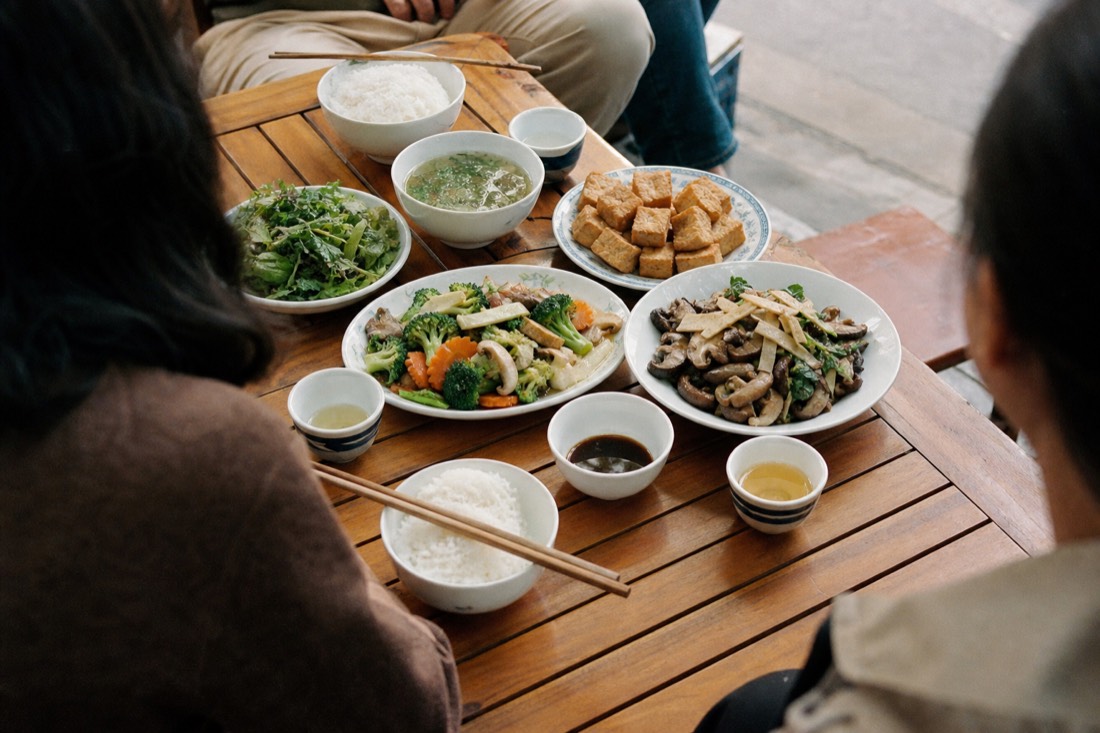
The split matters. At a dedicated chay restaurant, everything on the menu is fair game and prices stay street-level, a few dollars for noodles or a banh mi. At a regular pho shop or bun cha grill, the broth is bone-based and the dipping sauces are built on fish sauce, so a "vegetables only" request often still arrives seasoned with fish. The workable strategy is to plan vegetarian meals around chay spots and market fruit, then treat mainstream stalls as a place for egg or tofu dishes where you can see what goes in the pan.
Hanoi also rewards the sweet-toothed vegetarian. Che, the family of bean, jelly, and coconut dessert cups, is almost always meat-free, and the city's famous egg coffee contains exactly what its name says, egg yolk whipped with sweetened condensed milk over strong dark coffee. It was invented in 1946 during a milk shortage, a story Vietcetera has traced in detail, and it remains vegetarian though clearly not vegan. There is a full page on it in the egg coffee guide.
What is chay food?
Chay is Vietnamese Buddhist vegetarian cooking: no meat, no seafood, and at strict places no fish sauce, with soy-based seasoning instead. Chay eateries cluster near pagodas and get busiest on the 1st and 15th of the lunar month, when many Hanoians eat vegetarian for the day.
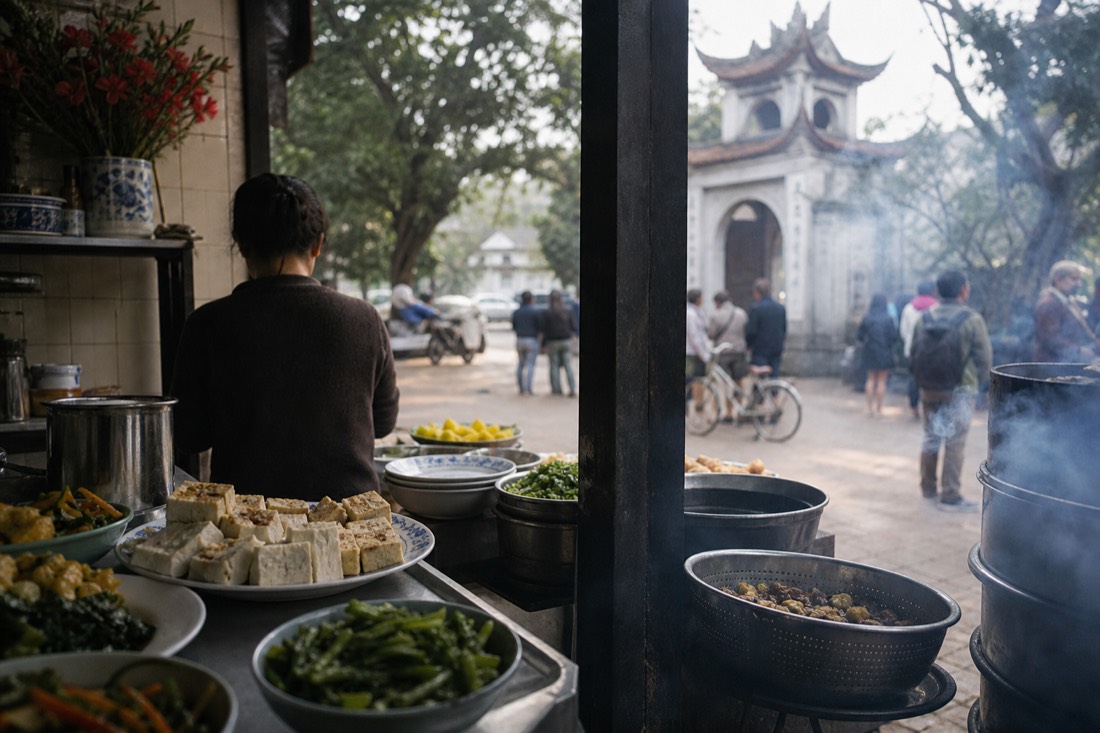
Chay is not a modern diet trend wearing local clothes. It is temple food that went commercial, which is why the best chay kitchens sit near pagodas and why the cooking leans on mushrooms, tofu, jackfruit, and banana blossom rather than imported meat substitutes. Mock-meat versions of familiar dishes are common, pho chay, bun cha chay, even chay banh mi, and they are priced for locals.
One practical note from the community of travelers who eat this way: chay places attached to or beside a temple are the strictest about keeping fish sauce out entirely, while a minority of commercial chay spots may still use it in some sauces. If you are vegetarian by preference, this hardly matters. If you are strictly vegan or allergic, ask, the phrase table below covers it.
| Venue type | What it means for you | Fish sauce risk | Price feel |
|---|---|---|---|
| Chay eatery by a pagoda | Strictest kitchens, fully plant-based by rule | Lowest | Street-level, a dollar or two per dish |
| Commercial chay restaurant | Vegetarian menu, mock-meat versions of classics | Low, worth one question | Street-level to mid |
| Modern vegan cafe | Western-friendly menus, smoothie bowls, labeled allergens | Lowest, often labeled | Mid |
| Mainstream street stall | Meat-first, fish sauce in most seasoning | High unless you ask | Cheapest in the city |
Is Vietnam good for celiacs?
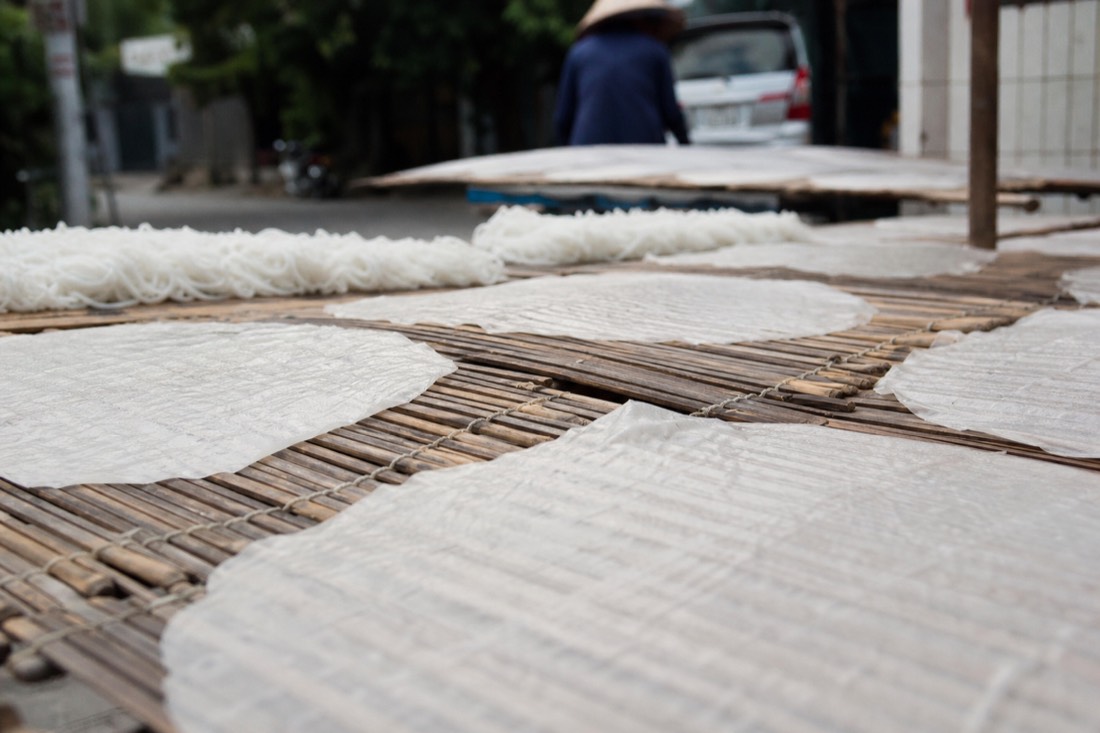
Cautiously, yes. Northern Vietnamese food is built on rice, rice noodles, and rice paper, so the gluten-free baseline is stronger than in wheat-based cuisines. The dangers are soy sauce, which is brewed with wheat and used more in the north, Maggi-style seasonings, fried street snacks, and the odd fish sauce blended with wheat protein.
Pho is the celiac's friend here: the noodles are rice, the broth is bones and spices, and the classic garnishes are herbs, lime, and chili. The trap is what lands next to the bowl. Quay, the fried dough sticks Hanoians dunk in pho ga, are pure wheat. Soy sauce appears on northern tables far more than in the south, and standard Vietnamese soy sauce contains wheat. Even fish sauce, normally gluten-free by nature, occasionally lists hydrolyzed wheat protein on the label, so bottled brands deserve a glance.
| Hidden gluten source | Where it turns up | Risk level |
|---|---|---|
| Soy sauce (xi dau) | Dipping sauces, stir-fries, marinades, chay cooking | High, wheat-brewed |
| Maggi-style seasoning | Banh mi, fried rice, home-style stalls | High |
| Fried snacks and batters | Banana fritters, some spring roll wrappers, quay dough sticks | High |
| Shared woks and fryers | Any busy stall doing wheat and rice items together | Moderate, cross-contact |
| Fish sauce (nuoc mam) | Nearly everything | Usually gluten-free, rare wheat-protein blends |
Sensitive travelers should layer the standard street-food precautions on top: bottled water, care with ice and raw herbs, and hot food from busy stalls, in line with the CDC's food and water guidance. The broader hygiene playbook lives in the street food safety guide.
What Vietnamese dishes are naturally gluten-free?
Most rice-based classics: pho with its rice noodles, banh cuon's steamed rice sheets, xoi sticky rice, banh xeo's rice-flour crepe, fresh spring rolls in rice paper, and most che desserts. Egg coffee is gluten-free too. Skip banh mi, beer, quay dough sticks, and anything glossed with soy sauce.
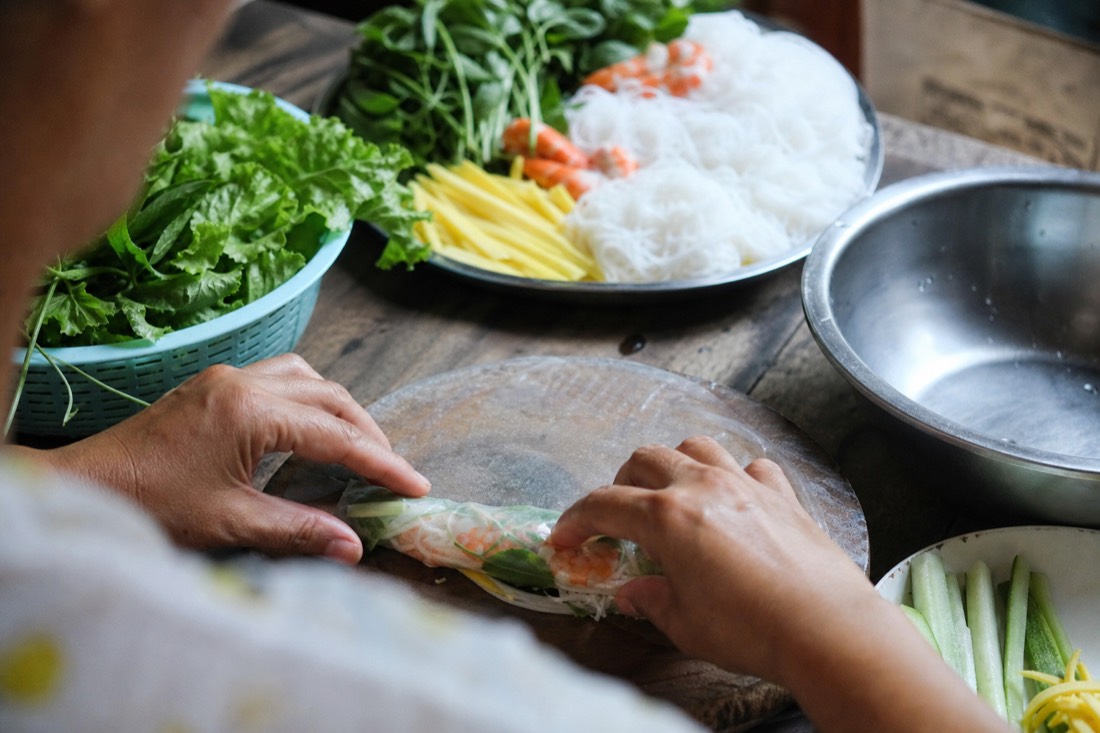
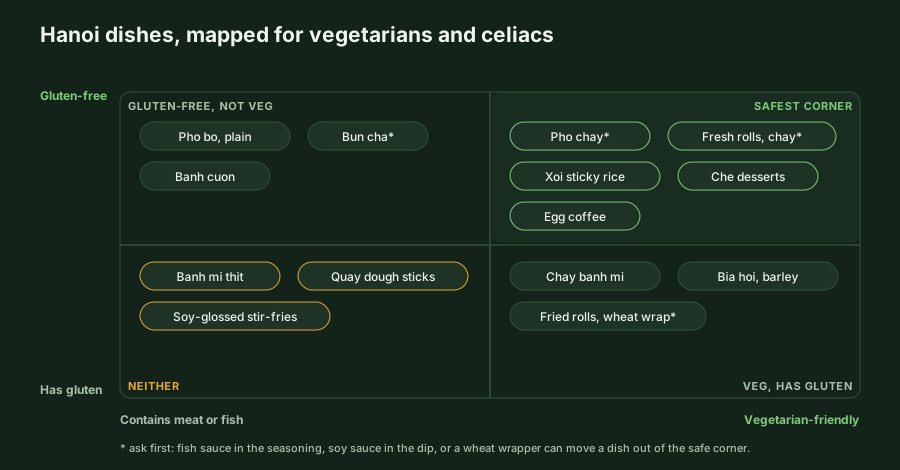
The pattern is easy to hold in your head: steamed and rice-flour dishes are usually safe, baked and deep-fried ones usually are not, and sauces are where the exceptions hide. A bowl of pho in Hanoi with nothing added is about as safe as street eating gets for a celiac; the same bowl with a spoon of stall soy sauce is not.
| Dish | Vegetarian as usually served? | Gluten status | The move |
|---|---|---|---|
| Pho bo / pho ga | No, meat broth | Gluten-free base | Skip soy sauce and quay dough sticks |
| Pho chay | Yes | Gluten-free base | Confirm the seasoning is not soy-heavy |
| Bun cha | No, grilled pork | Usually gluten-free | Ask about the dipping sauce |
| Banh mi | Sometimes, chay versions exist | Contains gluten, wheat bread | No workaround, it is bread |
| Banh cuon | No, pork filling standard | Gluten-free rice sheets | Chay versions swap in mushroom |
| Xoi (sticky rice) | Often, topping-dependent | Gluten-free | Choose bean or corn toppings |
| Fresh spring rolls | Chay versions common | Gluten-free rice paper | Fried versions may use wheat wrappers |
| Che desserts | Yes | Mostly gluten-free | Skip variants with wheat pearls |
| Egg coffee | Yes, contains egg and dairy | Gluten-free | Not vegan |
| Bia hoi | Yes | Contains gluten, barley | Rice wine or fresh juice instead |
How do you order safely in Hanoi?
Carry three phrases: toi an chay, meaning I eat vegetarian, khong nuoc mam, no fish sauce, and toi di ung lua mi, I am allergic to wheat. Say them before ordering, not after. Better still, learn the dishes hands-on at a cooking class with a confirmed vegetarian option.
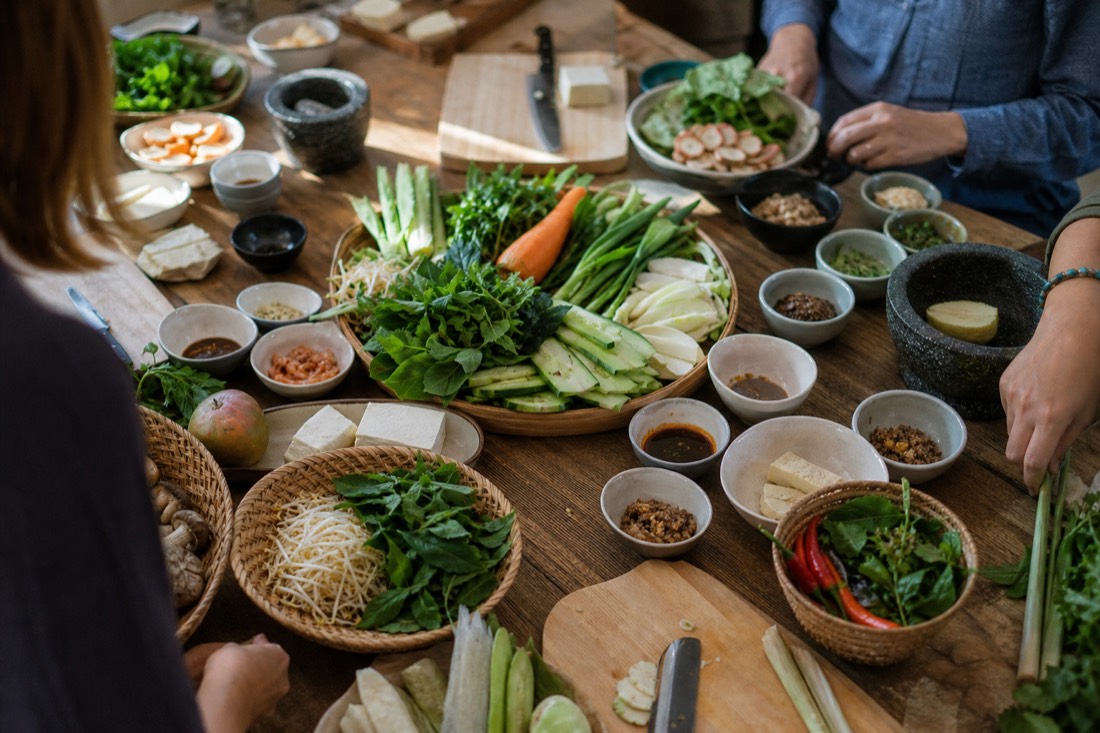
Language does most of the safety work here, because stall cooks are accommodating once they understand the request. A written card in Vietnamese beats spoken tones every time; have your hotel write out your exact restrictions and photograph the card.
| Vietnamese phrase | What it tells the cook |
|---|---|
| Toi an chay | I eat vegetarian food |
| Khong nuoc mam | No fish sauce |
| Khong xi dau | No soy sauce |
| Toi di ung lua mi | I am allergic to wheat |
| Khong thit, khong hai san | No meat, no seafood |
Hanoi will not hand a restricted eater a worry-free plate, but it hands you the raw materials: a rice-based kitchen, a living vegetarian tradition, and cooks who adjust once asked. That is more than most street food capitals offer.
Is Hanoi good for vegetarians?
Yes. The chay tradition means dedicated vegetarian eateries are common, especially near pagodas, and they serve meat-free versions of pho, bun cha, and banh mi at street prices. Central Hanoi also has around 25 fully vegan spots. The main caution is mainstream stalls, where fish sauce seasons most dishes, so vegetarians do best planning meals around chay kitchens.
Is Vietnam safe for celiacs?
Workable, with attention. The cuisine is rice-based, so pho, banh cuon, xoi, fresh spring rolls, and most che are naturally gluten-free. The risks are soy sauce, which contains wheat and is common in northern cooking, Maggi-style seasonings, fried snacks, and shared fryers. A written Vietnamese allergy card and a preference for steamed rice dishes keep most celiac travelers eating well.
What is chay food in Vietnam?
Chay is Buddhist vegetarian cooking: no meat or seafood, built instead on tofu, mushrooms, jackfruit, and mock meats. Chay eateries cluster near temples and fill up on the 1st and 15th of each lunar month, when many locals eat vegetarian. Temple-adjacent chay kitchens are strictest, keeping even fish sauce out, which makes them the safest bet for vegans.
Is pho gluten-free?
The core bowl usually is: rice noodles, meat broth, herbs, lime, and chili contain no wheat. Problems arrive at the table. Quay fried dough sticks are wheat, stall soy sauce is wheat-brewed, and a rare fish sauce blend lists wheat protein. Order pho plain, skip the soy sauce and dough sticks, and it ranks among the safer street dishes for celiacs.
Does the Hanoi cooking class have a vegetarian option?
Yes. The market-to-table class featured on this site, and reviewers confirm a vegetarian version of the menu is available on request. Mention your diet when booking. For vegetarians and celiacs it doubles as training: you see every ingredient, learn the sauces, and leave able to order the same dishes safely elsewhere.
Your next Hanoi experience
Check your date before planning the rest of the day
Vegan Old Quarter food walk
Explore plant-based Hanoi food with a local guide and vegan tastings.
Up to ten guests; Old Quarter pickup, vegan food and a drink included. Vegan does not establish gluten-free or allergy-safe preparation.
An editorial starting point. Confirm your party’s requirements with the operator.
Choose a date to see scheduled departures. Final availability and price are confirmed on Viator.
No verified option fits those requirements. Adjust your choices or reset to explore the general recommendations.
Compare options, fit your schedule & check your budget
Vegan Old Quarter food walk · 3h. Explore plant-based Hanoi food with a local guide and vegan tastings. Up to ten guests; Old Quarter pickup, vegan food and a drink included. Vegan does not establish gluten-free or allergy-safe preparation.
Rose Kitchen market and cooking class · 4.5h. Shop at a local market, cook a selected Vietnamese menu and share the meal in a garden-villa kitchen. Allow 4–4.5 hours depending on option. Menu choices vary; pho or bun cha must be selected. Check pickup option. Vegan menu available by arrangement.