Where to Stay in Hanoi, A Food Lover's Area Guide
The four main areas ranked by what matters at dinnertime, how far you are from the nearest charcoal grill.
 Written with Mai Trần, Hanoi food tour guide and culinary specialist
Short answer
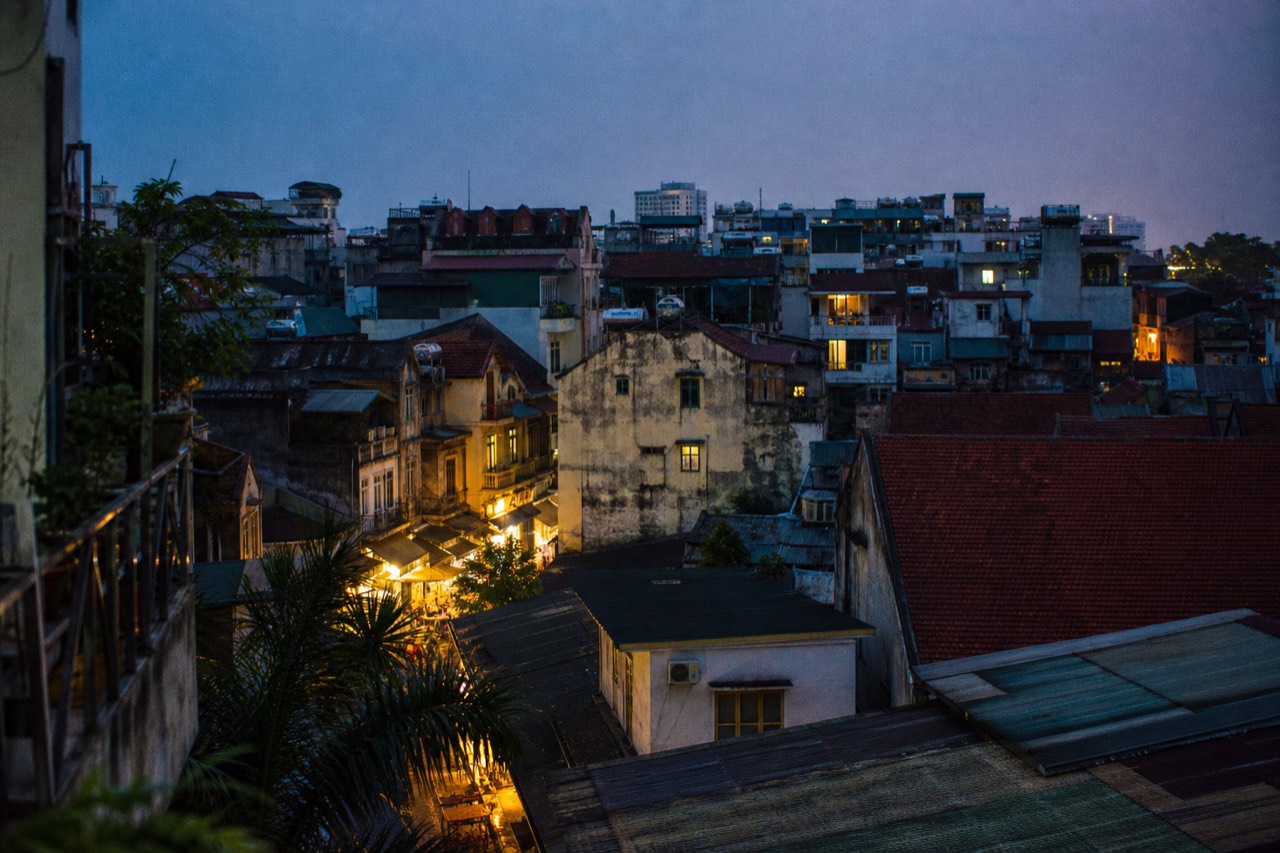
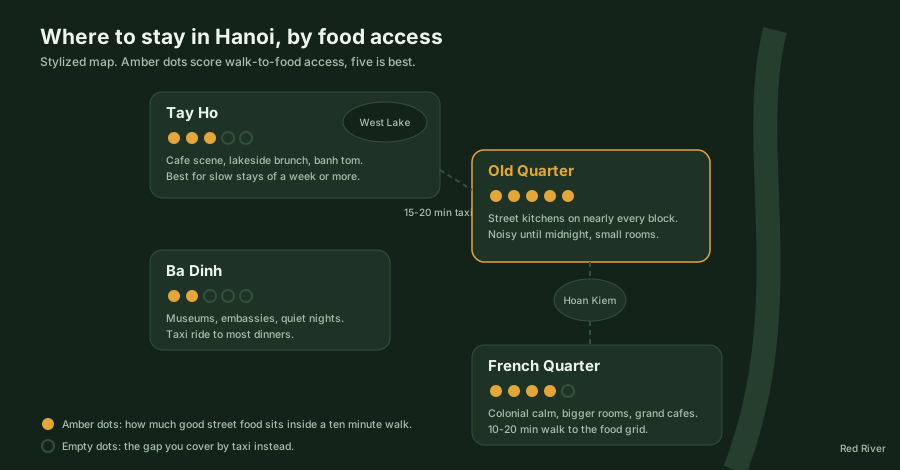
For eating, base yourself in or beside the Old Quarter, where hundreds of street kitchens sit within a one kilometre walk. Light sleepers do better in the French Quarter, ten to twenty minutes on foot from the same stalls. Tay Ho suits cafe lovers on longer stays, while Ba Dinh is quiet, museum-heavy, and a taxi ride from the best food streets.
Bun cha is a lunch dish. The grills along Hang Manh are smoking before noon, and the best trays of banh cuon are gone while most hotel breakfasts are still being cleared. That is the real argument for picking your Hanoi base carefully: this city's food runs on its own clock, and the closer you sleep to the Old Quarter's kitchens, the more of that clock you actually get to use.
Which area of Hanoi is best to stay in?
For food travelers the Old Quarter wins: it packs the densest cluster of street kitchens, coffee houses, and bia hoi corners in the city into one walkable square kilometre. The French Quarter trades some of that access for quiet and space, Tay Ho suits longer stays and cafe mornings, and Ba Dinh is calm but thin on evening food.
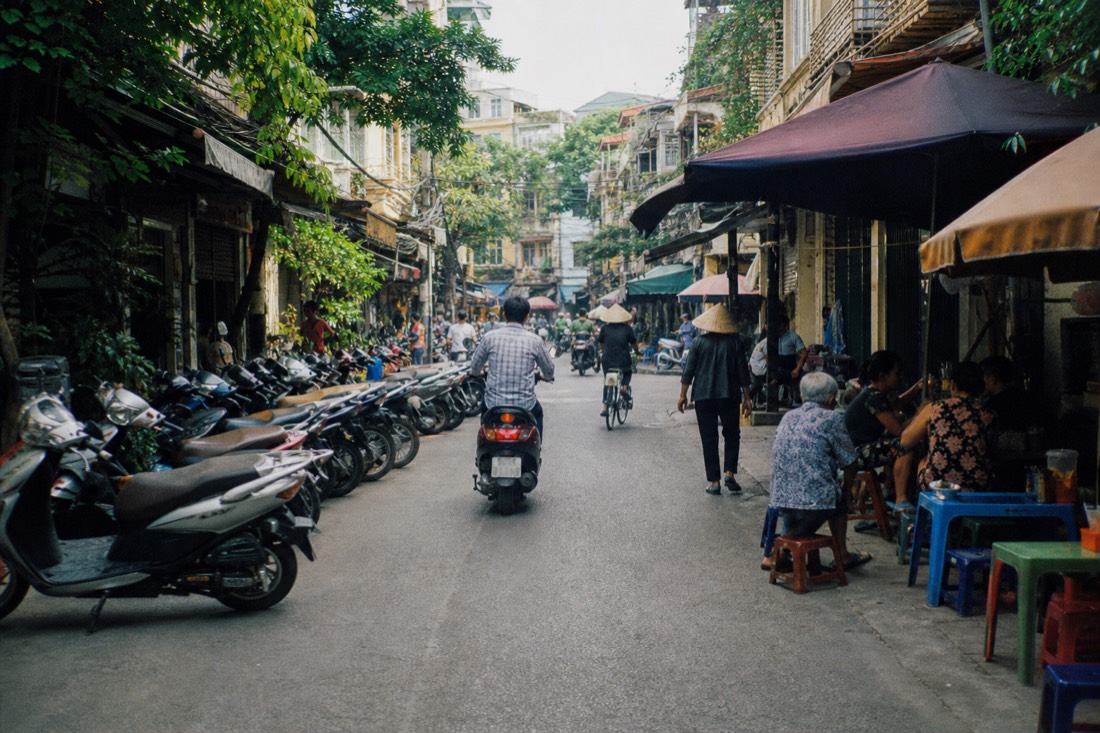
The honest way to compare the four areas is not by hotel style but by what happens when you step outside hungry. In the Old Quarter, the answer is usually a stall within fifty metres. In the French Quarter, it is a pleasant ten minute walk. In Tay Ho it is a lakeside cafe or a Grab ride. In Ba Dinh it is often a taxi.
| Area | Character | Food draw | Trade-off |
|---|---|---|---|
| Old Quarter | Dense grid of tube houses, markets, motorbikes | Street kitchens on nearly every block: bun cha, banh cuon, pho, egg coffee | Noise until midnight, small rooms |
| French Quarter | Wide colonial boulevards south of Hoan Kiem Lake | Dress-up dining and grand cafes, with the Old Quarter stalls a short walk away | Few pavement kitchens of its own |
| Tay Ho (West Lake) | Lakeside, leafy, half expat village | Serious cafe scene, brunch spots, and banh tom, the West Lake shrimp fritter | A 15 to 20 minute taxi from the Old Quarter |
| Ba Dinh | Government quarter, embassies, museums | Quiet neighbourhood pho and market snacking by day | Sparse after dark, taxis needed for dinner |
Is it best to stay in the Old Quarter?
Yes, if eating is the point of the trip and you can sleep through some noise. Every major food street sits within a ten minute walk, morning markets start at dawn, and Ta Hien's beer corner runs late. Bring earplugs, ask for a room away from the street, and the location repays you daily.
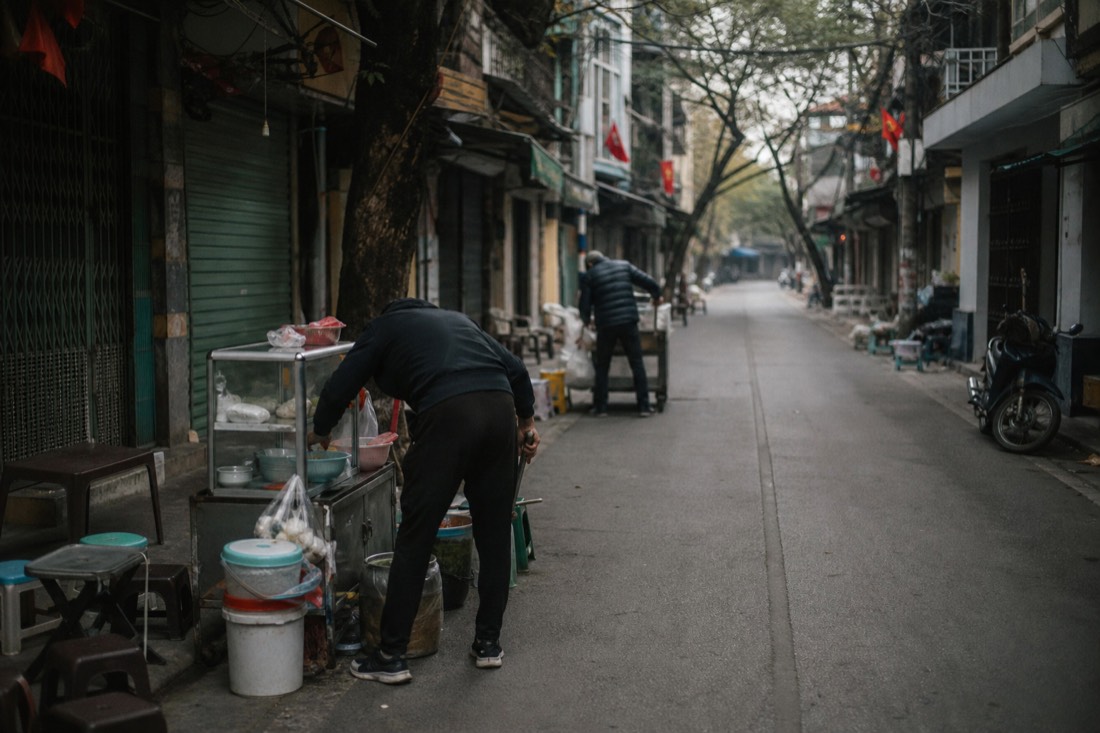
The Old Quarter's advantage is compounding. You do not plan meals here so much as trip over them: a banh mi cart on the corner, a pho shop with queues at seven in the morning, a che dessert counter for the afternoon. What to actually order across those blocks is its own subject, covered in the Old Quarter food guide.
The distances are small enough to be almost funny. From a typical Old Quarter room, nothing worth eating is more than a short stroll away.
| Starting area | Ta Hien beer corner | Hang Manh (bun cha) | Nguyen Huu Huan (egg coffee) | Hoan Kiem walking street |
|---|---|---|---|---|
| Old Quarter | 2 to 8 min walk | 5 to 10 min walk | 5 to 10 min walk | 2 to 8 min walk |
| French Quarter | 15 to 20 min walk | 12 to 18 min walk | 12 to 18 min walk | 5 to 12 min walk |
| Tay Ho | 15 to 20 min taxi | 15 to 20 min taxi | 15 to 20 min taxi | 15 to 20 min taxi |
| Ba Dinh | 10 to 15 min taxi | 10 to 15 min taxi | 10 to 15 min taxi | 10 to 15 min taxi |
Times are approximate and traffic-dependent, but the pattern holds: only one area lets you do everything on foot.
What is the French Quarter like for food travelers?
The French Quarter is the compromise pick: quieter streets, bigger rooms in colonial buildings, and the Old Quarter's food still ten to twenty minutes away on foot. It has grand cafes and the city's dress-up dining rather than pavement kitchens, so you commute slightly for stalls but sleep well.
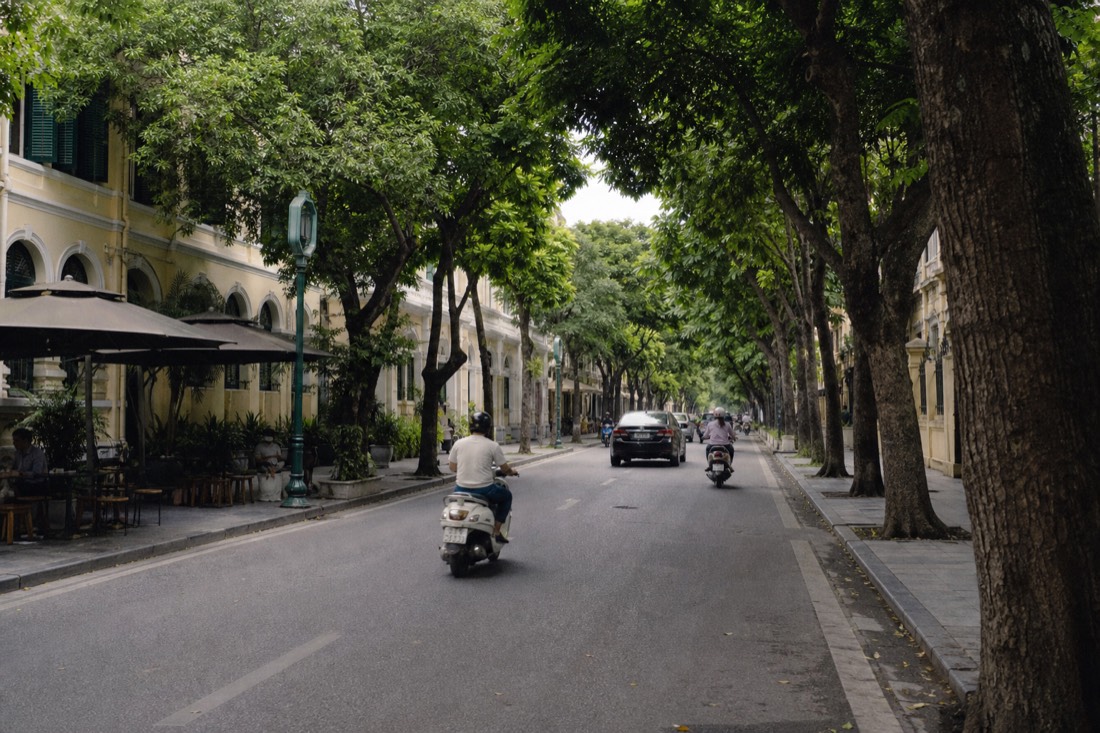
South of Hoan Kiem Lake the streets widen, the tree cover thickens, and the soundscape changes. Street noise here drops off sharply after about 10 pm, while the Old Quarter's motorbike-and-bar hum keeps going to midnight. The rooms follow the architecture: colonial-era properties commonly offer 25 to 40 square metres with real windows, where Old Quarter tube houses often squeeze 15 to 20 square metres out of buildings so narrow that natural light is a lottery.
| Sleep factor | Old Quarter | French Quarter |
|---|---|---|
| Typical room size | 15 to 20 sqm, tube-house footprint | 25 to 40 sqm, colonial floor plans |
| Natural light | Often limited, some windowless rooms | Generally good, tall windows |
| Evening noise | High until around midnight | Falls away after about 10 pm |
| Morning scene | Markets and pho queues from dawn | Quiet boulevards, grand cafes |
This is also the polished end of Hanoi's dining ledger. The city's 2026 Michelin selection runs to four one-star restaurants and 23 Bib Gourmands, per the official Michelin announcement, and travelers who want one white-tablecloth night alongside their stall crawl will find the French Quarter the easiest place to dress for it.
Is Tay Ho worth staying in for the cafe scene?
For a stay of a week or more, yes. Tay Ho has Hanoi's best concentration of specialty cafes, lakeside brunch spots, and its own signature dish in banh tom, the West Lake shrimp fritter. For a two or three night food trip it is the wrong base, since every Old Quarter meal needs a taxi.
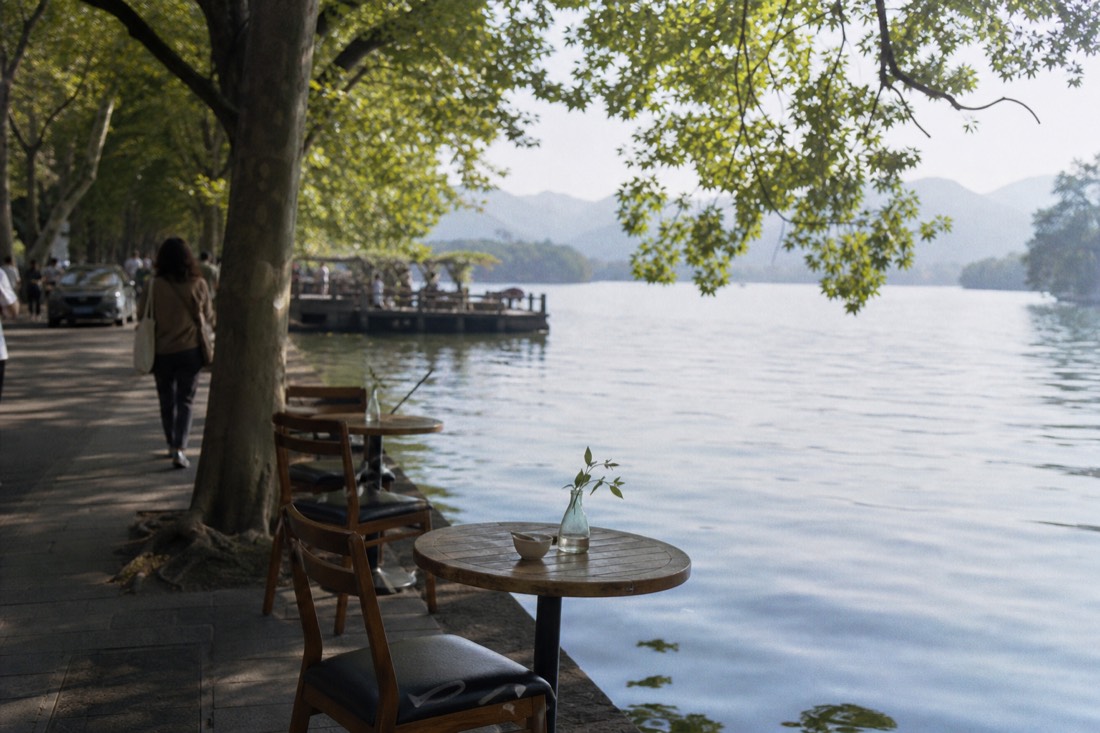
West Lake living has a rhythm the tourist core cannot match: quiet mornings, lake loops, coffee that takes itself seriously. The catch is simple. Each bun cha lunch or Ta Hien evening means a 15 to 20 minute ride each way, and that friction adds up across a short trip.
Where do most tourists stay?
Most first-time visitors stay in the Old Quarter or on the blocks ringing Hoan Kiem Lake, and for food purposes the crowd has it right. The lake fringe adds one bonus: from Friday evening through Sunday night the surrounding streets go pedestrian, turning the whole area into a snack-friendly walking zone.
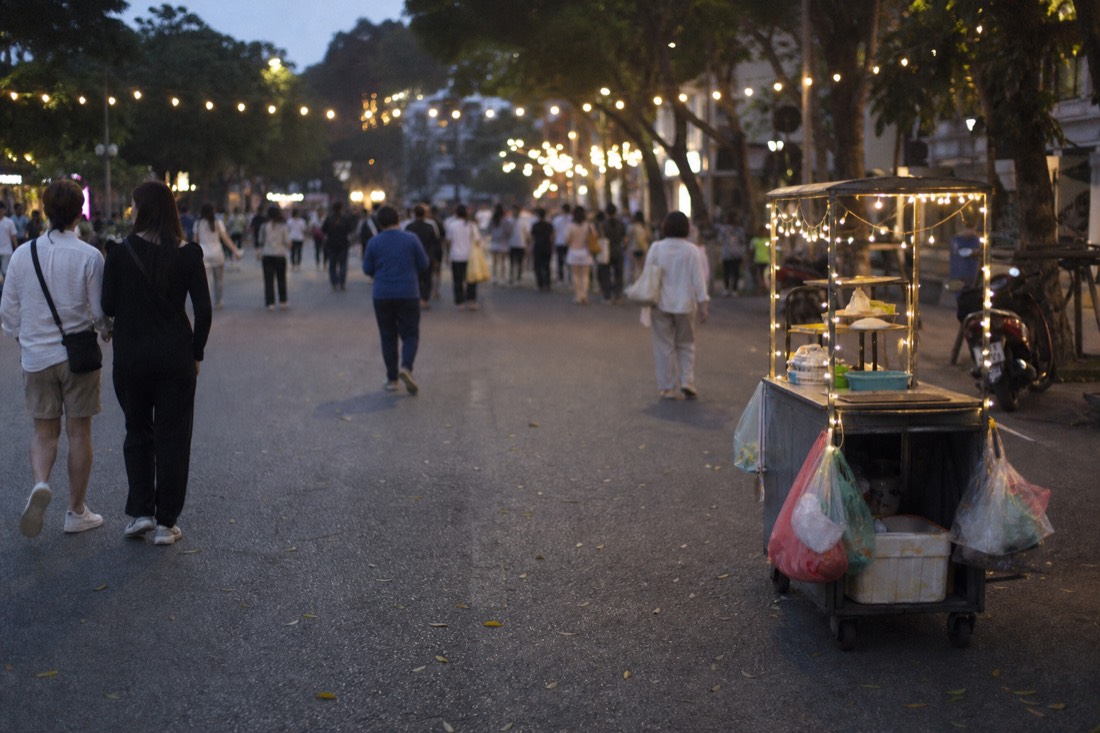
The weekend walking street matters more than it sounds. From around 7 pm on Friday until Sunday night, traffic clears from the roads circling Hoan Kiem, street performers set up, and the food vendors follow the foot traffic. Staying within a few minutes of the lake puts that scene on your doorstep two nights out of every seven.
One caveat on comfort: Hanoi walking weather is seasonal. April to June and September to December are the pleasant months, while high summer brings 35C heat and heavy humidity, as the national tourism board's climate guide lays out. In the sweaty months, a base that shortens your walks earns its keep twice over; timing details are in the best time to visit guide.
Where should you avoid staying?
Nowhere in central Hanoi is unsafe, so avoid areas on practicality instead. Skip the far-western business districts, where street food density collapses and every meal becomes a ride. Light sleepers should avoid rooms directly over Ta Hien or major Old Quarter junctions. Airport-side hotels only make sense for one-night layovers.
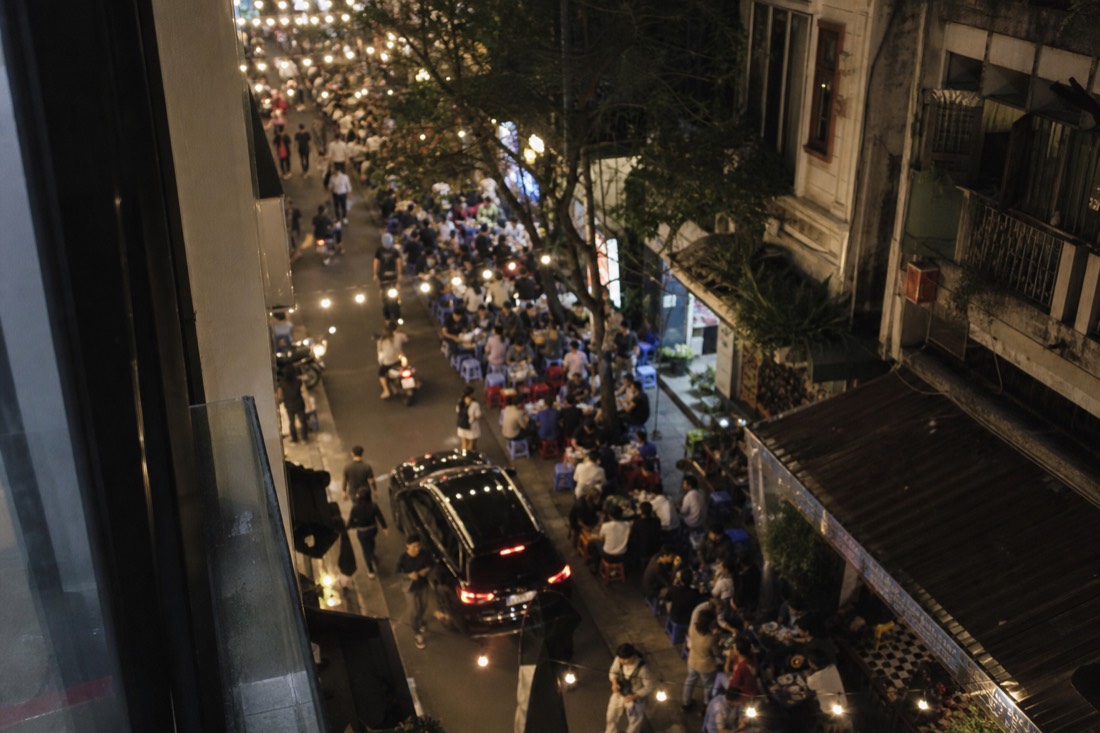
The most common booking mistake is optimizing for hotel value over location. A gleaming high-rise in a business district out west can cost less than a modest Old Quarter room, and the difference comes back out of your pocket in Grab fares and out of your evenings in transit time. The second mistake is the opposite one: booking the cheapest bar-street room in the Old Quarter, then discovering what dozens of bia hoi crowds sound like at 11 pm through a single-glazed window.
A middle path works well: an Old Quarter or lake-fringe hotel on a side street rather than a main artery, a back-facing room, and earplugs as insurance. For the broader list of tourist-trap misfires, food-related and otherwise, see what to avoid in Hanoi. And if your base does end up further out, a small-group evening like the eat like a local tour solves the distance problem for at least one night, since you only make the trip in once.
Pick the area to match the trip: Old Quarter for a short eating blitz, French Quarter for the same blitz with better sleep, Tay Ho for slow weeks of cafes, Ba Dinh if museums outrank meals.
Which area of Hanoi is best for street food?
The Old Quarter, without much argument. Its square kilometre holds the densest run of street kitchens in the city, from dawn pho shops to the Ta Hien beer corner at night, and everything is walkable. The French Quarter is a close second because it borders the same food streets, ten to twenty minutes away on foot, while offering quieter nights.
Is the Old Quarter too noisy to sleep in?
It is noisy, not impossible. Motorbike and bar noise typically runs until around midnight, and tube-house hotel rooms are small, sometimes windowless. The fixes are simple: choose a side street over a main artery, request a back-facing or high-floor room, and pack earplugs. Very light sleepers should book the French Quarter instead, where streets quiet down after about 10 pm.
Is Tay Ho too far from the food?
For a short trip, effectively yes. Tay Ho sits 15 to 20 minutes by taxi from the Old Quarter, so every stall meal costs you a ride each way. It rewards longer stays: the cafe scene is Hanoi's best, the lakeside is calm, and monthly apartments are affordable. Stay there for a slow week, not a 48-hour eating sprint.
Where should you stay in Hanoi for a two-night trip?
Book the Old Quarter or the streets immediately ringing Hoan Kiem Lake. With only two nights, walking distance to food is worth more than room size or quiet, and this position puts bun cha lunches, egg coffee stops, and the night beer scene all within ten minutes on foot. If your dates touch a weekend, the lake's pedestrian street lands on your doorstep too.
Your next Hanoi experience
Check your date before planning the rest of the day
Old Quarter food walk
Follow an English-speaking guide between six or seven food and drink tastings.
Old Quarter pickup on foot or meet at 38 Bat Su. Train Street is an optional upgrade. Dishes depend on the day.
An editorial starting point. Confirm your party’s requirements with the operator.
Choose a date to see scheduled departures. Final availability and price are confirmed on Viator.
No verified option fits those requirements. Adjust your choices or reset to explore the general recommendations.
Compare options, fit your schedule & check your budget
Old Quarter food walk · 3h. Follow an English-speaking guide between six or seven food and drink tastings. Old Quarter pickup on foot or meet at 38 Bat Su. Train Street is an optional upgrade. Dishes depend on the day.
Private Old Quarter food walk · 3h. Explore the Old Quarter with a guide dedicated to your own party. Old Quarter pickup or 38 Bat Su. Tastings included. Confirm specific dietary and access needs before booking.